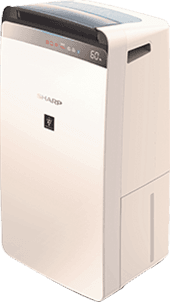
The thermodynamics of the DW-J20FM-W rely on a high-torque rotary compressor that executes a standard vapor-compression cycle optimized for high-latent heat environments. By drawing warm, humid air across a sub-cooled evaporator coil, the unit achieves a moisture extraction rate of 20 L/day at 30°C/80% RH. In the context of the Indian subcontinent, where ambient temperatures often fluctuate between 30 and 40 degrees Celsius, compressor efficiency is paramount. Unlike reciprocating compressors, the rotary design in this unit minimizes mechanical friction and heat discharge, ensuring that the cooling capacity remains dedicated to dehumidification rather than fighting its own thermal output. This engineering choice is vital for maintaining sustained performance during the relentless humidity of a Mumbai or Kolkata monsoon season.
The selection of R-134a as the primary refrigerant in the DW-J20FM-W is a deliberate engineering decision based on its stable thermodynamic properties at elevated ambient pressures. In many parts of coastal India, atmospheric conditions place significant stress on refrigerant circuits, necessitating a medium that can dissipate heat effectively through the condenser coils. R-134a operates at manageable discharge pressures, which extends the operational lifespan of the compressor seals and internal valving. This refrigerant ensures that even when the external temperature peaks, the internal coil temperature remains sufficiently low to reach the dew point of the incoming air. Such thermal stability is essential for consistent water recovery rates in high-vapor-pressure zones like Kochi or the Goa coastline.
Central to the automation of the DW-J20FM-W is a digital humidistat that provides real-time monitoring of local relative humidity. While specific range data is often simplified, the sensor’s logic determines the latency between a detected rise in RH% and the activation of the compressor. For Indian residential use, maintaining a set point between 50% and 60% is standard for human comfort, but the unit’s sensitivity also allows for lower thresholds required in specialized environments like home server rooms or archives. The digital controller manages the cycling process to prevent short-cycling of the compressor, which would otherwise lead to premature failure. This precise sensing ensures that the unit responds dynamically to the rapid humidity spikes common during sudden tropical downpours.
Thermal management within the unit includes an integrated auto-defrost mechanism, a critical feature for variable Indian climates. When operating in air-conditioned rooms or during the cooler nights in hill stations like Shimla, Munnar, or Ooty, the evaporator coils can drop below freezing, leading to ice accumulation. The DW-J20FM-W detects this frost buildup and temporarily halts the compressor while keeping the fan running to melt the ice. This prevents the airflow from being restricted, which would otherwise stall the dehumidification process and risk overheating the motor. This functionality ensures that the device remains operational across a wide range of indoor environmental conditions without requiring manual intervention to clear ice blockages from the internal heat exchanger.
The air circuit is driven by a variable-speed fan capable of a high-speed airflow of 258 m³/hr, facilitating rapid air exchange in rooms up to 550 sq. ft. This airflow rate is balanced against a 4.6 L reservoir, which, under peak monsoon conditions of 80% RH, can reach capacity within approximately 12 to 18 hours of continuous operation. To handle this volume, the engineering team included a continuous drainage port, allowing users to bypass the tank and route condensate directly to a floor drain. The variable fan speed is not merely for noise reduction (down to 29 dB) but serves to optimize the contact time between the humid air and the cold coils. Lower speeds increase moisture extraction efficiency per pass, while higher speeds ensure better air distribution.
Constructing a 16.7 kg chassis requires a robust structural frame to support the compressor and the weight of a full water tank. The inclusion of heavy-duty caster wheels provides the necessary mobility to move the unit across diverse Indian flooring, from marble to vitrified tiles. Maintenance is focused on the HEPA filter system, which serves a dual purpose: protecting the internal coils from dust buildup and improving indoor air quality. Because the unit is compatible with standard household sockets, it does not require industrial wiring for residential use. The longevity of the device is dictated by simple filter cleaning cycles, making it a sustainable asset for long-term humidity control in the most demanding coastal environments of the country.