The thermodynamic efficiency of the MAD20S1QWT is centered on its rotary compressor architecture, which is specifically optimized for high-torque operation in tropical climates. By drawing warm, moisture-laden air across an evaporator coil chilled by R-410A refrigerant, the system achieves a consistent 20 pints/day (~9.5 L/day) extraction rate. In Indian coastal cities where ambient temperatures often fluctuate between 30°C and 40°C, the rotary design offers superior heat dissipation compared to older reciprocating models. This ensures that the refrigerant maintains its phase-change properties without over-stressing the motor. For the refrigeration cycle, this translates to reliable moisture removal even when the enthalpy of the incoming air is significantly higher than standard laboratory test conditions, making it technically resilient for rigorous residential use.
Utilizing R-410A refrigerant provides a significant engineering advantage for the MAD20S1QWT in high-ambient environments like Goa or Chennai. R-410A operates at higher pressures than R-22, allowing for a more compact heat exchanger design while maintaining a high Coefficient of Performance. In the context of Indian summers, the refrigerant’s high heat-transfer coefficient ensures that the evaporator coils stay sufficiently cold to reach the dew point rapidly, even when the indoor humidity is a staggering 85%. This allows the unit to maintain its extraction efficiency without the thermal throttling common in inferior units. The chemical stability of R-410A also ensures that the internal components of the refrigeration circuit remain free from degradation over years of heavy seasonal operation across the subcontinent.
The control logic of the MAD20S1QWT utilizes a high-precision digital humidistat capable of monitoring relative humidity (RH) across a 35% to 85% range. This wide spectrum is critical for the Indian market, where users may need to maintain 45% RH for home server setups or 60% RH for general comfort in a Mumbai apartment. The sensors are calibrated to minimize latency, ensuring the compressor cycles efficiently only when the setpoint is exceeded. By preventing frequent short-cycling, the system extends the life of the rotary compressor while maintaining the specific atmospheric conditions required to protect sensitive materials like musical instruments or archives. This precise regulation ensures that the unit doesn't over-dry the air, which can be just as damaging to wooden furniture as excessive moisture.
Operating a dehumidifier in air-conditioned rooms or in cooler hill stations like Munnar requires specialized thermal management, which is provided through an integrated auto-defrost mechanism. When ambient temperatures drop toward the 41°F threshold, frost can accumulate on the evaporator coils, insulating them and halting the dehumidification process. The system’s sensors detect this frost buildup and temporarily disable the compressor while running the fan to melt the ice. Once the coils are clear, the unit automatically resumes extraction. This feature is indispensable for night-time operation in modern Indian homes where heavy air conditioning can lower room temperatures while humidity remains high. This unit thus offers year-round utility, transitioning seamlessly from the sweltering monsoon heat to the cooler, damp winters of Northern India.
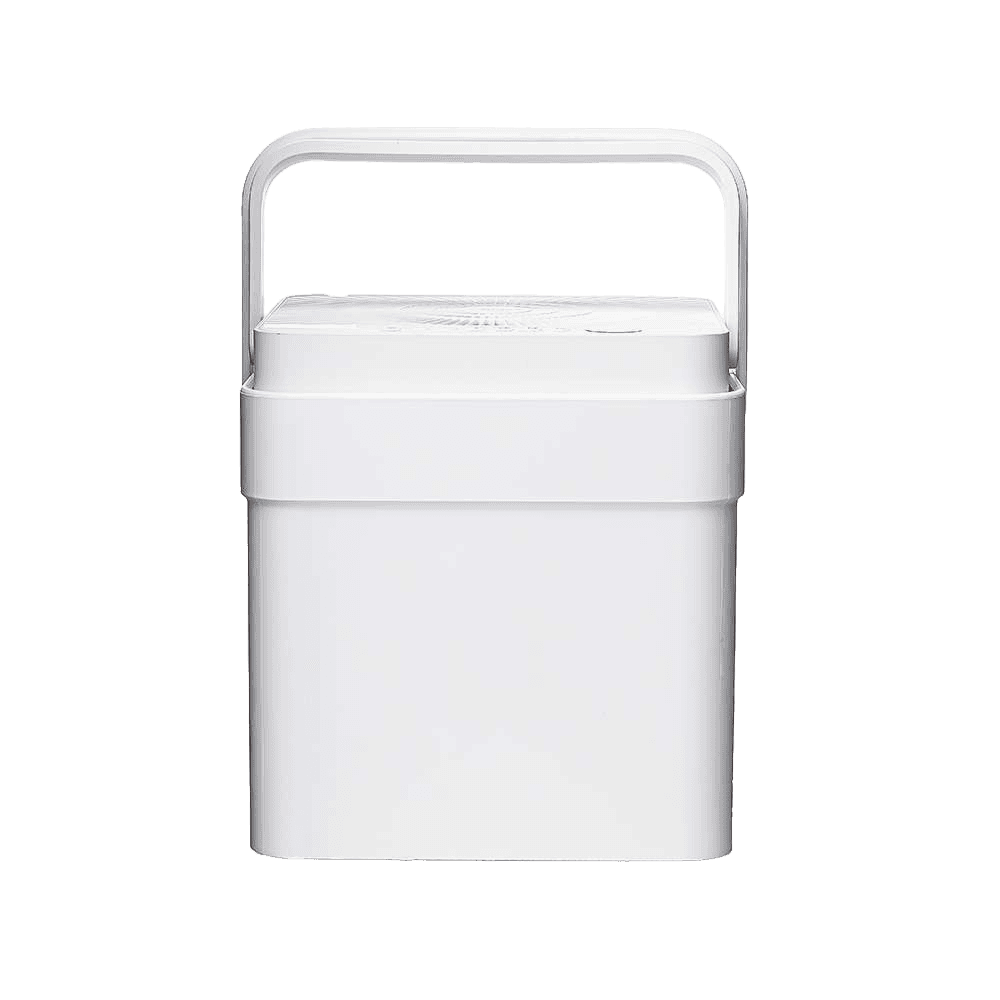
The 4 gallons (nested cube reservoir) is a significant departure from standard designs, maximizing water storage in a compact footprint. In a high-humidity environment like Kochi, where 80% RH is common, a 20-pint unit could fill its reservoir within 12 to 15 hours of continuous operation. The system includes a secondary float-switch mechanism for auto shut-off, preventing overflow if the tank reaches its limit. Furthermore, the 2-speed fan circuit allows users to balance the air throughput against noise requirements. On high speed, the increased air velocity enhances the moisture extraction rate by ensuring more humid air passes over the cooling coils per hour. The internal air circuit remains versatile, supporting both manual tank emptying and continuous gravity-fed drainage for high-demand residential or light commercial scenarios.
Maintenance is streamlined by a 15.20 kg chassis and easily accessible mesh filter. For Indian users, the frequent presence of dust and pollutants means the filter must be cleaned every 250 hours of operation to maintain optimal airflow. A dedicated filter indicator light removes guesswork, ensuring the rotary compressor never works harder than necessary due to air starvation. The integration of caster wheels & handles allows for effortless relocation from a damp balcony area to a central living room. Long-term reliability is anchored in the simplicity of this maintenance cycle, which focuses on preserving the unit’s airflow and thermal exchange capabilities. By prioritizing these engineering fundamentals, the MAD20S1QWT serves as a durable asset for moisture management in the most challenging tropical coastal environments across the Indian peninsula.