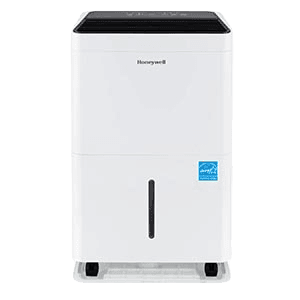
The TPFIT50WK utilizes a high-efficiency refrigeration cycle driven by its internal rotary compressor to achieve a moisture extraction rate of 50 pints/day (~23.7 L/day). In the high ambient temperatures of Mumbai, often ranging between 30 and 40 degrees Celsius, compressor efficiency is critical as the heat load on the condenser increases significantly. The rotary design provides superior torque and smoother operation compared to reciprocating versions, allowing the unit to maintain a high pressure differential even when the surrounding air is saturated with moisture. This mechanical advantage ensures that the dew point on the evaporator coils is reached rapidly, maximizing the volume of water vapor transitioned from a gaseous state to liquid runoff for efficient collection or drainage.
Using R-410A refrigerant allows the TPFIT50WK to operate effectively across the wide temperature spectrum found in tropical Indian climates. R-410A is a near-azeotropic mixture that exhibits high volumetric cooling capacity and low toxicity, making it ideal for residential portable dehumidifiers. Its higher operating pressure compared to older refrigerants like R-22 enables more compact component design without sacrificing thermal exchange efficiency. During an intense Goa summer, the refrigerant’s thermodynamic properties facilitate rapid heat rejection at the condenser coil, which is essential for continuous moisture extraction. This engineering choice ensures the compressor does not overheat during prolonged operation, maintaining the system's longevity and performance stability when humidity levels remain stubbornly above 85% for weeks at a time.
Precise humidity control in the TPFIT50WK is managed by an onboard digital humidistat capable of sensing relative humidity within a 30% to 90% range. The sensor logic incorporates a specific latency period to prevent short-cycling of the rotary compressor, which would otherwise reduce the lifespan of the motor windings. This range is particularly relevant for diverse Indian applications; while residential users in Chennai might aim for a comfortable 55% RH, specialized environments like server rooms or home libraries in Kochi may require a stricter 45% threshold to prevent hardware corrosion or paper degradation. The user interface allows for granular adjustments, ensuring the unit activates only when necessary, thus optimizing power consumption while providing a consistent moisture barrier against the encroaching outdoor humidity.
Thermal management is further enhanced by an integrated auto-defrost mechanism, a critical feature for the TPFIT50WK when operated in cooler Indian climates such as Shimla, Munnar, or Ooty. When ambient temperatures drop below 41°F (5°C), ice crystals can form on the evaporator coils, significantly impeding airflow and reducing dehumidification efficiency. The auto-defrost sensor detects this frost accumulation and temporarily halts the compressor while running the fan to melt the ice using ambient air heat. This functionality is equally important for night-time operation in air-conditioned bedrooms where the localized temperature near the unit may drop below the frost point. By preventing coil freeze-ups, the system maintains a continuous moisture removal path, ensuring that dampness does not accumulate during the cooler hours of the night.
The air circuit of this Honeywell model features a 3-speed fan that allows users to balance moisture extraction speed against acoustic comfort. In peak monsoon conditions where indoor RH hit 85%, the 14.4 pints reservoir can reach capacity in under 12 hours of continuous operation. To address this, the engineering team included a gravity-fed continuous drain port, allowing the unit to be plumbed directly into a floor drain for unattended use in damp basements. The fan’s aerodynamic design ensures that even at 50 dB on the highest setting, the unit moves enough air volume to process the total cubic footage of a 4,000 sq. ft. (~372 m²) area effectively. This synergy between the water collection system and air movement is what makes it a reliable workhorse.
Weighing 19.60 kg, the unit’s chassis is constructed from high-grade impact-resistant polymers designed to withstand the corrosive coastal air of Goa and Kolkata. Portability is managed via heavy-duty caster wheels that distribute the weight evenly, preventing floor damage during transit. Long-term maintenance is centered on the washable dust filter, which protects the internal coils from the particulate matter common in urban Indian environments. Cleaning this filter every two weeks ensures that static pressure remains low and the rotary compressor operates within its designed thermal envelope. Given the energy-efficient performance and the comprehensive protective features like auto shut-off, this model serves as a robust shield against humidity-related asset depreciation. It is clear that for large-scale residential protection, the TPFIT50WK stands as the definitive conclusion for Indian buyers.