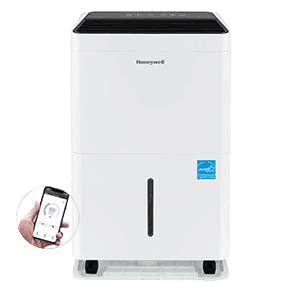
The refrigeration cycle in the TPFIT50AWK utilizes a high-torque rotary compressor to achieve a dehumidification rate of 50 pints/day (~23.7 L/day). This process involves drawing warm, saturated air over cold evaporator coils where the dew point is reached, causing water vapor to condense into liquid. In India’s high ambient temperatures, often exceeding 35 degrees Celsius in coastal cities like Mumbai, the compressor must work harder to maintain the temperature differential required for condensation. Unlike standard units designed for temperate climates, this model's cooling circuit is optimized for high latent heat loads. This thermal efficiency ensures that the unit does not overheat during continuous operation in peak summer, providing a consistent moisture extraction rate that is vital for preventing structural damage in large residential spaces.
The use of R-410A refrigerant is central to the TPFIT50AWK performance profile. This hydrofluorocarbon blend offers a higher heat-carrying capacity compared to older refrigerants, allowing for a more compact evaporator design without sacrificing moisture removal speed. R-410A operates at higher pressures, necessitating a robust piping system and high-quality seals to prevent leakage under the thermal stress of Indian summers. For users in humid Chennai, where salt-induced corrosion is a risk, the closed-loop refrigeration system provides a durable barrier against environmental degradation. The thermodynamic properties of R-410A ensure that the unit maintains high energy efficiency ratios even when the humidity gradient is steep, making it a sustainable choice for long-term moisture control in large villas or commercial offices requiring constant dry air.
Precise moisture management is governed by a digital humidistat that monitors ambient relative humidity with a range from 30% to 90%. The latency between sensor reading and compressor activation in the TPFIT50AWK is minimized to prevent short-cycling, which can damage the motor. This accuracy is essential in diverse Indian applications, such as server rooms in Bengaluru where a strict 45% RH is required to prevent electrostatic discharge, or residential bedrooms in Kochi aiming for a comfortable 55% RH. The unit’s control board processes these inputs to modulate fan speeds and compressor run-times, ensuring that the target set-point is achieved quickly. This granular control prevents the over-drying of wooden furniture while ensuring that the air remains below the threshold for mold spore germination.
Thermal management extends to low-temperature operations, which are common in Indian hill stations like Shimla or during winter nights in the North. When ambient temperatures drop toward the 41°F lower limit, ice can form on the evaporator coils, significantly reducing air flow and extraction efficiency. The auto-defrost mechanism in the TPFIT50AWK detects this ice buildup and temporarily halts the compressor while keeping the fan running to melt the frost. This feature ensures that the unit continues to protect property in cold, damp climates without the risk of mechanical failure or coil damage. For coastal residents who run air conditioning at low temperatures, this defrost cycle prevents the dehumidifier from becoming an ineffective block of ice, maintaining a continuous cycle of protection for stored valuables.
The water management system features a 15-pint reservoir, which, under 80% RH conditions typical of a Goa monsoon, may require emptying every few hours. To mitigate this, the unit includes a continuous drain port, allowing for unattended operation in basements or warehouses where floor drains are available. The 360 CFM air flow is distributed through a 3-speed fan circuit, which is critical for circulating dry air into deep corners where stagnant moisture accumulates. High CFM values ensure that the entire 4000 sq. ft. (~372 m²) area is reached, preventing micro-climates of high humidity behind wardrobes or under beds. This high-volume air movement accelerates the evaporation of moisture from porous surfaces like carpets and upholstery, significantly reducing the drying time after heavy rains.
At a weight of 17.86 kg, the chassis is supported by high-impact caster wheels that facilitate movement across marble or tiled Indian flooring. Maintenance is centered on the washable dust filter, which should be cleaned every two weeks to maintain the 360 CFM efficiency and prevent the motor from straining against air resistance. Long-term operational costs are primarily influenced by filter hygiene rather than the ~540-watt power consumption, as a clean air path ensures the rotary compressor operates within its peak efficiency curve. The unit represents a significant leap in domestic humidity engineering, providing the durability needed for the Indian subcontinent's harsh environmental cycles. For homeowners seeking an industrial-strength solution in a portable form factor, the definitive choice remains the TPFIT50AWK.