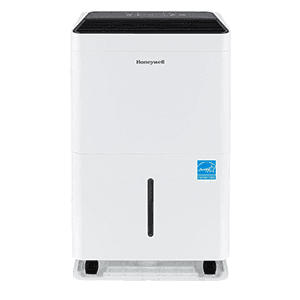
The refrigeration cycle of the TPFIT32WK is optimized for the high latent heat loads found in tropical Indian environments. Utilizing a robust rotary compressor, the system draws warm, saturated air across an evaporator coil cooled by R-410A refrigerant. This process effectively condenses 32 pints/day (~15.1 L/day) of liquid water from the air stream. In cities like Mumbai or Chennai, where ambient temperatures frequently range between 30 and 40 degrees Celsius, compressor efficiency is paramount. Unlike units designed for temperate climates, this compressor maintains its volumetric efficiency under thermal stress, ensuring that moisture extraction rates do not drop significantly as the room temperature rises, which is a common failure point in lower-quality domestic dehumidification equipment.
Selection of R-410A refrigerant within the TPFIT32WK reflects a commitment to modern thermodynamic standards suitable for India's high ambient conditions. R-410A operates at higher pressures than older refrigerants, allowing for a more compact heat exchanger design while maintaining superior heat transfer coefficients. This choice is critical because it enables the 320-watt system to handle the dense, moisture-laden air typical of a Goa monsoon without overloading the electrical circuit. The refrigerant's properties ensure that the cooling coils remain at a temperature consistently below the dew point, facilitating continuous condensation. Furthermore, the chemical stability of R-410A reduces the risk of long-term component degradation, making the internal refrigeration loop a reliable asset for years of seasonal operation.
Precision humidity control in the TPFIT32WK is managed by an onboard digital humidistat that monitors the environment in real-time. This sensor-driven system allows for an adjustable range of 30% to 90% RH, covering everything from sensitive server room requirements to general residential comfort. The engineering logic incorporates a specific latency period between sensor readings and compressor activation to prevent short-cycling, which would otherwise reduce the lifespan of the motor. For Indian users, this means the unit can accurately maintain a 50% RH target even when external humidity is fluctuating wildly during a rainstorm. This level of sensing precision is vital for protecting high-end electronics and musical instruments from the micro-corrosion that begins whenever indoor humidity exceeds the 60% threshold.
Thermal management is further enhanced by an automatic defrost mechanism, a crucial feature for the TPFIT32WK when operating in cooler Indian climates. In hill stations such as Munnar or Shimla, or even in air-conditioned rooms in Delhi, the evaporator coil temperature can drop below 41°F, leading to ice accumulation. When the internal sensor detects frost, the compressor cycles off while the fan continues to run, melting the ice before it can block the 200 CFM airflow. This prevents the loss of dehumidification capacity and protects the evaporator fins from physical damage. Without this automated cycle, the unit would eventually cease to function as an effective moisture extractor, leading to increased energy consumption and potential mechanical failure of the fan motor.
The air circuit of this Honeywell model is designed for a high-volume throughput of 200 CFM across its three-speed fan. This airflow rate is calculated to ensure that the entire volume of a 3,000 sq. ft. (~279 m²) area is processed frequently enough to maintain a uniform humidity gradient. The 9.9-pint reservoir is equipped with an auto shut-off float switch to prevent overflows, a necessary safeguard for domestic use. For unattended operation in high-moisture zones like basements or during the heavy rains of Kochi, the gravity-fed continuous drain port is the preferred engineering solution. By balancing fan speed against noise levels at 49 dB, the unit achieves a high moisture-removal-to-acoustic-impact ratio, suitable for both living areas and study rooms.
Physical construction of the 13.97 kg chassis incorporates high-grade polymers that resist the corrosive effects of salt-laden air in coastal Indian zones. The mobility provided by the caster wheels allows the unit to be deployed dynamically as moisture hot-spots appear, such as near damp bathroom walls or in walk-in wardrobes. Maintenance is simplified through a washable dust filter that prevents the internal coils from becoming fouled with debris, which would otherwise impair thermal exchange. Since energy consumption is relatively low at 320 watts, the primary long-term operational cost is simply the time taken for basic filter cleaning. Reliable, efficient, and physically resilient, this Honeywell unit stands as the definitive conclusion for anyone seeking an engineered solution to the persistent problem of tropical humidity.