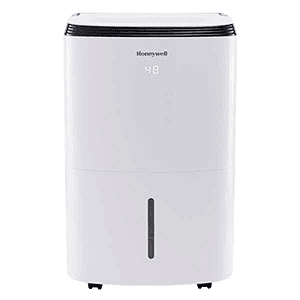
The thermodynamic performance of the TP70WKNR is centered on its 50 pints/day (~23.7 L/day) extraction capacity, achieved through a sophisticated refrigeration cycle. The rotary compressor is the primary driver, circulating R-410A refrigerant to chill the evaporator coils well below the dew point of the incoming humid air. In the Indian context, where ambient temperatures often exceed 35°C in cities like Kolkata or Chennai, the compressor must work harder to maintain the necessary temperature gradient. Unlike standard residential units, the engineering here optimizes heat exchange efficiency to ensure that moisture is condensed and collected even when the latent heat load is exceptionally high. This makes the unit far more effective at rapid moisture removal during the peak of the tropical monsoon season.
The choice of R-410A refrigerant in the TP70WKNR provides a significant advantage in terms of heat transfer coefficients and ozone depletion potential. In the high ambient heat of an Indian summer, R-410A operates at higher pressures compared to older R-22 systems, requiring more robust copper tubing and weld points within the chassis. This refrigerant allows for a more compact evaporator design while maintaining the high thermal conductivity needed to process 185 CFM of air. Engineers have balanced the refrigerant charge to ensure the system remains stable across a wide operating temperature range from 41°F to 89°F. This stability is crucial for maintaining consistent extraction rates without the risk of compressor overheating during extended run cycles.
Precise humidity control in the TP70WKNR is facilitated by an onboard digital humidistat capable of sensing relative humidity between 30% and 90%. In professional Indian environments like server rooms in Bengaluru or archives in Delhi, maintaining a specific 45% RH is critical to prevent hardware failure and paper degradation. The logic circuit within the unit calculates the delta between the ambient humidity and the user-defined setpoint, activating the compressor only when necessary to save energy. This precision prevents the over-drying of spaces, which can lead to wood cracking or respiratory discomfort. By offering a wide sensing range, the unit accommodates both the extreme 90% RH of a Goa monsoon and moderate commercial requirements.
Thermal management is further enhanced by an automatic defrost mechanism, a vital feature for the cooler, damp climates of Indian hill stations like Shimla or Munnar. When ambient temperatures drop toward the lower operating limit of 41°F, frost can accumulate on the evaporator coils, insulating them and reducing extraction efficiency. The system detects this frost buildup and temporarily halts the compressor while keeping the fan running to melt the ice. This ensures that the unit can continue to operate in air-conditioned rooms or during cold monsoon nights without mechanical failure. This engineering foresight allows for year-round utility across India's diverse microclimates, ensuring the machine remains functional in conditions that would cause standard dehumidifiers to lose significant pulling capacity.
The fluid dynamics of the unit are managed through a dual-speed fan motor delivering 185 CFM, balanced against a 14-pint water collection reservoir. In high-humidity zones like Kochi, where the 50-pint extraction rate is fully utilized, the internal tank will reach capacity approximately every 6 to 8 hours. To mitigate the need for manual intervention, the engineering includes a dedicated continuous drainage port. This allows users to connect a standard garden hose for direct gravity-fed drainage into a floor trap. The auto shut-off float switch acts as a secondary safety layer, preventing overflows if the tank is not emptied. This combination of high-volume airflow and flexible drainage options makes the unit suitable for large 3BHK layouts.
Structurally, the 19.28 kg chassis is supported by heavy-duty caster wheels to facilitate easy relocation across tiled or marble Indian flooring. Maintenance is streamlined through a washable dust filter that protects the internal coils from the particulate matter common in urban Indian air. A dedicated filter indicator light alerts the user when the airflow is being restricted, ensuring the 710-watt power draw remains efficient. Consistent cleaning of the filter is the primary requirement for maintaining the 185 CFM air throughput and preventing strain on the rotary compressor. By adhering to a simple maintenance schedule, the unit provides a long-term solution for large-scale moisture control in both residential and light commercial sectors. This engineering reliability defines the TP70WKNR.