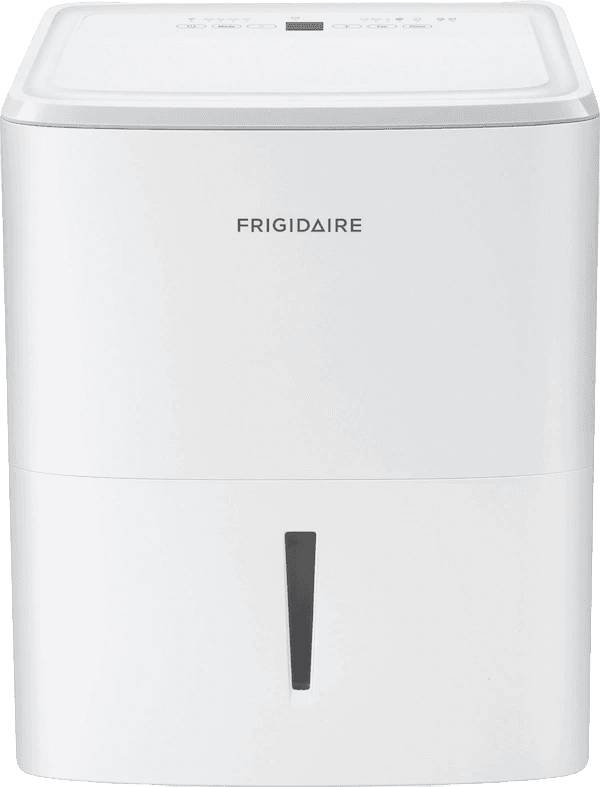
The refrigeration cycle within the FHDD3534W1 is optimized for high-latent-heat environments. Utilizing a rotary compressor, the unit draws humid air over cold evaporator coils, reducing the air temperature below the dew point to condense moisture at a rate of 35 pints/day (~16.6 L/day). In the Indian context, where ambient temperatures often exceed 30°C, compressor efficiency is paramount. Unlike reciprocating models that may struggle with heat dissipation, the rotary design provides a continuous, smooth compression cycle that handles the high pressure of R-32 refrigerant effectively. This ensures that even during a relentless Goa monsoon, the unit maintains its extraction capacity without overheating, providing a stable dehumidification performance that protects the building envelope from saturated air conditions.
The choice of R-32 refrigerant in the FHDD3534W1 reflects a commitment to thermodynamic efficiency and environmental standards. R-32 has a higher refrigeration capacity and thermal conductivity compared to R-410A, which is critical when operating in the high ambient temperatures of Chennai or Kolkata. Its lower viscosity reduces pressure drops in the heat exchangers, allowing the 370-watt system to move heat more effectively. From an engineering perspective, R-32's ability to operate at higher pressures without significant energy penalties makes it ideal for the compact heat exchangers found in portable units. This refrigerant ensures that the cooling coils remain at the precise temperature needed for maximum moisture transition, maintaining the 35-pint benchmark consistently across varying tropical humidity profiles.
Humidity sensing is managed by a high-precision digital humidistat, offering an operational range from 35% to 85% RH. The FHDD3534W1 employs a sensor with minimal latency, ensuring the compressor cycles on or off promptly as room conditions change. In Indian residential settings, maintaining 50-60% RH is the gold standard for comfort and health. However, in specific applications like home server rooms in Bangalore or archives in Kochi, the ability to lock in a 45% RH target is vital. The controller's logic includes an auto-restart function, which is indispensable given the frequency of power fluctuations in many Indian cities. This ensures that the device resumes its last programmed setting immediately after power restoration, maintaining environmental stability without manual intervention.
Thermal management is critical during the cooler, damp months in hill stations like Munnar or during night-time operation in AC-chilled rooms. When ambient temperatures drop toward the lower 41°F limit, frost can accumulate on the evaporator coils, insulating them and halting the dehumidification process. The FHDD3534W1 utilizes an auto-defrost mechanism that detects ice buildup and cycles the compressor off while keeping the fan running to melt the frost. This engineering feature prevents mechanical strain and ensures the unit can operate safely in diverse Indian microclimates. Without this capability, the unit would effectively become a block of ice in cooler conditions, rendering it useless for moisture control during the transition from the monsoon to the winter season.
The air circuit and drainage systems are designed for high-volume throughput. With a median airflow of 118 CFM, the unit moves enough air to cycle the volume of a 1200 sq. ft. (~111 m²) space multiple times per hour. The 16.9 pints tank features an auto shut-off float switch to prevent overflow, a critical safety feature for high-humidity zones like coastal Goa. At peak extraction, the tank may require emptying every 8 to 12 hours. For truly unattended operation, the integrated continuous drain port allows users to bypass the tank using a standard garden hose. This is particularly useful in Kerala's backwater regions, where the sustained 85%+ RH can fill the internal reservoir faster than in drier inland regions.
Construction and maintenance protocols focus on long-term reliability. The 18.60 kg chassis is supported by heavy-duty Caster wheels, facilitating easy movement across tiled or marble flooring common in Indian homes. Maintenance is primarily centered on the mesh filter, which protects the internal coils from dust and pet dander. In dusty urban environments like Delhi or parts of Mumbai, cleaning the filter every two weeks is essential to prevent a drop in the 118 CFM (Med) air flow. Since the unit operates on 370 Watts, it remains an energy-efficient appliance for continuous use. The build quality, combined with a 1-year limited warranty, positions the FHDD3534W1 as a robust technical asset for managing the unique atmospheric challenges of the Indian subcontinent.