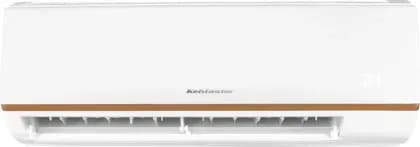
Energy performance of the KAS-X12310B is anchored by its BEE 2025 3 Star certification and industry-standard energy efficiency. Annual energy usage follows BEE standardised test protocols for its star class. The TechVanced+ Inverter employs Variable Frequency Drive (VFD) control, modulating compressor RPM continuously between 15 Hz and 120 Hz to match real-time thermal load — eliminating the energy-intensive stop-start cycles of fixed-speed motors.
The KAS-X12310B is built around 100% copper condenser coils, which outperform aluminium alternatives with 40% higher corrosion resistance — a critical durability metric for India's coastal zones, humid interiors, and regions with salt-laden particulate air. Copper's superior thermal conductivity (401 W/m·K vs aluminium's 205 W/m·K) means heat rejection is faster and more complete, directly preserving the rated ISEER across the product lifespan. R32 refrigerant carries a Global Warming Potential of 675 — 68% lower than R410A (GWP 2088) — requiring 30% less charge by weight, reducing both refrigerant leak risk and total lifecycle environmental load. Multi-stage filtration (Dust, PM 2.5) captures PM2.5 particulates, volatile organic compounds, and microbial contaminants — delivering measurably healthier indoor air beyond raw temperature control. 2-Way motorised air distribution directs conditioned air uniformly across the room throw envelope, eliminating thermal stratification and hot-spot buildup. The 10-Year compressor warranty signals the manufacturer's projected confidence in mechanical durability under India's sustained 10–12 hour daily summer load patterns.
Standard power management rated at 230V ensures safe operation. Auto-restart with non-volatile memory ensures the KAS-X12310B resumes at the last-set temperature and mode after power interruption — a functional reliability requirement for Indian grid zones experiencing 4–10 daily outages during peak summer months. Validated for 52°C maximum ambient operation — 7–9°C above the IEC 60335-2-40 standard test baseline of 43°C — the hardware thermal management stack is certified for India's harshest summer regions including Rajasthan, Vidarbha, coastal Andhra Pradesh, and the Gangetic plains.