

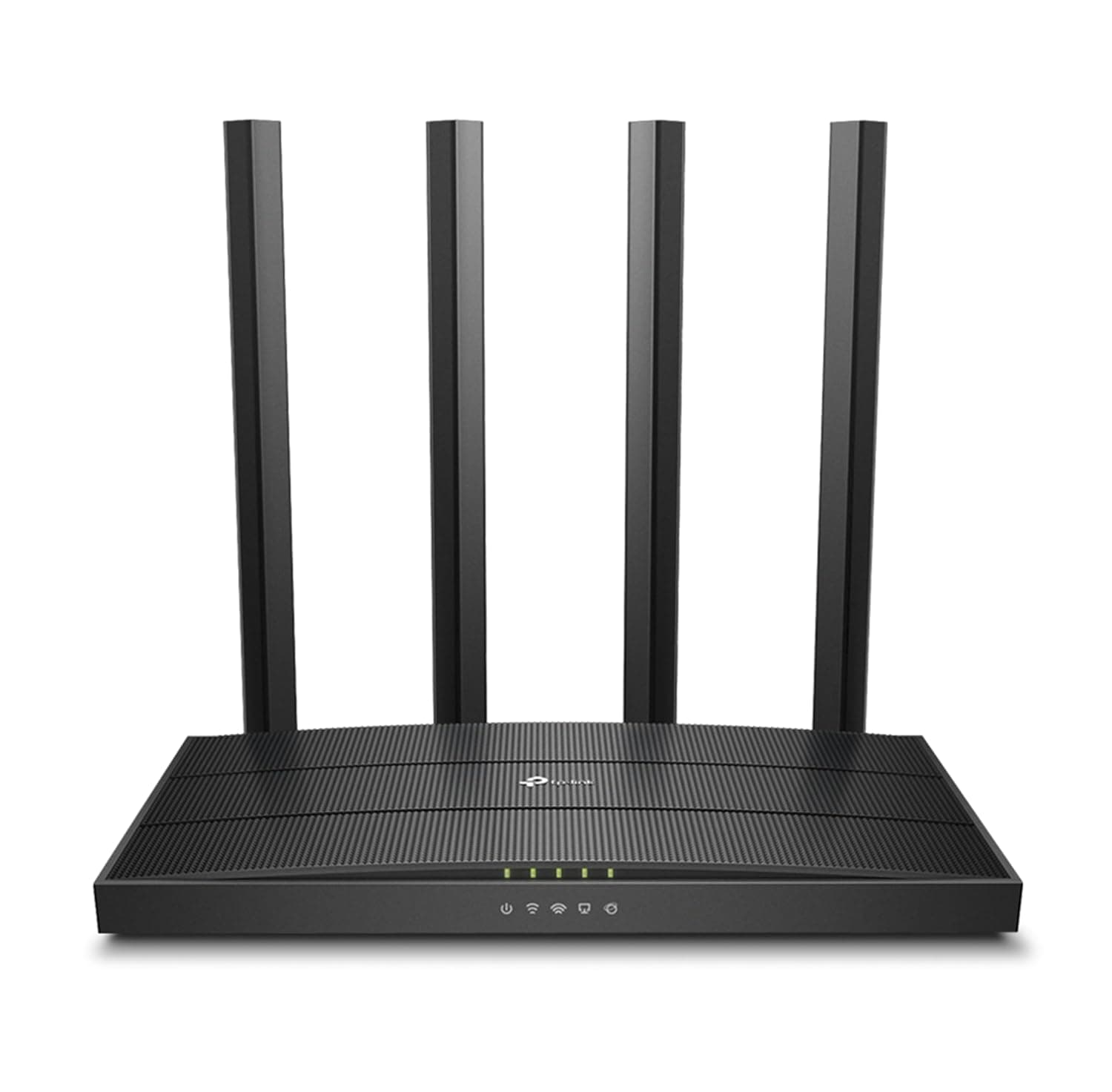
The TP-Link Deco E4 is a budget-friendly entry into the mesh networking world, specifically engineered to solve the 'dead zone' problem prevalent in Indian apartments characterized by thick RCC (reinforced concrete) walls. This 3-pack system utilizes Wi-Fi 5 (802.11ac) technology to provide a combined throughput of 1200 Mbps—comprising 300 Mbps on the 2.4 GHz band and 867 Mbps on the 5 GHz band. Covering up to 3000 sq ft, it is the ideal choice for 3BHK and 4BHK flats or multi-floor duplexes where a standard ISP-provided router from Jio Fiber or Airtel Xstream fails to penetrate distant bedrooms or balconies. A critical technical detail for the Indian market is the inclusion of 10/100 Mbps Ethernet ports. While it seamlessly integrates with ACT Fibernet or BSNL FTTH, it is optimized for internet plans up to 100 Mbps. For households with 200 Mbps+ plans, the physical ports will act as a bottleneck. However, for the majority of Indian families focusing on Netflix 4K streaming, Zoom calls for WFH, and managing up to 80 smart devices, the Deco E4 offers a rock-solid, seamless roaming experience. It supports MU-MIMO to handle multiple devices simultaneously and features intuitive parental controls, allowing parents to restrict social media or gaming during study hours. Setup is handled entirely via the Deco app, making it accessible for non-technical users seeking a 'set it and forget it' networking upgrade.
Quick Answer
The TP-Link Deco E4 (3-pack) is the best value-for-money mesh WiFi system for large Indian homes up to 3000 sq ft. It is perfect for users with internet plans up to 100 Mbps on Jio or Airtel who face signal drops due to thick concrete walls.
If you live in a 3BHK apartment and are frustrated by WiFi dead zones in your back rooms, the TP-Link Deco E4 is the most cost-effective solution available. It is perfect for WFH professionals and families with multiple streaming devices. However, if you are paying for a premium 300Mbps or 1Gbps fiber plan, you should look at the Deco M4 or Deco X-series instead to avoid the 100Mbps hardware bottleneck of the E4's Ethernet ports.