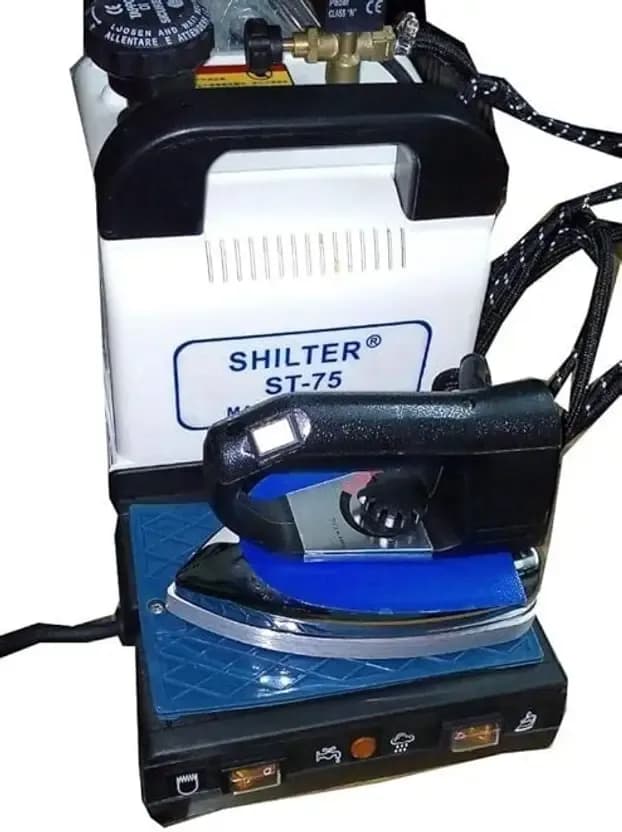
The engineering of the Non Stick soleplate is tailored for the high friction typically encountered when pressing Indian textiles. By utilizing a specific polymer coating, the soleplate minimizes drag on delicate silk borders and heavy cotton embroidery, ensuring heat is distributed across the entire surface without hot spots. The 1000W heating element is calibrated to reach operational temperatures quickly, reducing the time required for thermal recovery between garments. This rapid heat-up cycle is particularly effective when dealing with stubborn creases in starched linen or thick polyester blends. The scratch-resistant surface maintains its integrity even after repeated contact with metal buttons or zippers on trousers, ensuring a smooth glide remains consistent over years of use.
Temperature regulation is managed through a mechanical thermostat dial that offers three distinct fabric modes for silk, cotton, and synthetics. This precision is vital for Indian wardrobes that often mix natural and man-made fibers, such as rayon kurtas or polyester school shirts. The thermostat's bimetallic strip is engineered for high sensitivity, cutting off current exactly when the target temperature for the selected mode is reached. This prevents scorching on heat-sensitive fabrics while providing the sustained high temperature necessary for crisp creases on thick cotton sarees. By aligning the thermal output with the specific heat capacity of different materials, the iron ensures that delicate threads are never exposed to excessive thermal stress during the pressing process.
The safety architecture is built to withstand the unique electrical environment of Indian households, where voltage fluctuations of 220–240V are common. The unit integrates a dual-layer safety system consisting of a thermal fuse and overheat protection circuitry. If the internal temperature exceeds safe operating limits, the thermal fuse acts as a physical break in the circuit, preventing potential fire hazards or damage to the internal wiring. Furthermore, the shockproof plastic body provides an insulation layer that protects the user from electrical leakage. These features, combined with ISI certification standards, ensure that the unit operates reliably during extended ironing sessions, providing a robust defense against both mechanical failure and human error during daily household chores.
Ergonomics play a critical role in the design, with a total weight of 0.8kg making it easy to maneuver across large surface areas like bedsheets or long sarees. The handle is contoured to provide a secure grip, reducing the muscle fatigue often associated with heavier traditional irons. A 1.5-meter power cord provides a significant range of motion, allowing for flexible positioning relative to wall sockets without the need for extension cables. The cord swivel mechanism prevents tangling and reduces wear at the entry point of the dry iron. Collectively, these design choices establish the steam press shilterplate1 as a balanced, efficient tool that meets the rigorous demands of regular Indian garment care while ensuring long-term user comfort.