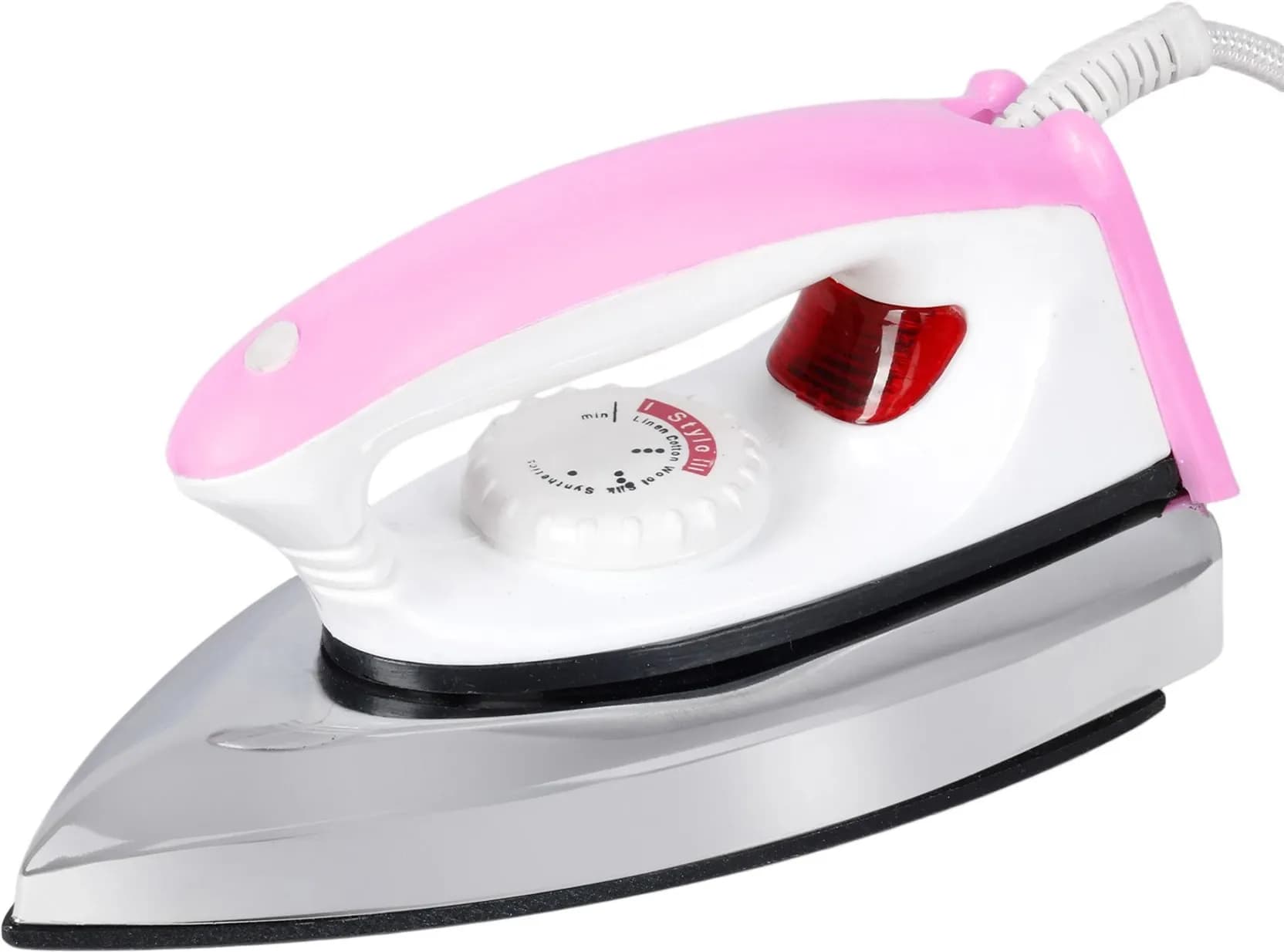
The non-stick coating applied to the soleplate of this dry iron is engineered to minimize friction against various textile surfaces. This specialized layer prevents the base from sticking to delicate prints or synthetic fibers, which is essential when pressing silk kurtas or polyester blends. The 1000W heating element is strategically positioned to ensure that thermal energy is distributed uniformly across the entire surface area. By maintaining a consistent temperature across the plate, the dry iron prevents hot spots that could potentially scorch thinner fabrics. This thermal uniformity allows for smooth gliding over intricate embroidery and buttons commonly found on Indian ethnic garments, ensuring a flat finish. Temperature management is handled via a manual thermostat dial that offers dedicated settings for cotton and synthetic materials. This mechanical control system allows the user to fine-tune the heat output based on the specific resistance of the fabric fibers. For instance, the cotton mode provides the high-intensity heat necessary to penetrate thick linen or heavy cotton sarees, effectively breaking down tough wrinkles. Conversely, the synthetic setting reduces the thermal output to safely press rayon and other heat-sensitive materials. This precision in temperature mapping ensures that the dry iron remains versatile enough for a diverse Indian wardrobe, protecting the integrity of both traditional and modern clothing styles effectively. The internal safety architecture is designed to handle the electrical fluctuations common in the Indian 220–240V power grid. An integrated thermal fuse acts as a critical failsafe, physically breaking the circuit if internal temperatures exceed safe operating limits. This is complemented by an overheat protection mechanism that cycles the power to maintain the selected temperature without risk of fire or hardware damage. Furthermore, the ISI certification confirms that the dry iron has undergone rigorous testing for electrical insulation and grounding. These safety features are vital for domestic environments where multiple appliances operate simultaneously, providing a reliable barrier against electrical surges and preventing accidents. Ergonomic considerations are evident in the 0.8 kg lightweight chassis, which is balanced to provide sufficient downward pressure without requiring excessive physical effort from the user. The handle is contoured to offer a secure grip, reducing the strain on the palm and wrist during repetitive motions. A 1.5-meter power cord provides ample flexibility, allowing the user to reach the full length of an ironing board or a large table used for pressing sarees. The overall design prioritizes maneuverability, making it easy to navigate around collars, cuffs, and pleats. Ultimately, the 7.DRY IRON 1000 WATT serves as a robust and user-friendly tool that balances technical safety with practical handling.