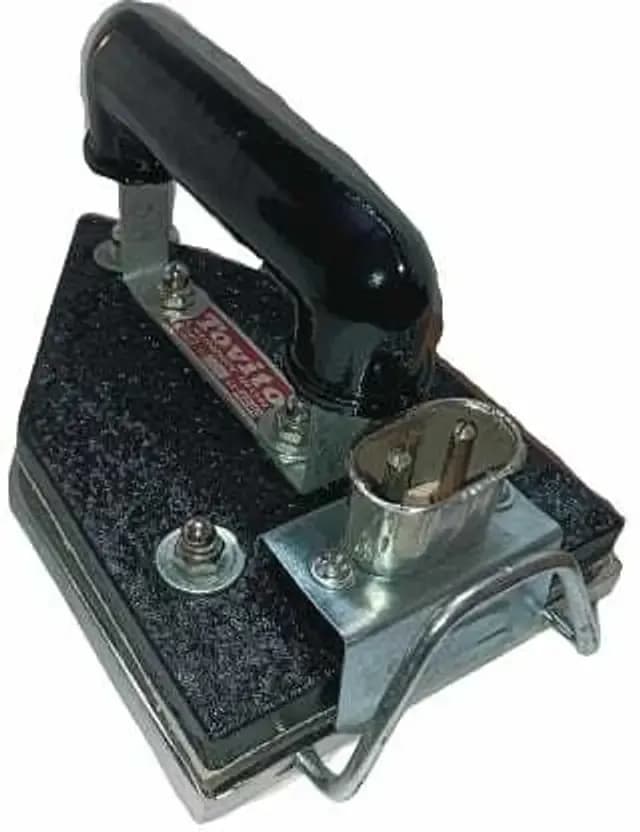
The Teflon soleplate engineering on this dry iron ensures a low coefficient of friction against textile fibers. This specific material application prevents the adhesion of starch or synthetic resins often found in Indian garment finishes. Heat distribution remains uniform across the surface, eliminating cold spots that cause uneven pressing. The coating is chemically bonded to the base metal to provide scratch resistance when navigating around metal buttons on office shirts or intricate embroidery on silk kurtas. Because the unit operates at 0, the heat-up cycle is tuned for thermal stability rather than rapid fluctuating peaks. This engineering choice extends the life of the heating element significantly compared to high-wattage alternatives.
Thermostatic control is managed via a mechanical dial that correlates directly with the thermal properties of common fabrics. This dry iron offers specific settings for polyester blends, silk, and heavy cotton, allowing the user to select the exact thermal intensity required. By mapping the dial to these fabric modes, the internal thermostat maintains a tight temperature tolerance, which is critical for preventing fiber melt in delicate rayon or nylon garments. The 0 power draw ensures that once the desired temperature is reached, the thermal inertia of the thick soleplate keeps the heat steady. This precision is vital for the multi-fabric Indian wardrobe, where a single ironing session may include various materials.
The safety architecture is built to handle the variations in Indian household electrical grids. An integrated auto shut-off mechanism works alongside a high-limit thermal fuse to disconnect power if the internal temperature exceeds safe operating parameters. This dual-layer protection is essential for preventing domestic accidents and scorched fabrics if the unit is left unattended. The dry iron carries ISI certification, confirming it meets rigorous national standards for electrical insulation and earthing. Such engineering safeguards are particularly important when dealing with the 220–240V supply common in India, as they mitigate the risks associated with sudden voltage spikes or prolonged usage during heavy laundry days in large family households.
Ergonomic considerations are evident in the handle design and the 3.4 weight distribution of the unit. The heavy mass of the soleplate provides the necessary downward force to flatten stubborn wrinkles in linen and thick cotton without requiring the user to apply excessive manual pressure. This reduces arm fatigue during long sessions involving multiple school uniforms. The 0 cord reach is designed to provide sufficient movement around the ironing board without tangling, while the heel rest offers a stable vertical position between garments. Ultimately, the 3.Royaltech TeflonShoe MultiModel provides a balanced combination of physical weight and surface glide, making it a dependable choice for maintaining a crisp, professional appearance in any Indian household.