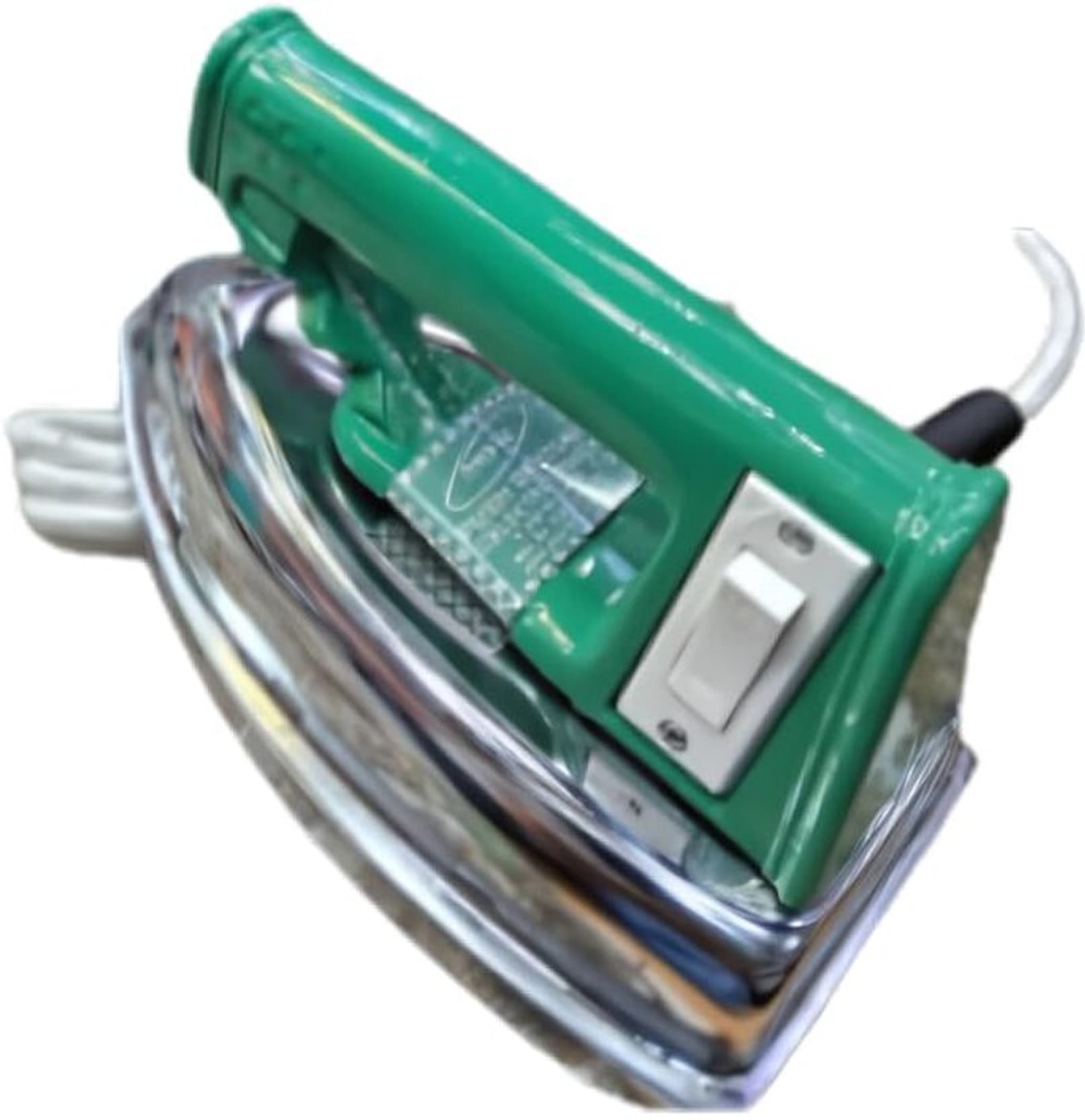
The engineering of the non-stick soleplate is central to the performance of this dry iron. The coating is applied using a high-temperature bonding process that ensures the surface remains slick even when used on starched cotton sarees. This low-friction exterior prevents the accumulation of fabric fibers, which often causes dragging or scorching on inferior plates. Within the base, the 750W heating element is strategically routed to eliminate cool zones, ensuring that the edges of the plate reach the same temperature as the center. This uniformity is essential for pressing heavy seams and thick embroidery found on traditional Indian garments. Investing in this precision-engineered surface ensures that your most expensive clothes are protected from accidental heat damage.
Precision temperature management is handled by a high-sensitivity bimetallic thermostat connected to the manual control dial. This system allows the user to switch between the three primary fabric modes—cotton, synthetic, and silk—with repeatable accuracy. For Indian wardrobes that contain a mix of natural and man-made fibers, this granular control is vital to prevent fiber degradation in delicate kurtas. The thermostat monitors the soleplate temperature in real-time, engaging the heating element only when necessary to maintain the user's selected thermal profile. This cycling process not only protects the fabric from excessive heat but also optimizes power consumption during long ironing sessions. Such mechanical reliability makes this dry iron a standout choice for those who value fabric longevity.
The safety architecture of this iron is built to withstand the realities of Indian electrical grids, which can experience voltage spikes. By achieving ISI certification, the manufacturer guarantees that the internal wiring and shockproof housing meet stringent national safety standards. The thermal fuse acts as a permanent cut-out if the primary thermostat fails, preventing the risk of a domestic fire. Additionally, the overheat protection system automatically regulates the current to keep the soleplate within safe operating parameters. These engineering choices provide a redundant safety net, ensuring that even if the iron is left unattended for a short period, the risks are significantly mitigated. Choosing an iron with these specific safety protocols is essential for modern high-density residential living.
Ergonomic considerations are evident in the weight distribution and handle geometry of the unit. At 1.2 kg, the iron provides enough gravitational pressure to flatten creases in thick cotton school uniforms without requiring the user to apply excessive physical force. The handle is shaped to fit the natural contours of the hand, reducing strain during extended use. Furthermore, the 1.8-meter cord length provides sufficient mobility to reach the full length of a saree on a standard ironing board. The cord also features a reinforced strain relief at the entry point to prevent fraying over time. Consequently, the 5.Upgraded Model represents a balanced intersection of ergonomic comfort and functional durability for the daily demands of an Indian household.