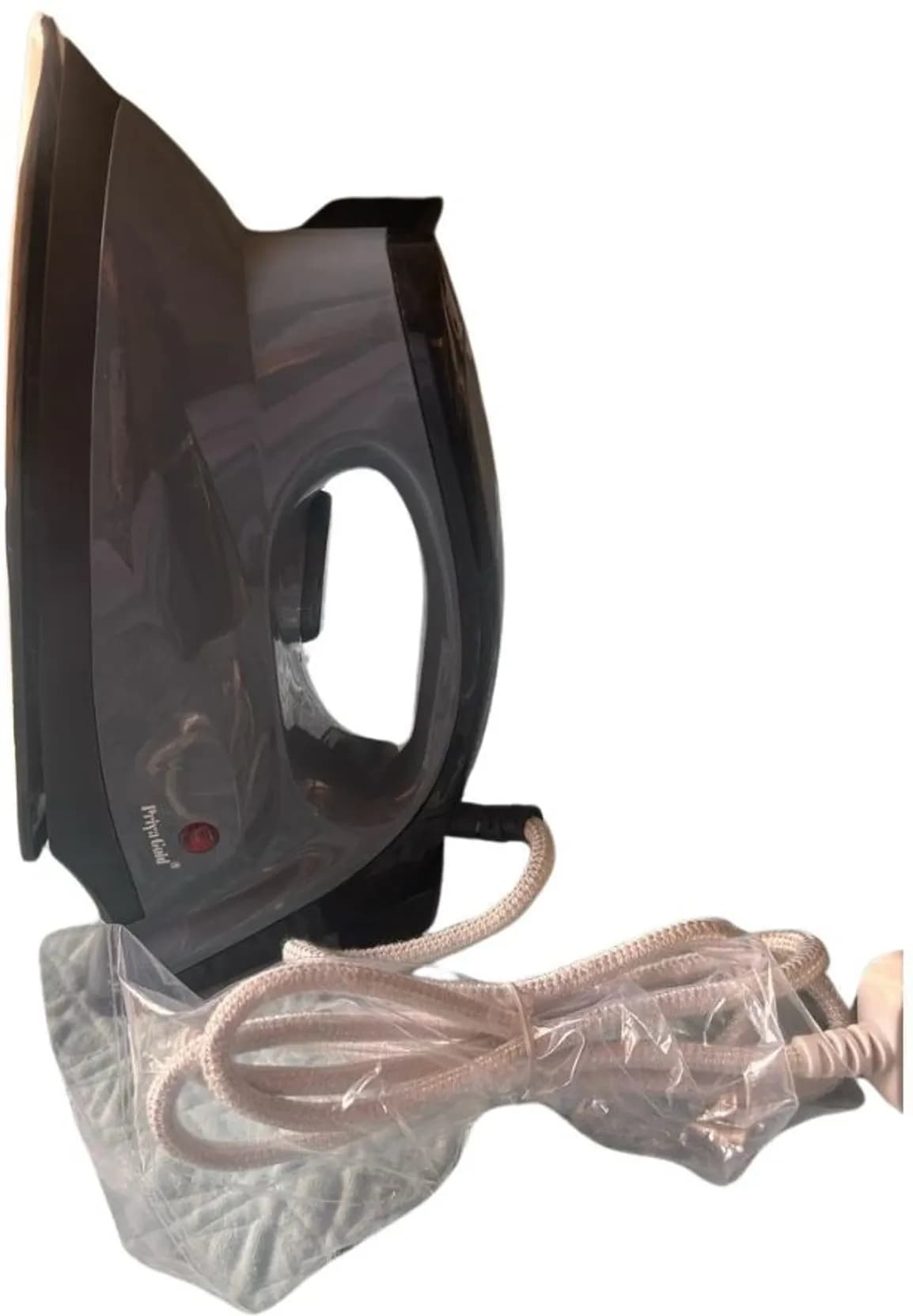
The Teflon-coated soleplate is engineered to provide a low-friction interface between the heating element and the fabric. Unlike traditional metallic surfaces, this non-stick layer prevents the accumulation of starch or synthetic residues that often ruin clothes. The heat distribution is tuned for uniformity, ensuring that no hot spots develop during operation. This is particularly vital when pressing around buttons on office shirts or delicate embroidery on cotton sarees, where uneven heat can cause damage. The 1000W power input ensures that the base reaches the desired thermal state rapidly, maintaining a steady heat reservoir that compensates for the cooling effect of damp or thick fabrics during the ironing process.
Precision thermal control is achieved through a bi-metallic thermostat that responds instantly to the user's input via the adjustable dial. Each of the three fabric modes—silk, cotton, and synthetic—is calibrated to specific temperature ranges that respect the fiber's melting point. For Indian wardrobes containing mixed-fabric blends and varying thread counts, this accuracy is essential. Silk kurtas require a gentle, lower heat, while cotton necessitates a higher temperature to break down stubborn wrinkles. The internal switching mechanism is designed for thousands of cycles, ensuring that the temperature remains consistent over the 1-year warranty period, preventing the gradual drift in heat accuracy common in lower-quality dry irons.
The safety infrastructure is specifically designed to handle the nuances of the 220–240V Indian electrical grid. An integrated thermal fuse acts as a final fail-safe, physically breaking the circuit if the thermostat fails and temperatures spike dangerously. Furthermore, the auto shut-off mechanism provides a secondary layer of protection for busy households, reducing fire risks if the iron is accidentally left connected to power. ISI certification ensures that the internal wiring, insulation, and shockproof body meet national standards for consumer safety. These features work collectively to mitigate risks associated with voltage fluctuations and human error, making it one of the safest options for families with children or elderly users.
Beyond the internal components, the physical design focuses on user comfort and operational efficiency. The 0.8kg weight is balanced centrally, allowing for natural movement without straining the wrist, which is a significant advantage during long sessions of ironing school uniforms. The 1.8-meter power cord offers a generous range of motion, reducing the need for extension boards in smaller Indian rooms. The handle is contoured to provide a secure grip, even during rapid movements. Concluding the analysis, the 1 1000w represents a focused engineering effort to combine high-thermal efficiency with the highest standards of household safety, resulting in a product that serves the daily needs of Indian consumers reliably.