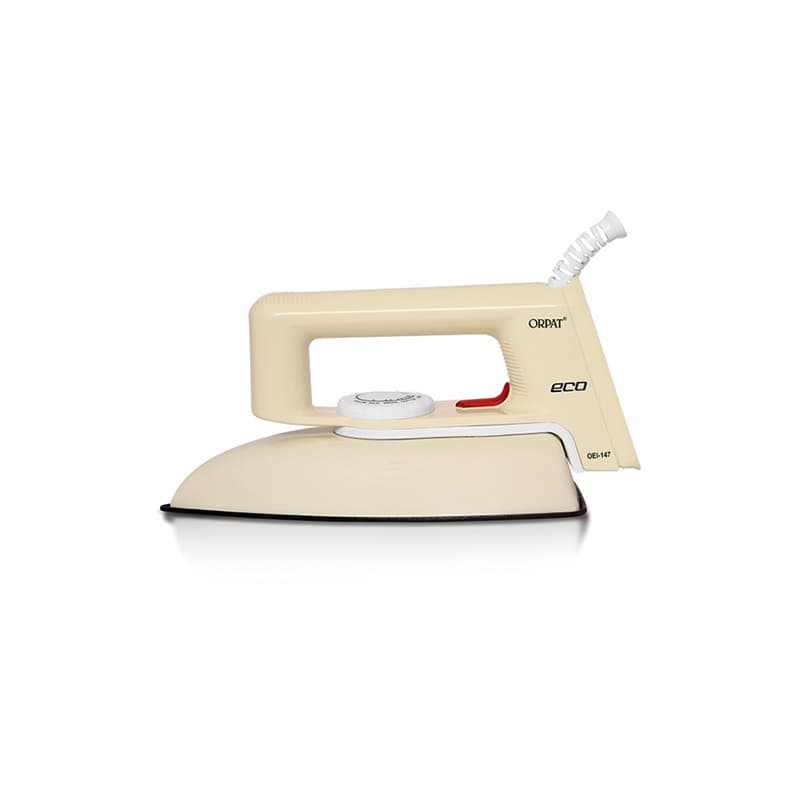
The non stick soleplate of this dry iron is engineered to minimize friction across textured fabrics such as handloom cotton and embroidered silk kurtas. By utilizing a specific coating, it prevents the localized melting often associated with lower-quality irons on polyester blends. The 1000 heating element is positioned to ensure uniform heat distribution, eliminating cold spots that can cause uneven creasing. This thermal consistency is vital when working with school uniforms where crisp edges are required. The scratch-resistant nature of the surface ensures that contact with metal buttons or zippers does not degrade the glide quality over time, maintaining high performance across years of domestic use.
Temperature management is facilitated through a manual dial mapped to seven distinct fabric modes including silk, cotton, wool, synthetic, linen, rayon, and nylon. Each setting corresponds to a calibrated thermal window designed to protect the integrity of the textile fibers. For instance, the silk setting maintains a lower, stable heat to prevent scorching, while the cotton mode utilizes the full potential of the 1000 power draw for deep crease penetration. This granularity is essential for the diverse Indian wardrobe, which often mixes delicate rayon tops with heavy linen trousers, requiring an iron that can transition between heat levels with speed and precision.
The safety architecture is centered around ISI certification, ensuring the dry iron meets rigorous national standards for electrical appliances. It incorporates a thermal fuse and overheat protection mechanism that automatically interrupts the circuit if internal temperatures exceed safe operating limits. This is particularly important in the context of Indian household electrical grids where voltage spikes can occur. The shockproof body provides an additional layer of user protection, ensuring the 220–240V input remains safely contained. These features work in tandem to prevent fire hazards and internal component damage, making the unit a reliable choice for families who prioritize safety alongside performance during daily chores.
Ergonomic considerations are evident in the 1.2 kg weight distribution, which provides sufficient downward pressure to remove wrinkles from heavy cotton sarees without requiring excessive physical effort from the user. The handle is contoured for a secure grip, reducing hand fatigue during extended sessions involving multiple office shirts. A 1.8-meter cord allows for significant movement around the ironing board, preventing the need for awkward extension cords in most room layouts. Ultimately, the 1.OEI 147 ECO combines these physical attributes with reliable heating to serve as a robust solution for the specific ironing demands found in typical Indian homes, ensuring clothes look pristine.