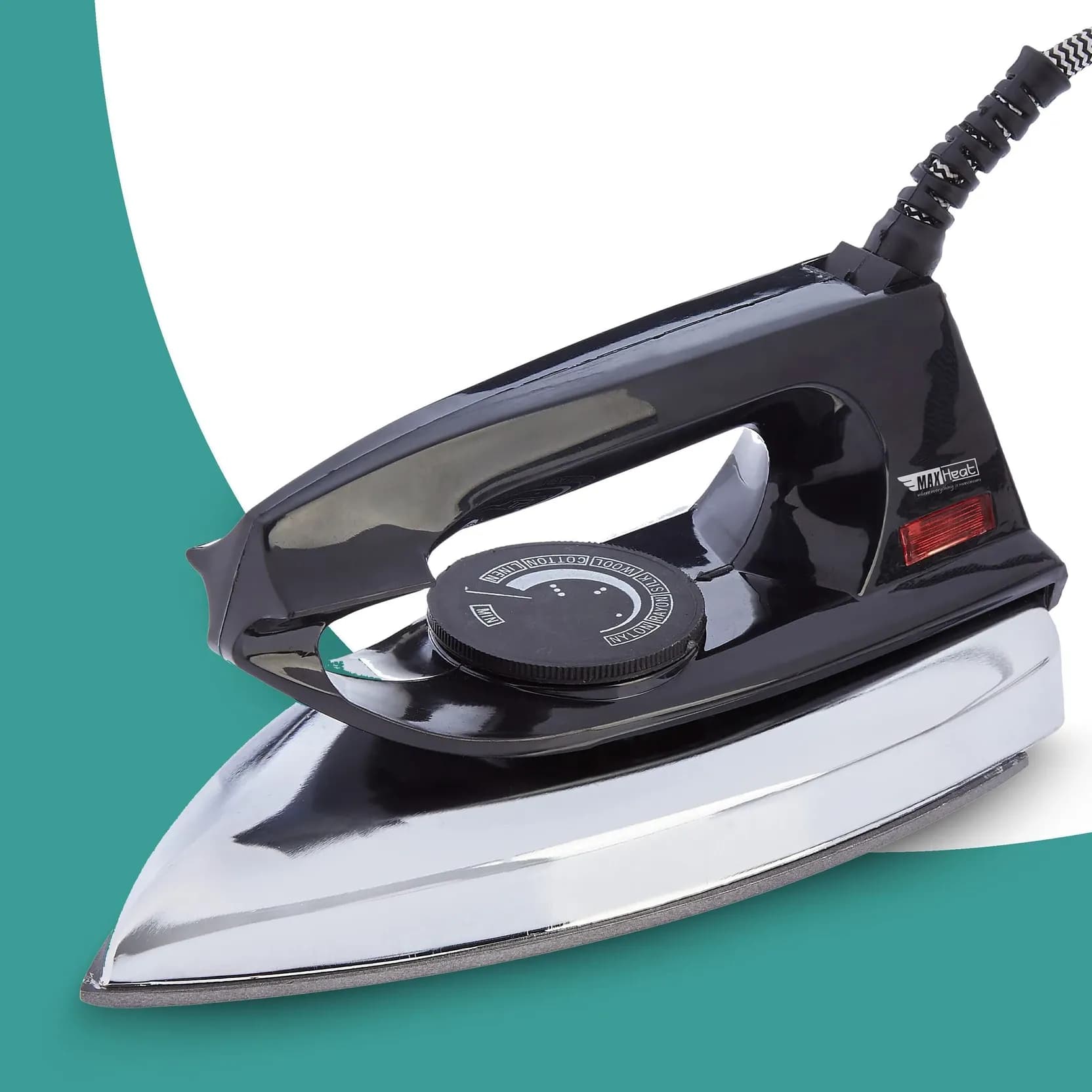
The engineering of the aluminium soleplate is a critical factor in the dry iron's ability to maintain thermal stability during operation. Aluminium is chosen for its high thermal conductivity, allowing the 750W heating element to reach the desired temperature in under a minute. This material ensures that heat is distributed uniformly across the entire surface area, preventing hot spots that could damage sensitive fabrics like silk kurtas. Furthermore, the soleplate is designed with a specific level of scratch resistance, allowing it to navigate over plastic buttons on office shirts and metallic zippers on school trousers without sustaining surface damage. This careful selection of materials directly contributes to the dry iron's long-term performance.
Temperature precision is managed through a bimetallic thermostat system that coordinates with the adjustable dial. Each of the three fabric modes—silk, cotton, and synthetic—corresponds to a specific temperature threshold designed to optimize wrinkle removal without exceeding the fabric's melting point. For instance, the cotton setting allows for higher heat density to penetrate thick fibres, while the silk setting restricts thermal output to protect delicate proteins in the fabric. This mapping is essential for Indian wardrobes that often contain a mix of natural and man-made fibres. By providing predictable heat levels, the dry iron gives users total control over their garment care, ensuring every garment receives specific thermal treatment.
The safety architecture is specifically designed to accommodate the electrical environment of Indian households, where voltage fluctuations between 220V and 240V are common. The inclusion of an ISI-certified thermal fuse acts as a final fail-safe, cutting off power permanently if the internal temperature exceeds a critical limit due to a component failure. Additionally, the auto shut-off mechanism engages to prevent overheating if the dry iron is left unattended for too long in a stationary position. This multi-layered approach to safety, combined with a shockproof body, minimizes the risk of electrical hazards or accidental fires. For families with children, these engineering safeguards provide a necessary layer of protection that goes beyond basic functionality.
Ergonomics play a significant role in the daily usability of this dry iron, particularly during extended ironing sessions involving multiple loads of laundry. The handle is shaped to fit comfortably in the palm, reducing strain on the wrist and fingers. Weighing only 0.4 kg, the unit is incredibly easy to maneuver, allowing the user to reach tight corners around collars and cuffs with minimal effort. The 1.5-meter cord provides a practical radius of movement, ensuring the user is not tethered too closely to a power outlet. Every design choice, from the weight to the cord length, focuses on reducing user fatigue. Consequently, the Regular stands out as a functional ergonomic tool for households.