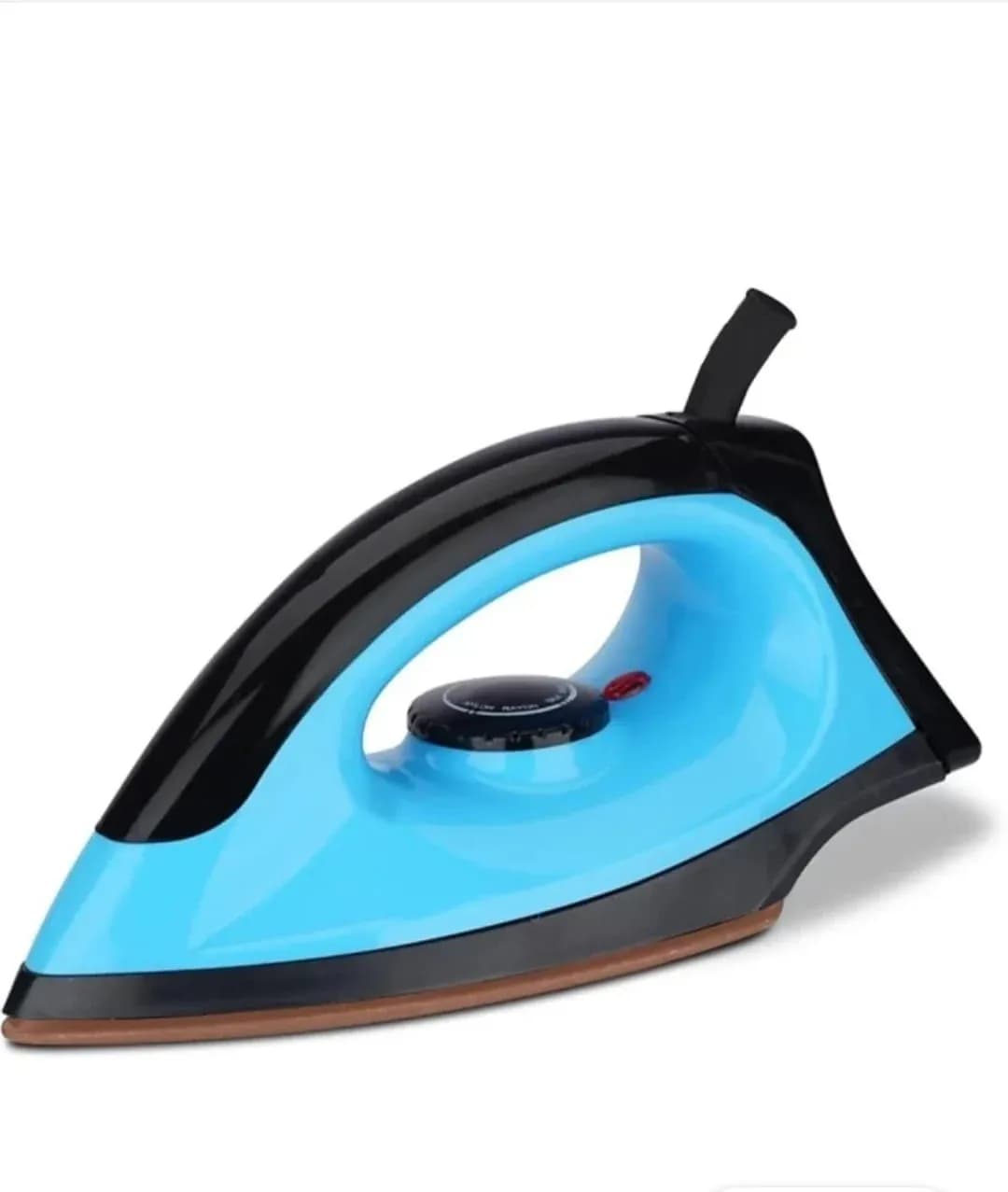
The engineering of the Non Stick soleplate on this dry iron is centered on minimizing friction across natural and synthetic fibers. By utilizing a specialized coating, the unit prevents the accumulation of starch residues commonly found when pressing cotton sarees or starched school uniforms. The heating element is precisely calibrated to distribute thermal energy uniformly across the entire surface area, eliminating cold spots that can cause uneven results. This uniform heat distribution is critical when dealing with delicate silk kurtas that require consistent, low-level warmth to remove creases without damaging the weave. The scratch-resistant surface ensures that metal buttons on office shirts do not compromise the glide quality.
Temperature regulation is managed through a tactile manual dial that offers distinct settings for the two primary fabric modes: cotton and synthetic. This mechanical thermostat system is engineered for high accuracy, ensuring the internal heating coil cycles off once the desired temperature threshold is reached. For Indian households with mixed-fabric wardrobes, this precision is vital. Pressing a heavy cotton dupatta requires significantly higher thermal output than a polyester blend shirt, and the thermostat prevents the soleplate from exceeding safe limits. This granular control protects against accidental fabric burns while ensuring enough heat is available to tackle stubborn wrinkles in thick denim or heavy linen fabrics.
The safety architecture of this dry iron is designed to withstand the typical electrical environment of Indian homes, where voltage fluctuations between 220V and 240V are common. The integration of an ISI certified thermal fuse acts as a critical fail-safe, cutting off power if the internal temperature exceeds safe parameters. Complementing this is the overheat protection system, which manages the duty cycle of the heating element during extended ironing sessions. These safety layers are essential for preventing household fires and protecting internal circuitry from power spikes. By adhering to strict ISI standards, the dry iron ensures the exterior housing remains cool to the touch, providing a secure user experience.
Ergonomic considerations are evident in the 1.0 kg weight distribution, which provides enough downward pressure to flatten creases in office shirts without requiring excessive effort. This weight is specifically balanced to handle the resistance of heavy cotton fabrics while remaining manageable for quick touch-ups on lightweight synthetic scarves. The 1.5-meter cord length offers sufficient mobility around standard ironing tables, reducing the need for extension cords in most Indian layouts. The handle is contoured to provide a firm grip, reducing hand fatigue during large batches of laundry. Collectively, these design choices establish the unit as a reliable tool for maintaining a well-pressed appearance in any domestic setting.