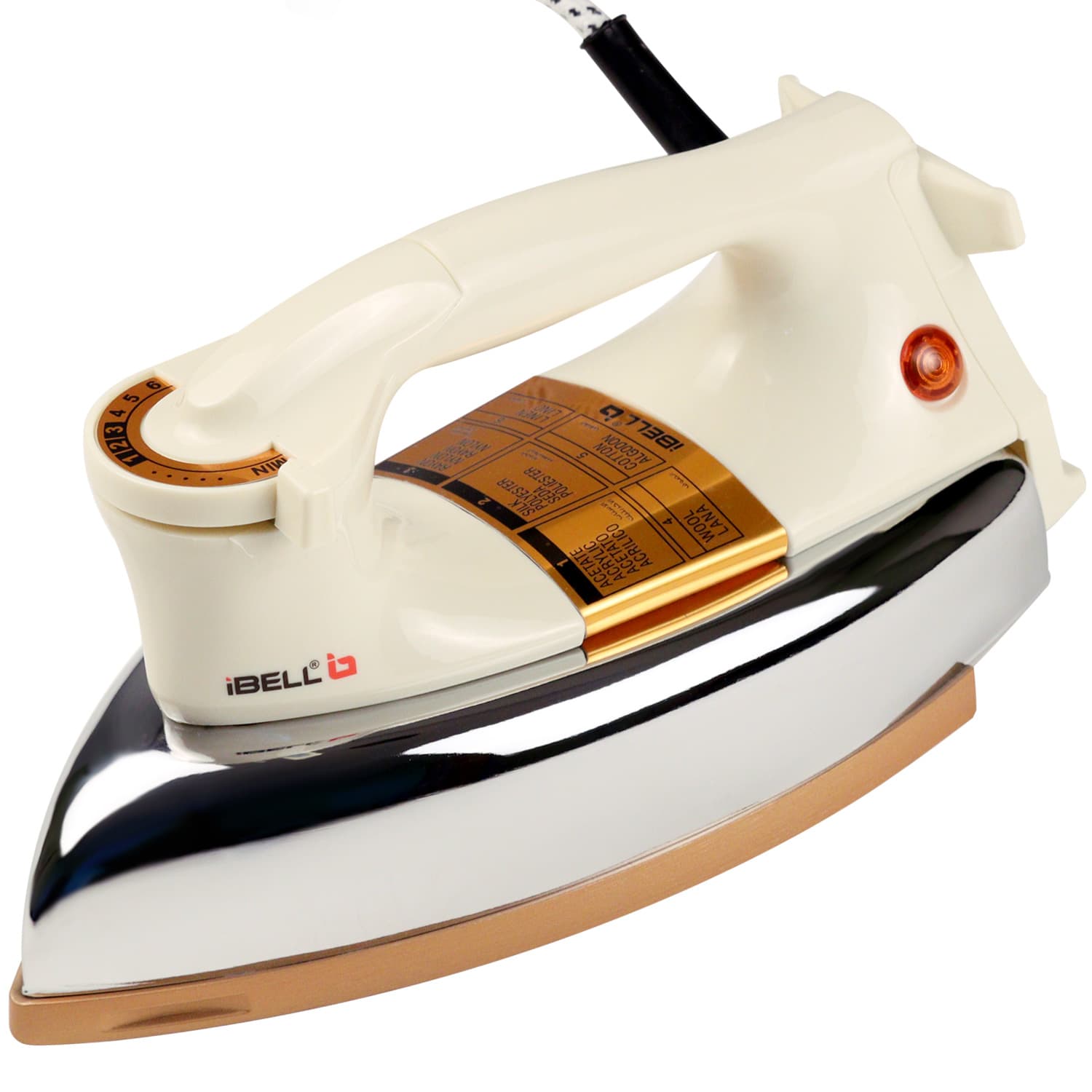
The engineering of the Non Stick soleplate is centered on minimizing friction while maximizing heat transfer. Unlike standard plates, this coating is formulated to resist the adhesive properties of starch commonly used in Indian cotton sarees. The 750 heating element is strategically coiled beneath the plate to ensure there are no cold spots, which prevents the uneven pressing that often leads to fabric pulling. Its scratch-resistant surface is particularly beneficial when navigating around metal zippers on office shirts or heavy embroidery on festive kurtas. This heat-up cycle is optimized for a balance between speed and energy efficiency, allowing the dry iron to reach operating temperature within seconds.
A manual thermostat dial serves as the primary interface for managing the seven distinct fabric modes, ranging from nylon to linen. The internal bimetallic strip is calibrated to trigger at specific temperature thresholds, ensuring the plate never exceeds the safe limit for delicate silk or rayon. For tougher fabrics like thick cotton or linen, the thermostat maintains a high, steady temperature to break down stubborn wrinkles without fluctuating. This level of thermal stability is critical for Indian wardrobes that often mix traditional natural fibers with modern synthetic blends. By providing granular control, the dry iron prevents the accidental melting of polyester-rich school uniforms while delivering crispness.
The safety architecture is specifically designed to handle the 220–240V fluctuations common in Indian electrical grids. At its core, the thermal fuse acts as a physical fail-safe that disconnects the circuit if internal temperatures spike beyond safe parameters. This is complemented by the overheat protection system, which manages the duty cycle of the heating element during extended use. The shockproof plastic body is molded from high-grade polymers that insulate the user from any potential current leakage, meeting stringent ISI safety standards. These layers of protection work in unison to mitigate risks associated with unattended operation or sudden power surges, making the dry iron a secure household asset for daily use.
Ergonomic considerations are evident in the handle design and the ultra-lightweight 0.492 kg chassis. This weight distribution is intentional, reducing the downward pressure required by the user while maintaining enough contact for effective wrinkle removal. The 1.8-meter cord is attached via a swivel mechanism, which prevents tangling and allows for greater maneuverability around the edges of large fabrics like dupattas or sarees. This thoughtful design reduces physical fatigue, allowing for longer ironing sessions without discomfort. Ultimately, the 2.Dry Iron Box represents a calculated balance of mechanical safety and user-centric design, making it a superior choice for the high-volume ironing demands of large Indian families.