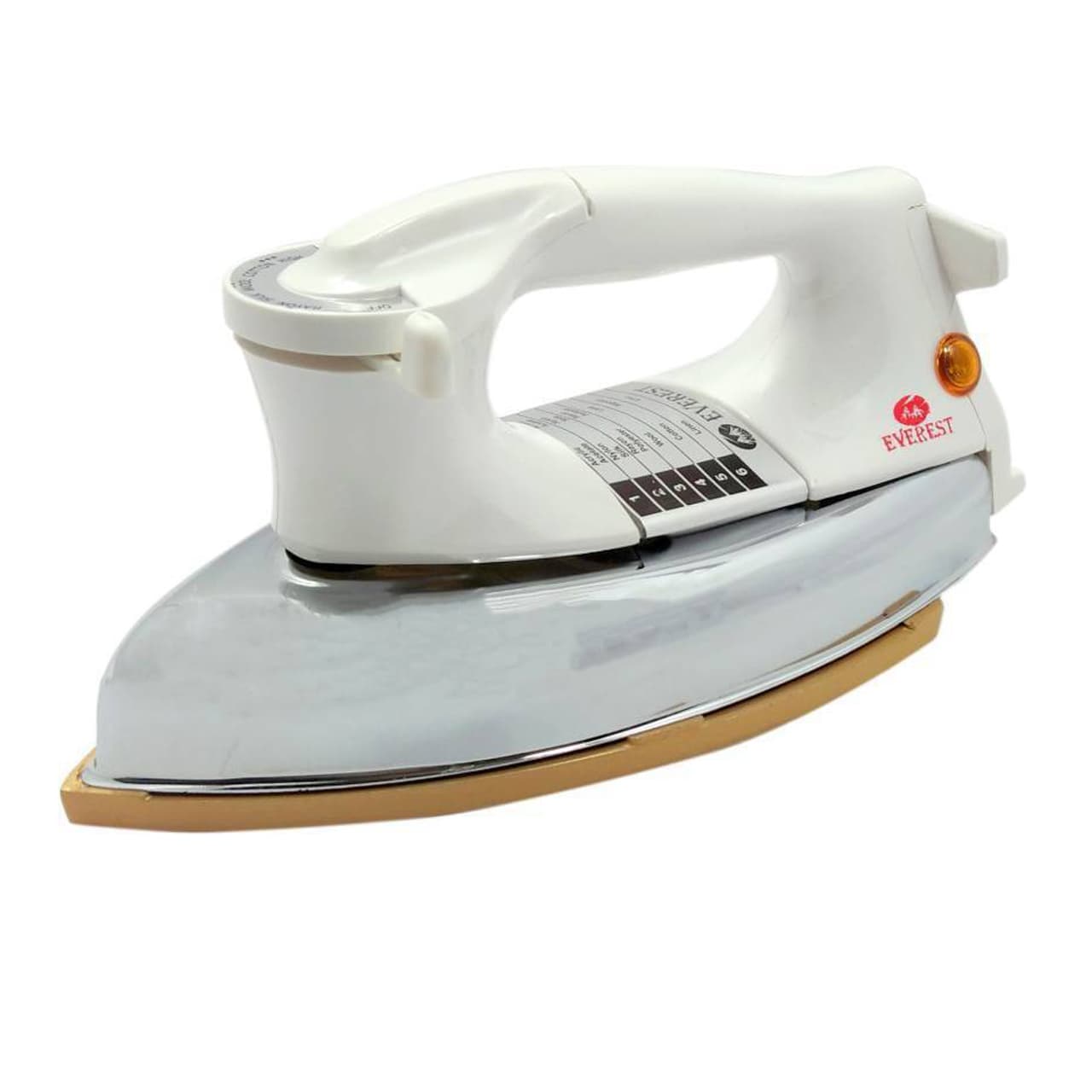
The soleplate of this dry iron is engineered with a specialized Non Stick coating designed to minimize friction across varied textures. This material facilitates a smooth glide over intricate Indian embroidery and metallic buttons found on kurtas, preventing snagging or heat-induced sticking. Thermal distribution is optimized across the plate surface, ensuring no localized hot spots occur during operation. The 1000W heating element is calibrated to reach the desired temperature quickly, reducing the wait time between power-on and active use. This thermal efficiency is critical for flattening heavy cotton fabrics that require sustained heat to break down tough fibers and eliminate deep-set laundry creases effectively.
Precision temperature control is managed via a mechanical adjustable dial that interfaces with a high-sensitivity thermostat. This system maps specifically to three fabric modes, allowing for the distinct thermal profiles required by silk, cotton, and synthetic materials. For silk kurtas, the iron maintains a lower, stable temperature to protect protein fibers, whereas for cotton, it ramps up to maximum heat. This granularity is essential for Indian wardrobes that often mix traditional handloom fabrics with modern blends. The engineering ensures that once a temperature is set, the fluctuations remain minimal, protecting garments from the thermal shocks that often lead to permanent fabric discoloration or shine marks.
The safety architecture is designed to handle the 220–240V electrical environment common in Indian households, which can be prone to voltage fluctuations. The inclusion of an ISI-certified thermal fuse acts as a secondary fail-safe, cutting off power if the primary thermostat fails to regulate internal heat. Furthermore, the auto shut-off mechanism adds a layer of protection against unattended operation, significantly reducing fire risks. A shockproof body construction uses high-insulation polymers to ensure user safety even if internal components experience wear. These integrated systems work in unison to provide a resilient platform that protects both the user and the electrical circuit from surges.
Ergonomic considerations are evident in the 0.2 kg ultra-lightweight chassis, which is designed to reduce carpal tunnel strain during repetitive motions. The handle grip is contoured to fit the average palm size, providing better leverage when applying pressure to stubborn starch-treated school uniforms. The 1.8-meter power cord utilizes a flexible jacket to prevent tangling and offers enough range to move around large items like cotton sarees. Every component of the 6.EVEREST Plancha is balanced to ensure that the center of gravity remains low, improving stability on the ironing board. This thoughtful design makes it a superior choice for high-volume domestic pressing tasks in India.