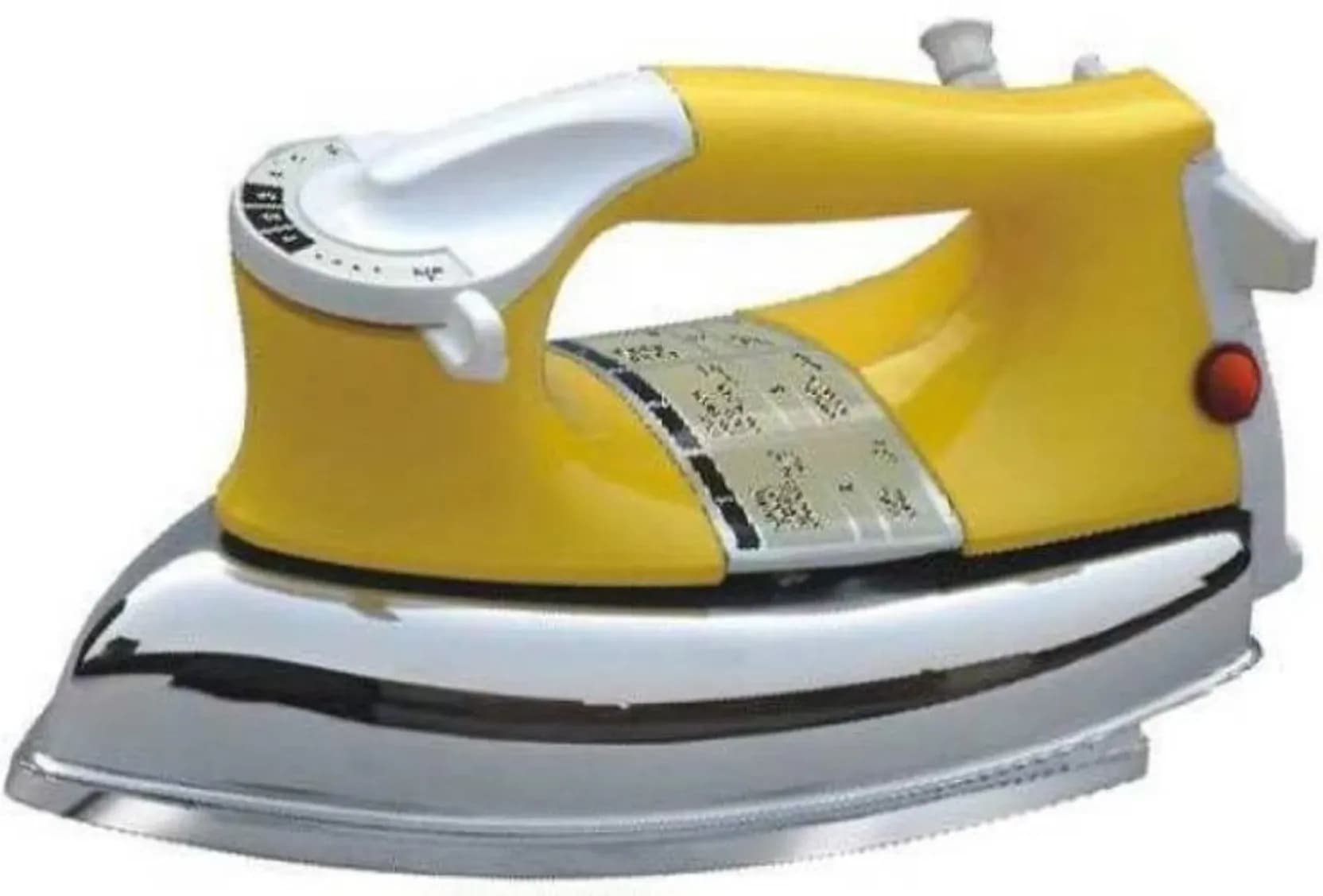
The soleplate of this dry iron is engineered with a high-performance Non Stick coating that facilitates a seamless glide over various textile textures. This surface treatment is specifically designed to handle the high-heat demands of 750W power output, ensuring that the base reaches its operating temperature within seconds. The uniform heat distribution across the plate prevents the formation of localized hot spots, which is critical when pressing delicate Indian fabrics like rayon or polyester blends. Additionally, the coating provides a layer of scratch resistance that protects the unit when navigating around metallic buttons, zippers, and heavy embroidery found on traditional garments. This engineering focus ensures consistent results and long-term durability.
Temperature management is handled by a precise manual dial that correlates directly to the heating element's output. This mechanical thermostat allows users to toggle between two primary modes: cotton and synthetic. The internal calibration ensures that when set to the synthetic mode, the temperature remains low enough to prevent melting silk kurtas, yet high enough to remove minor creases. For heavy cotton sarees, the dial allows the heating element to reach its maximum thermal capacity, providing the necessary heat density to penetrate thick fibers. This level of control is essential for Indian wardrobes that often mix natural and man-made fibers, ensuring each garment receives the exact thermal energy required.
The safety architecture is built around three core components: an auto shut-off mechanism, a high-limit thermal fuse, and overheat protection. These systems are designed to monitor the internal temperature of the dry iron constantly. If the temperature exceeds safe parameters, the thermal fuse acts as a physical break in the circuit to prevent damage. This is particularly important in the context of Indian residential power grids where voltage fluctuations between 220V and 240V are common. Furthermore, the ISI certification confirms that the unit has undergone rigorous testing for electrical insulation and structural integrity, providing a layer of protection against accidental fires or electrical shocks during daily household operations.
User comfort is addressed through a 1.2 kg weight profile and an ergonomic handle design. The weight is calculated to provide sufficient downward pressure for effective ironing without requiring the user to exert excessive force, thereby reducing muscle strain during long sessions. The 1.8-meter power cord provides an extensive range of motion, allowing for easy movement around a standard ironing board or a large table used for pressing sarees. The handle is contoured to fit the natural grip of the hand, preventing slippage and improving maneuverability around collars and pleats. Consequently, the 2.BR AXR 750 emerges as a highly functional tool that balances technical efficiency with physical ease of use.