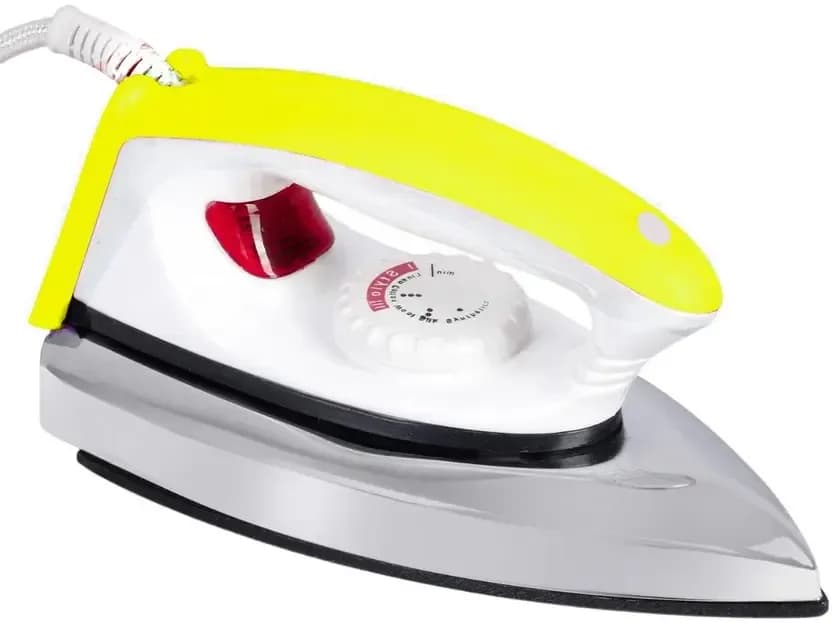
The engineering behind the non-stick soleplate focuses on reducing the coefficient of friction against varied textile surfaces. This ensures that the dry iron does not snag on the intricate embroidery of silk kurtas or the plastic buttons found on school uniforms. The 750W heating element is strategically coiled beneath the plate to ensure uniform heat distribution, preventing hot spots that could damage sensitive fibers. This thermal consistency is vital when dealing with starch-heavy cottons common in Indian households. The scratch-resistant surface maintains its integrity even after repeated contact with metallic zippers, ensuring a smooth glide remains consistent over the lifespan of the dry iron.
The manual dial thermostat is calibrated to provide three distinct temperature zones specifically mapped to cotton, silk, and synthetic fabrics. This mechanical precision allows the dry iron to reach the high temperatures necessary for crisping cotton sarees while quickly cooling down for polyester blends. Unlike digital sensors that can fail, this robust analog system provides tactile feedback and reliable operation. Indian wardrobes often mix traditional handloom fabrics with modern rayons, requiring frequent temperature adjustments. This dry iron handles these transitions seamlessly, ensuring that the user can move from heavy denim to light dupattas without the risk of thermal damage to the clothing.
The safety architecture is specifically designed to handle the 220–240V fluctuations common in Indian electrical grids. The ISI certification serves as a benchmark for quality, ensuring that the internal wiring and shockproof body meet rigorous national standards. An integrated thermal fuse acts as a secondary fail-safe, cutting off power if the internal temperature exceeds safe limits. Furthermore, the auto shut-off mechanism provides a critical layer of protection against unattended ironing, reducing fire risks in busy households. These combined engineering choices create a stable operating environment that protects both the user and the garment from electrical or thermal accidents during daily operation.
Ergonomic considerations are evident in the handle design and the ultra-light 0.49kg weight of the unit. This weight distribution is optimized to provide enough downward pressure for crease removal while remaining light enough to prevent muscle fatigue during bulk ironing of office shirts. The 2.5-meter cord length offers significant maneuverability, allowing users to move freely around large garments like bedsheets or sarees. Every component, from the shockproof plastic housing to the flexible cord entry, is built for the rigors of frequent Indian use. Consequently, the 6.Agila yellow iron 750w represents the logical buying conclusion for consumers seeking a durable, safe, and efficient dry iron.