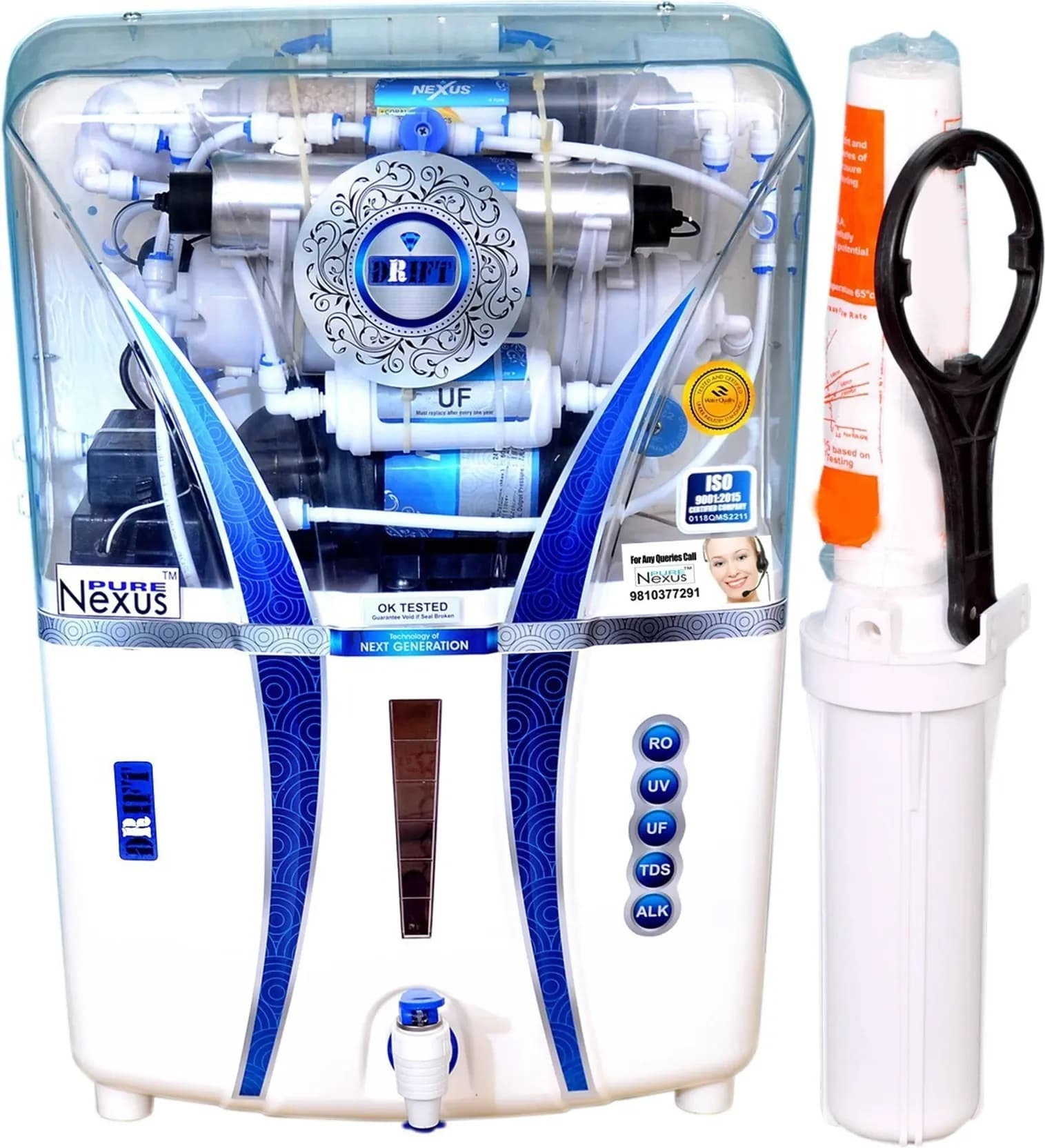
The technical architecture of the Nexus Pure centers on a comprehensive 10-stage filtration sequence that integrates RO, UV, UF, and TDS adjustment. By utilizing multiple barriers, the system systematically removes suspended solids, dissolved salts, and biological pathogens. The 0.33 l/min filtration speed is calibrated to allow sufficient contact time with the RO membrane, ensuring high-quality permeate even when the source water is challenging. This methodical approach to filtration offers a distinct advantage over faster, less thorough systems that might compromise on contaminant rejection. The 10-stage depth ensures that the final output remains palatable and balanced, regardless of the initial turbidity or hardness.
Operating mechanics are designed to withstand local water conditions, with a high TDS threshold of 2000 PPM. This capability makes the model suitable for areas relying on borewells or tankers where salinity often fluctuates throughout the year. The internal components are housed in a sturdy chassis designed to minimize vibration during the high-pressure RO cycle. While the output rate is modest, it is sufficient for the large 14 L reservoir, ensuring the tank stays filled for peak usage hours. The power consumption is remarkably low at 24 W, which helps in maintaining low operational costs over several years of use. This unit operates with a manageable noise profile, typical of high-quality domestic RO systems.
In terms of final value, the Nexus Pure represents a specialized choice for consumers who prioritize filtration depth and high-capacity storage. The warranty terms, being applicable only on SMPS Power Supply, mean that users should be diligent about regular filter maintenance and sediment pre-filter changes. It serves as a strong upgrade from basic units by offering a more robust TDS controller and enhanced biological safety via the UV and UF stages. While it lacks the smart connectivity of premium luxury models, it excels in the fundamental task of transforming hard water into safer drinking water. This model outperforms basic entry-level devices by providing a more resilient membrane and a larger storage buffer for frequent use.