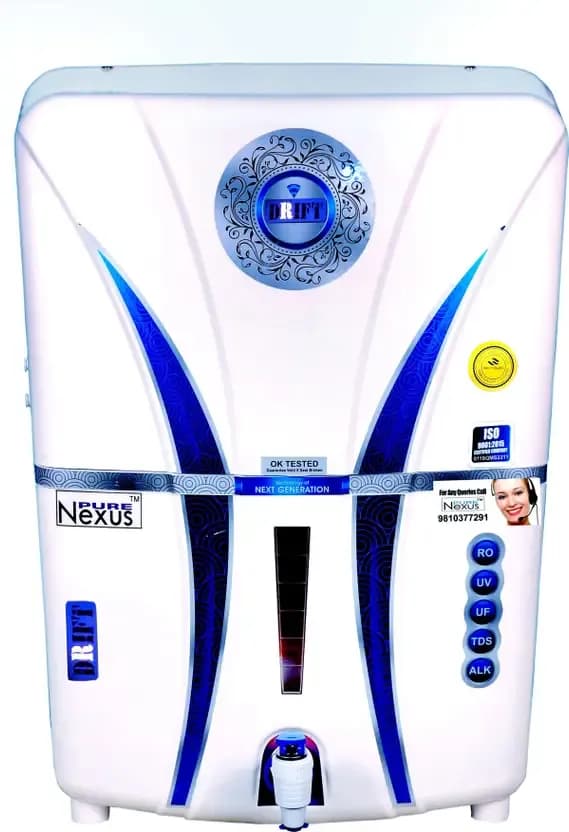
The core engineering of this unit centers on a comprehensive 10-stage purification sequence that integrates RO, UV, UF, and TDS modulation. This multi-layered approach ensures that the 0.33 l/min speed is utilized to strip away heavy metals, bacteria, and suspended solids effectively. By utilizing a membrane-intensive process, the system manages to maintain a high level of mineral balance while ensuring safety. The inclusion of an ultra-filtration stage provides a secondary barrier against cysts and fine particulates that may bypass standard filters. Comparatively, this model offers a more robust filtration path than basic three-stage systems found in the budget segment.
Mechanical performance is highlighted by the system's ability to handle raw water inputs of up to 2000 PPM. This high threshold makes the unit versatile for borewell, tanker, or municipal water sources across different Indian terrains. The internal pumps and solenoid valves are calibrated to operate within a 24 W power envelope, minimizing heat generation during long cycles. Build quality feels sturdy enough to support the 14 L internal tank when fully pressurized. The 10-stage filtration layout is logically organized to prevent premature clogging of the RO membrane by using specialized sediment pre-filters. Users can monitor the purification process through the transparent indicators on the external housing.
In the final analysis, this model represents a significant value proposition for those seeking high-capacity storage combined with advanced filtration. However, potential buyers must carefully consider the logistics of the warranty, as the customer has to courier the parts to seller address. This unconventional service model might be a hurdle for users who prefer on-site technician visits. Despite this, the unit is a strong upgrade from basic units that lack TDS control or UV stages. It outperforms basic entry-level devices in terms of raw purification capability and storage volume. For those comfortable with managing parts-based service, it remains a technically sound choice for high-TDS environments.