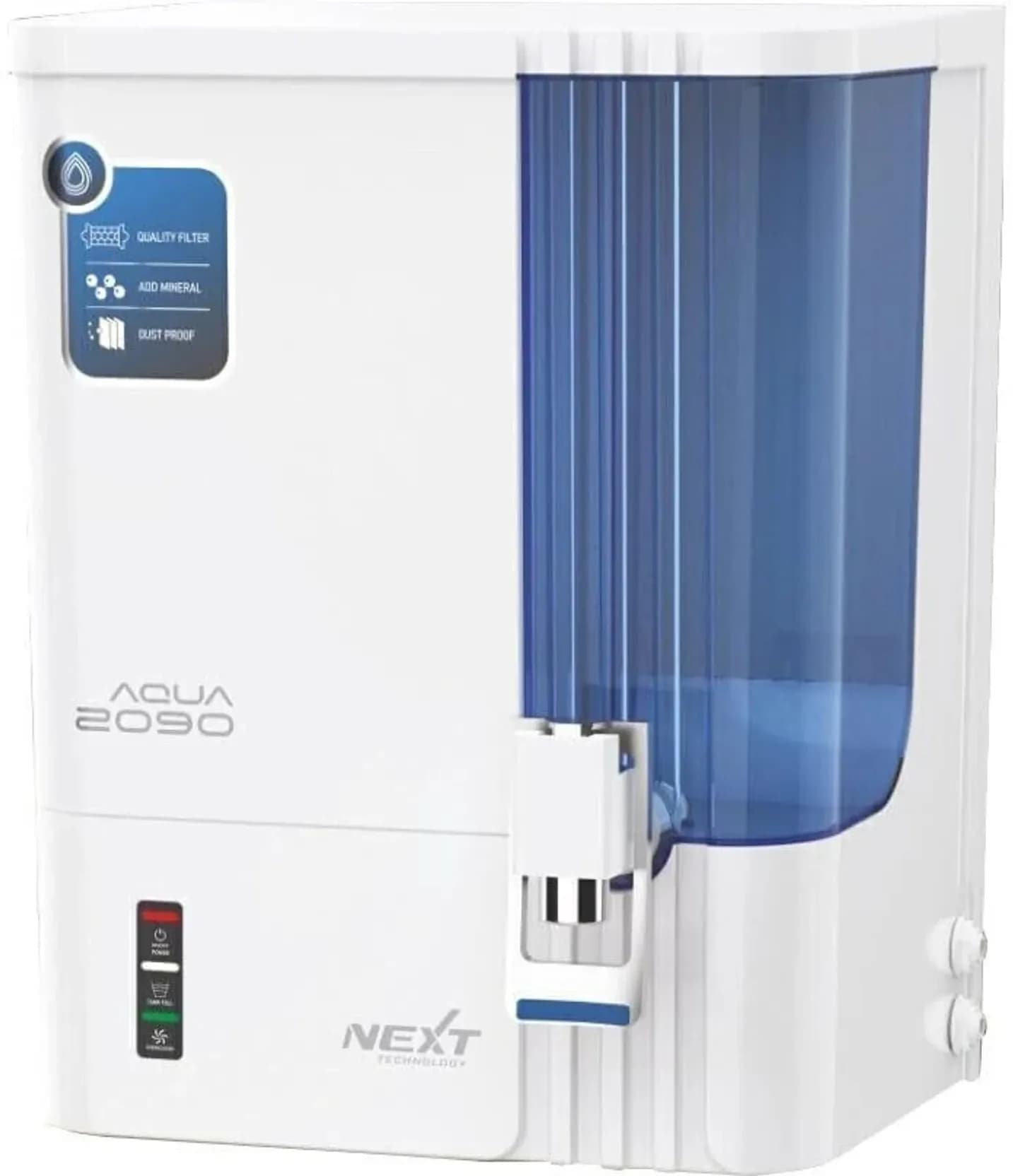
The core of this system lies in its dual RO+UV architecture, which is meticulously calibrated to handle the rigors of Indian tap and borewell water. The 5-stage purification sequence starts with sediment removal and culminates in UV sterilization, ensuring that biological contaminants are neutralized after the RO membrane does the heavy lifting. At a 15 Litres/Hour flow rate, the booster pump demonstrates significant mechanical endurance, maintaining pressure even in low-input scenarios. This throughput is a notable step up from standard 10 or 12-liter per hour units, reducing the wait time during peak morning hours. From a technical standpoint, the membrane chemistry is optimized to resist scaling in environments with high calcium and magnesium concentrations.
Operating mechanics are centered around the 60 W booster pump and the SMPS, which are the primary drivers of the filtration cycle. The device handles a TDS threshold of up to 2000 ppm, a specification that many entry-level purifiers struggle to meet without frequent filter clogging. The internal housing is designed to minimize vibration, which extends the lifespan of the internal plumbing and prevents micro-leaks over time. Unlike more complex digital models, this unit focuses on mechanical reliability, using food-grade plastics for the 11-litre storage tank to prevent secondary re-contamination. The 5 stages are logically sequenced to protect the expensive RO membrane from premature fouling by larger particles.
Ultimately, this purifier is a strong upgrade from basic units for users who prioritize raw performance over aesthetic gimmicks. It provides a balanced approach to water safety, specifically for regions where the source water exceeds 1000 ppm. The 1 Year Off-site Warranty on Booster Pump and SMPS covers the most vulnerable parts, which is a crucial consideration for long-term ownership costs. While it lacks some of the smart connectivity found in high-end appliances, its focus on filtration depth and high-capacity output makes it a dependable workhorse. It effectively outperforms basic entry-level devices by offering a larger storage reservoir and a more aggressive TDS handling capability.