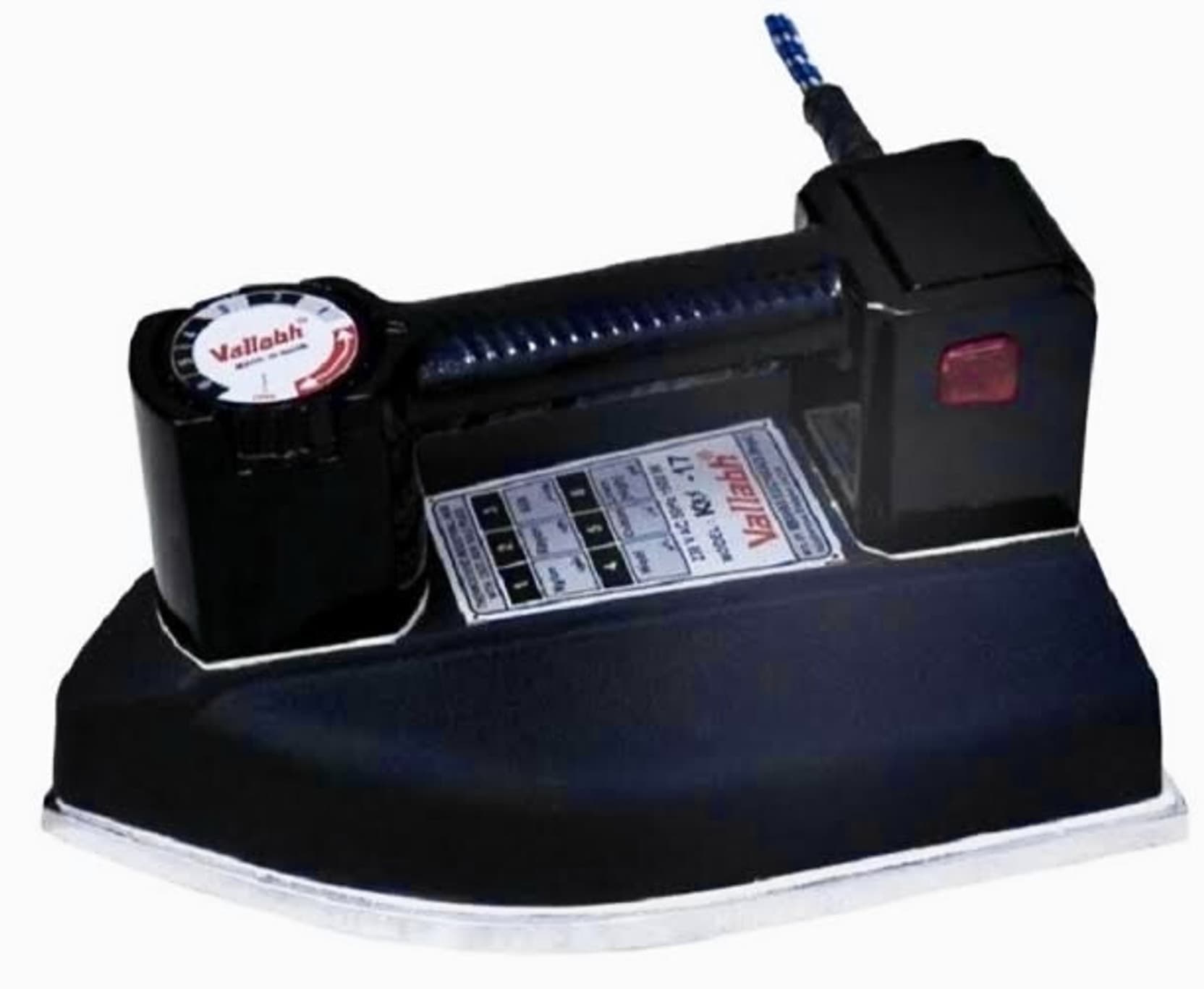
The engineering behind the stainless steel soleplate of this dry iron focuses on reducing friction across textured Indian fabrics. Unlike coated plates that may peel over time, the solid stainless steel construction offers superior scratch resistance against metallic buttons on office shirts and heavy embroidery on ethnic wear. The 1250 W heating element is strategically coiled to ensure uniform heat distribution across the entire pressing surface, eliminating cold spots that cause uneven finishes. This high wattage allows the unit to reach optimal operating temperatures in under sixty seconds, ensuring that the heavy-duty plate maintains its thermal mass during consecutive ironing tasks.
Thermal precision is managed through a calibrated thermostat knob that specifically targets the heat requirements of two primary fabric settings. While the cotton mode provides the intense heat necessary to break down stubborn cellulose bonds in thick handloom sarees, the linen setting offers the highest temperature threshold for crisp, professional results. This level of control is vital for Indian wardrobes which often contain mixed-fabric blends and delicate silk kurtas that require stable heat without fluctuations. By maintaining a narrow temperature variance, the internal sensors prevent the soleplate from exceeding safe limits, protecting the integrity of expensive natural fibers from heat-induced yellowing or permanent structural damage.
The safety architecture is engineered to withstand the common voltage fluctuations found in 220–240V Indian household power grids. An integrated thermal fuse acts as a secondary fail-safe, physically breaking the circuit if the internal temperature exceeds a critical threshold, while the auto shut-off mechanism engages during periods of inactivity. This is particularly important for preventing fire hazards in busy households where the iron might be left unattended. Furthermore, the shockproof body construction uses high-grade insulating polymers to prevent current leakage, and the ISI certification ensures that every component meets national standards for electrical safety and endurance, providing a secure environment for daily garment maintenance.
From a usability perspective, the 6.2 kg weight of the unit is balanced to provide natural downward pressure, which reduces the need for the user to lean into the board while pressing heavy fabrics. The ergonomic handle is contoured to fit the grip of Indian users, minimizing wrist fatigue during long sessions involving multiple school uniforms. A 3-meter long power cord offers significant mobility, allowing the user to navigate around large double-bed sheets or long sarees without feeling tethered to the wall socket. Ultimately, the 3.VallabhHeavy7 combines these structural advantages to offer a robust and reliable pressing solution that caters specifically to the intensive demands of modern Indian domestic environments.