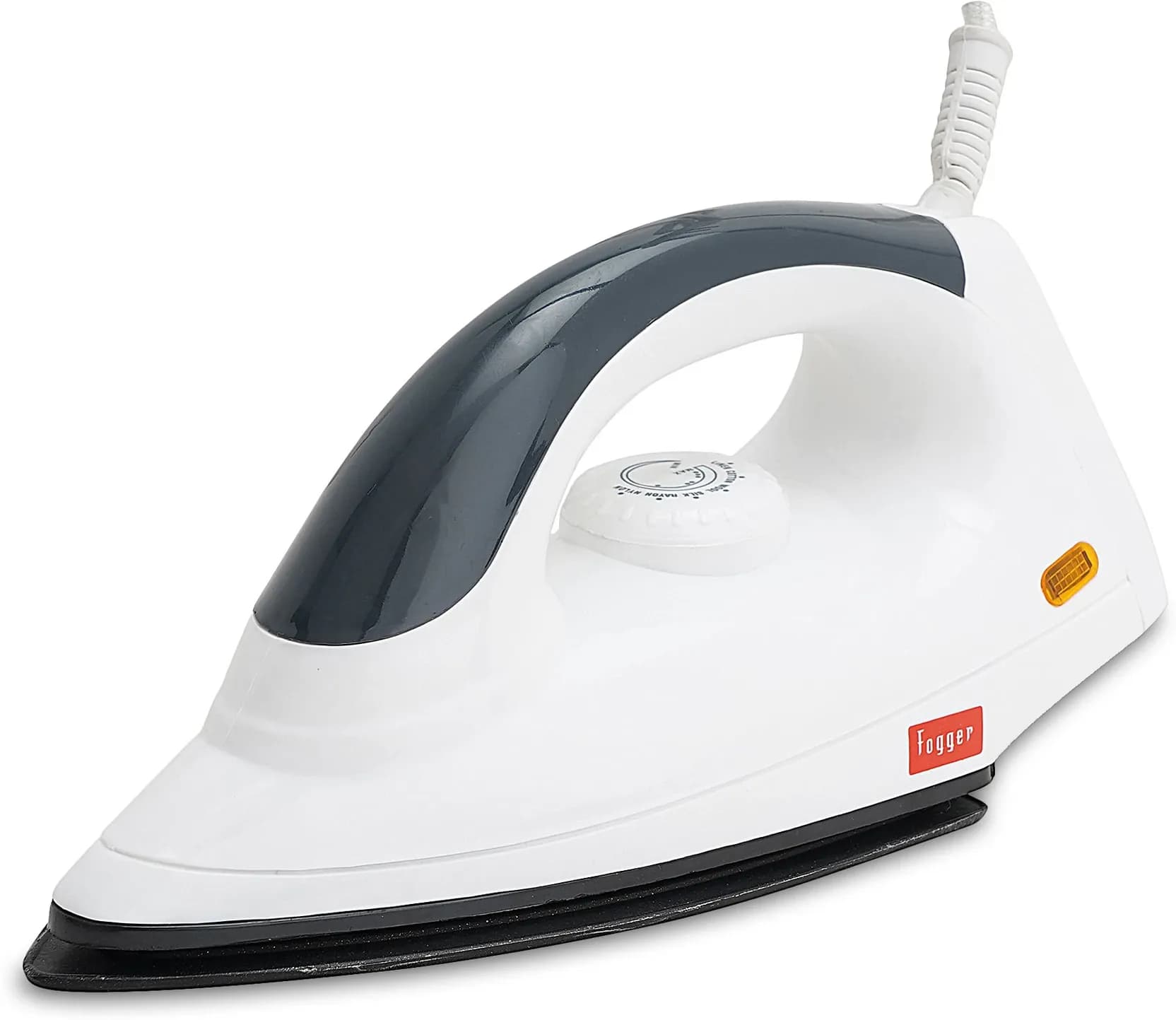
The Teflon-coated soleplate is engineered for high-thermal conductivity and surface slickness, which is essential for navigating the complex textures of Indian garments. By utilizing a 1000W heating element, the base plate reaches the target temperature quickly, reducing the wait time during busy morning routines. The non-stick coating is specifically applied to resist micro-scratches from plastic buttons on office shirts or metallic zippers on trousers, ensuring the glide remains smooth over years of operation. Heat distribution is uniform across the entire surface area, preventing hot spots that could damage sensitive silk kurtas or rayon blends. This technical synergy between wattage and material science results in a reliable pressing tool for varied domestic laundry requirements.
The integrated adjustable thermostat provides a mechanical interface to control the electrical resistance of the heating element, mapping directly to three specific fabric modes. When set to the silk or synthetic positions, the internal bi-metallic strip regulates lower thermal thresholds to protect delicate fibers from melting or heat-staining. Conversely, the cotton setting allows the 1000W system to reach maximum output, generating the intense heat required to break molecular bonds in dry cotton fibers for crisp pleating. This granular control is vital for Indian wardrobes that often mix traditional hand-loomed fabrics with modern polyester blends, allowing users to transition between different garment types without risking structural damage to the textiles.
Safety is integrated through a multi-layered architecture comprising an auto shut-off feature, a thermal fuse, and a shockproof plastic body. The thermal fuse acts as a secondary failsafe, physically breaking the circuit if the internal temperature exceeds safe operating parameters, which is a critical defense against Indian power surges. Furthermore, the ISI-certified components ensure that the dry iron complies with national safety standards for 220–240V household electronics. This combination of active and passive safety measures prevents accidents in busy homes where the dry iron might be left unattended. These engineering choices provide a secure user experience, protecting the household from electrical hazards while maintaining consistent performance across various environmental conditions.
Ergonomic design choices in this dry iron focus on reducing user fatigue during the long pressing sessions common in large Indian families. The 0.6kg weight is intentionally calibrated to provide enough downward pressure for wrinkle removal without causing wrist strain over thirty-minute intervals. The 1.5-meter power cord offers significant maneuverability, allowing the user to move around the ironing board freely while pressing large items like bedsheets or heavy sarees. The handle is contoured to fit the natural grip of the hand, providing better leverage and control over the pointed tip for reaching into sleeves and pockets. Consequently, the Star emerges as a technically sound choice for those seeking a balance of comfort and efficiency.