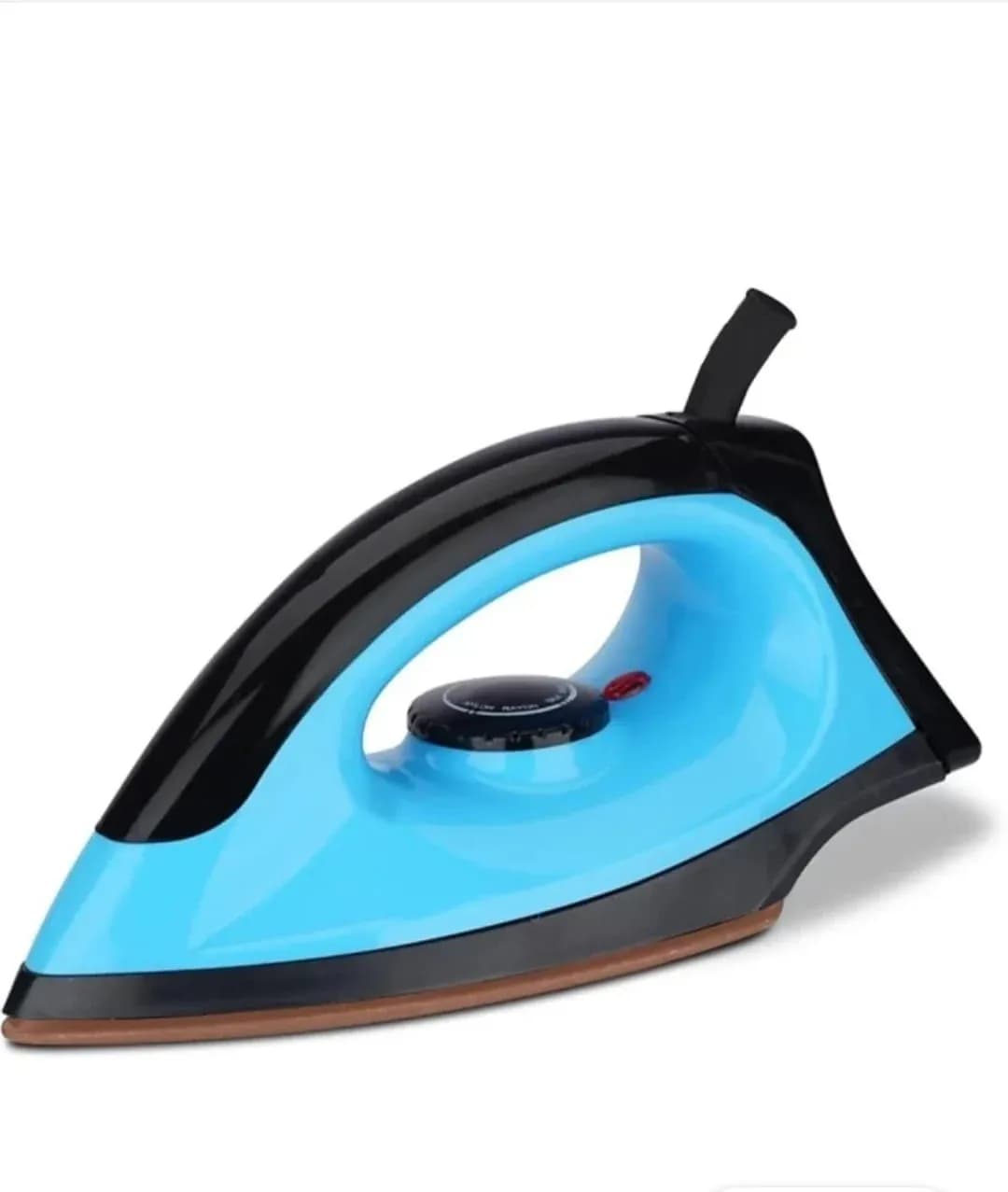
The Non Stick soleplate is engineered using a high-density coating that minimizes friction on varied textile textures. This surface ensures that heat distribution remains uniform across the entire contact area, preventing localized hot spots that often damage delicate silk or rayon. The 750 heating element is calibrated to achieve operational temperature quickly, facilitating rapid heat-up cycles that save time during morning rushes. Furthermore, the soleplate's edges are tapered to navigate around Indian fabric buttons and intricate embroidery found on traditional wear, ensuring a snag-free experience while maintaining structural integrity over years of use.
The thermostat utilizes a mechanical bimetallic strip system connected to a manual dial, offering two primary modes: cotton and synthetic. This mechanism provides a reliable thermal response, mapping the wattage output to the specific heat requirements of Indian mixed-fiber wardrobes. In the synthetic mode, the temperature is capped to prevent melting of polyester blends, while the cotton mode allows the element to reach the higher thresholds necessary for smoothing heavy linen or starched shirts. This precision-engineered thermal control ensures that the user can transition between different garment types without waiting excessively for the unit to cool or heat.
For the safety architecture, this dry iron incorporates a triple-layered protection system. The ISI certification guarantees that the internal wiring and insulation meet stringent national standards for 220–240V Indian household power supplies. An integrated thermal fuse acts as a secondary fail-safe, physically breaking the circuit if the temperature exceeds safe limits due to an internal component failure. Additionally, the overheat protection mechanism regulates the duty cycle of the heating element, preventing the unit from drawing excessive current during unattended incidents or voltage spikes. These engineering choices provide a robust defense against electrical hazards common in residential environments.
Ergonomically, the unit is built with a lightweight 1.0 chassis that reduces user fatigue during long ironing sessions involving multiple sarees or several sets of uniforms. The handle design features a textured grip that facilitates better control and prevents slipping, even in humid Indian climates. A 1.5 power cord offers ample reach from wall sockets to the ironing board, while the reinforced cord entry point minimizes internal wire breakage from frequent movement. As a final conclusion, the 11.sahno orange iron represents a balanced approach to durability and user comfort, specifically tailored for the high-frequency ironing demands of an Indian household.