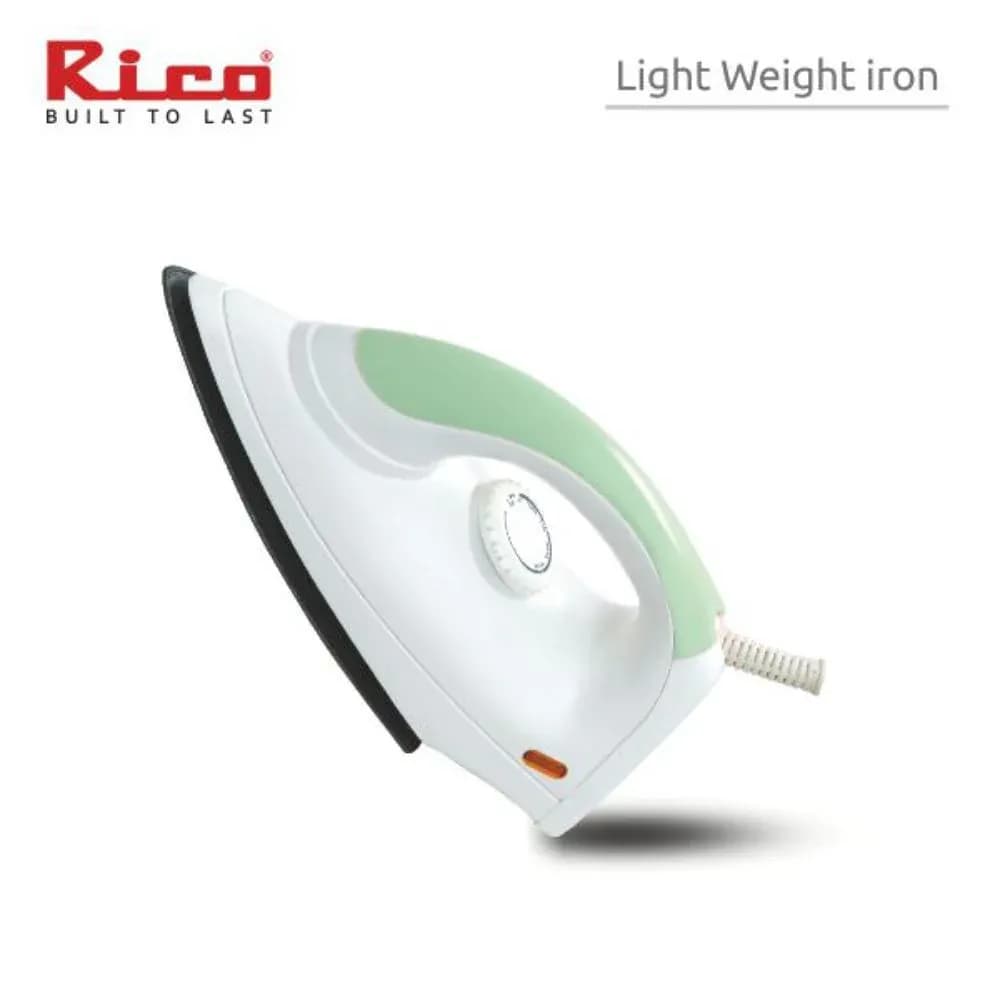
The non-stick soleplate utilizes a fluoropolymer coating that significantly reduces the coefficient of friction on fabric fibers. This ensures that even when pressing starched cotton sarees or delicate silk kurtas, the soleplate glides without pulling or snagging. The 1000W heating element is strategically embedded to ensure thermal uniformity across the entire surface area, effectively eliminating cold spots that cause uneven pressing. This wattage facilitates a rapid thermal recovery cycle, allowing the dry iron to maintain its set temperature even as the fabric absorbs heat. The result is a faster ironing experience that preserves the structural integrity of expensive Indian ethnic wear through efficient heat transfer.
The thermostat control is engineered with a bi-metallic strip that reacts to minute temperature fluctuations during operation. Mapping seven specific fabric modes—silk, cotton, wool, synthetic, linen, rayon, and nylon—allows users to customize the heat profile for complex wardrobes. For instance, the linen setting provides the high thermal intensity needed for thick fibers, while the silk setting maintains a lower, stable temperature to prevent scorching. This granularity is essential for Indian households that mix traditional cotton wear with modern synthetic blends. Precise temperature regulation ensures that the thermal output matches the heat resistance of each textile type for optimal results.
The safety architecture is designed to handle the realities of the Indian electrical grid, including voltage spikes between 220–240V. ISI certification indicates that the dry iron has undergone rigorous testing for insulation resistance and earth leakage. The thermal fuse acts as a secondary fail-safe, physically breaking the circuit if the primary thermostat fails to cut power, preventing a potential fire hazard. Combined with the auto shut-off feature, these components create a multi-layered defense system. This architecture ensures that even if the dry iron is left unattended on a school uniform, the risk of damage or electrical hazards is significantly mitigated for the user.
Ergonomic engineering focuses on the 0.9kg weight distribution, which is heavy enough to press wrinkles but light enough to prevent carpal strain. The handle is contoured to fit the natural grip of the hand, providing better leverage during the pressing of heavy cotton sheets or curtains. The 1.6-meter power cord provides sufficient mobility without becoming a tripping hazard in smaller Indian living spaces. A shockproof plastic body provides an additional layer of user protection against internal wiring faults. Ultimately, the 6.Rico AI 08 1000W represents a refined engineering approach that prioritizes long-term safety and user comfort for the demanding Indian household environment.