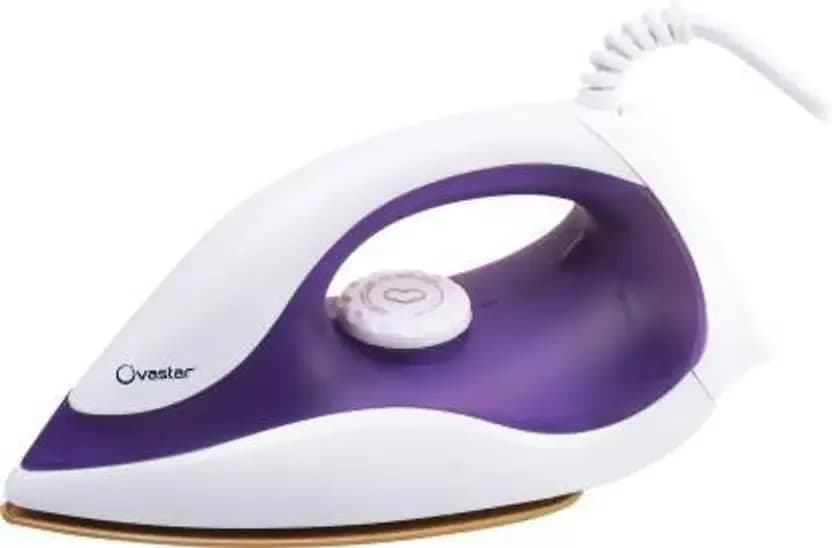
The Non Stick soleplate is engineered for a friction-free glide across cotton sarees and polyester blends. This specific coating material is designed for uniform heat distribution, which prevents the development of hot spots that typically cause fabric scorching. Its scratch-resistant surface is built to withstand contact with metal buttons on office shirts and intricate embroidery on silk kurtas without surface degradation. The 1000 heating element is carefully calibrated to reach peak temperatures quickly, significantly reducing the wait time between initial power-on and the first press. This thermal efficiency ensures that the heat remains consistent throughout long ironing sessions, providing a smooth finish on even the most stubborn wrinkles.
The thermostat system uses a robust manual dial to offer three distinct temperature modes: cotton, silk, and wool. This mechanical control allow for the precise mapping of heat to the specific requirements of a typical Indian mixed-fabric wardrobe. For delicate silks, the dry iron maintains a lower, stable temperature to prevent fiber melting, while for heavy cottons, it ramps up the heat for deep steam-less penetration. The sensitivity of the internal thermostat ensures that the heating element cycles off once the desired threshold is reached, maintaining a tight temperature tolerance. This level of precision is vital for preserving the luster of ethnic wear and the crispness of formal attire alike.
Safety architecture for this unit is built around a multi-layered protection system designed for Indian electrical environments. It incorporates an auto shut-off mechanism that engages if internal temperatures exceed safe limits, alongside a thermal fuse for secondary protection. These features are critical in regions with frequent voltage spikes between 220–240V, as they prevent internal component damage and overheating. The ISI certification serves as a benchmark for electrical safety, ensuring the dry iron meets rigorous standards for insulation and grounding. By preventing unattended overheating, these systems significantly reduce fire risks in the home, making the unit a secure choice for families prioritizing household safety and equipment longevity.
Ergonomics play a central role in the design of this dry iron, focusing on user comfort for high-volume tasks. The handle is contoured to provide a natural grip, reducing the physical effort needed to apply downward pressure on heavy linen. At a weight of just 0.9 kg, it allows for fatigue-free operation during long sessions involving multiple school uniforms and sarees. The 1.75-meter cord length offers significant freedom of movement, allowing the user to reach the full length of a standard ironing board without restriction. Ultimately, the OWEI 2526 represents a balanced engineering approach that prioritizes physical ease and operational reliability for the everyday needs of the Indian consumer.