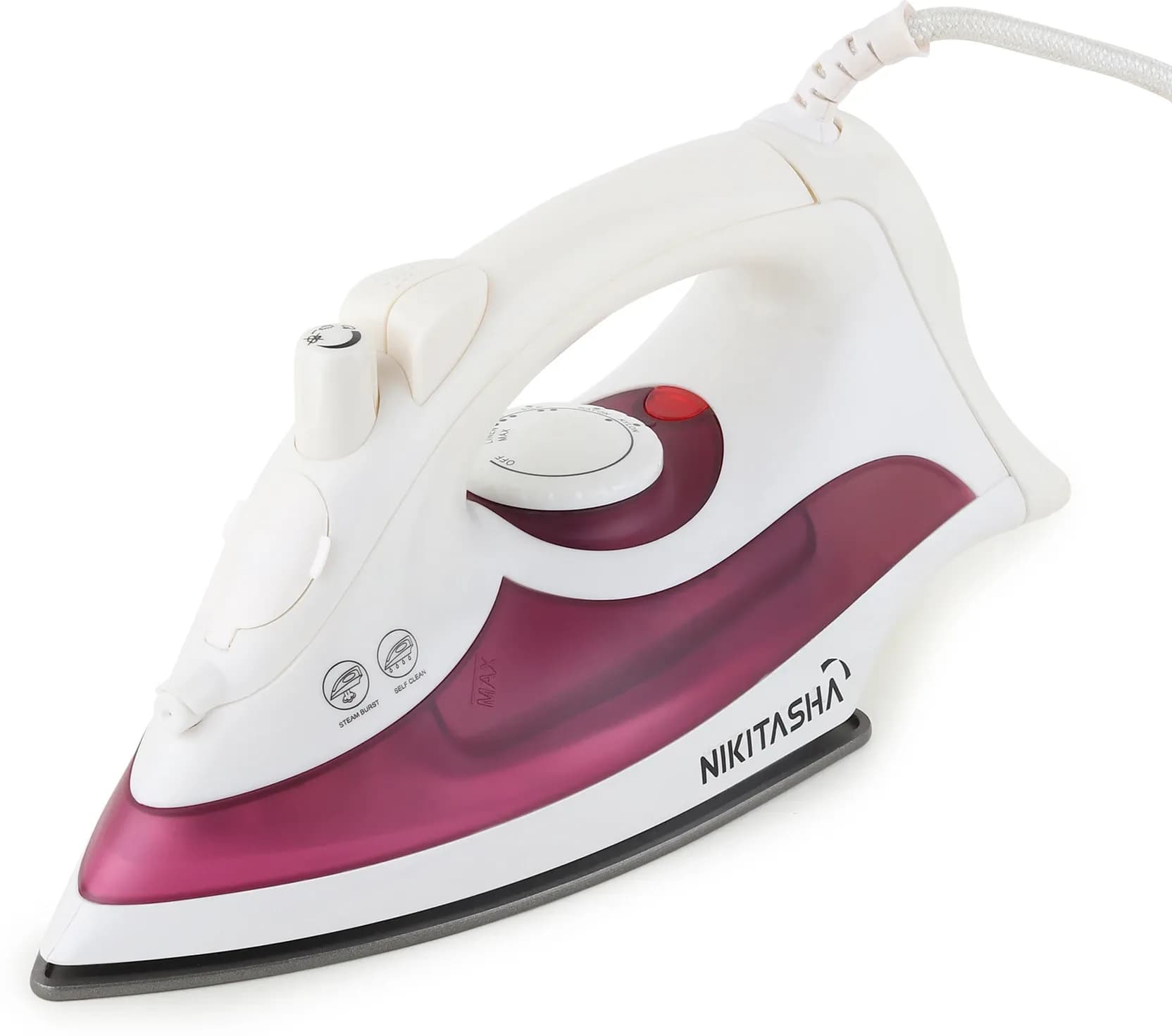
The Non Stick soleplate is engineered for low friction using a fluoropolymer coating that prevents the base from adhering to synthetic fibers or starch-heavy cotton sarees. Heat distribution across the surface is uniform, thanks to the 1200W internal heating coil that eliminates cold spots and ensures the unit reaches desired temperatures within sixty seconds. The soleplate edges are specifically contoured to navigate around buttons and embroidery on silk kurtas without snagging. This mechanical design prioritizes fabric longevity while maintaining high thermal transfer efficiency for daily garment preparation. The build focuses on durability through the use of heat-resistant plastics and a precision-ground metal base.
The manual dial thermostat is the core of the thermal management system, offering three distinct fabric modes calibrated for cotton, wool, and silk. Each setting corresponds to a specific temperature range, ensuring that delicate rayon or polyester blends are not exposed to excessive heat. By physically adjusting the internal bi-metallic strip, the dial maintains a consistent thermal output, which is crucial for managing Indian mixed-fabric wardrobes. This precision prevents the common issue of heat spikes that lead to yellowing on white office shirts. The mechanical feedback of the dial ensures users can confidently switch between high-heat cotton sarees and low-heat synthetic wear.
The safety architecture of this dry iron is built around three critical components: ISI certification, an auto shut-off mechanism, and a thermal fuse. In the volatile Indian electrical environment, where voltage spikes between 220V and 240V are common, these features act as a hardware-level defense. The auto shut-off engages if the unit is left stationary for too long, preventing fire hazards in busy households. Simultaneously, the thermal fuse provides a final failsafe, permanently breaking the circuit if internal temperatures exceed safe limits due to a thermostat failure. This multi-layered approach to safety ensures the device remains a low-risk household tool even during prolonged morning ironing sessions.
Ergonomics play a vital role in the long-term usability of the dry iron. At a weight of 1.1kg, the unit strikes a balance between providing enough gravitational pressure to flatten stubborn wrinkles and being light enough to prevent user fatigue. The handle is shaped to accommodate various grip styles, facilitating easy maneuvering over large surface areas like bedsheets or long sarees. With a 1.8-meter power cord, users have sufficient range to work comfortably without being tethered too closely to a wall socket. Ultimately, the nikitasha queen dry 1200w represents a focused engineering effort to meet the practical, everyday requirements of the average Indian domestic consumer.