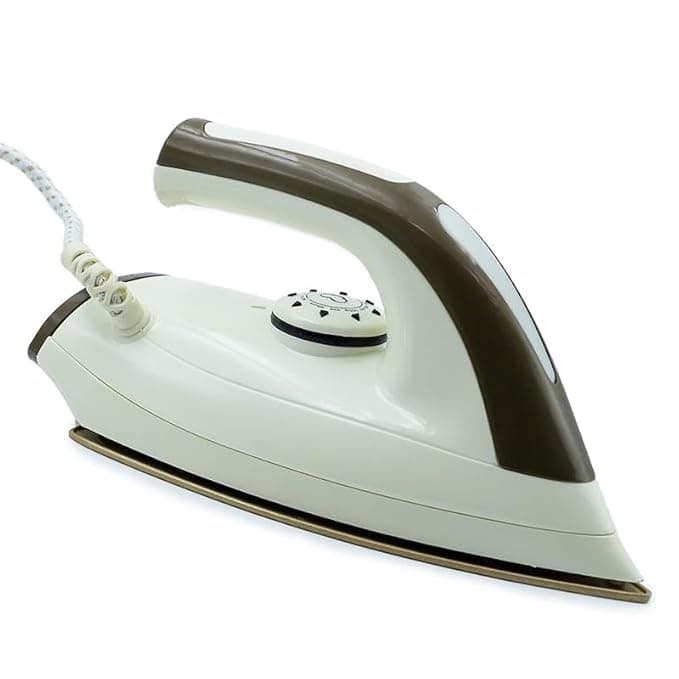
The soleplate of this dry iron is engineered with a double-coated non-stick layer that facilitates a frictionless glide across various textures. Unlike standard plates, this surface is designed to resist carbon buildup and chemical adhesion from starch, which is vital for maintaining the integrity of Indian cotton sarees. The 1000-watt heating element is calibrated for rapid thermal induction, ensuring the soleplate reaches the selected temperature in under 60 seconds. This thermal efficiency reduces the duty cycle of the heating element, promoting internal component longevity while providing the high heat necessary for removing stubborn creases in heavy linen.
Temperature regulation is managed by a high-sensitivity automatic thermostat that maps specifically to seven fabric categories. This engineering choice ensures that the transition between low-temperature synthetics and high-temperature cotton is handled without thermal lag. For Indian wardrobes containing mixed-fabric blends, this precision prevents the accidental melting of polyester threads in silk-blend kurtas. The dial is physically indexed to provide tactile feedback, allowing the user to switch modes confidently. By maintaining a tight tolerance around the target temperature, the dry iron protects the structural bonds of natural and synthetic fibers alike during the pressing process.
Safety architecture is a core pillar of this model’s design, centered around an ISI-certified electrical path. The inclusion of a thermal fuse acts as a physical fail-safe, severing the connection if internal temperatures exceed safety limits, while the overheat protection circuit manages standard operational spikes. These features are critical for the Indian power grid, where voltage fluctuations can occasionally stress home electronics. The shockproof plastic housing further insulates the user from the internal 220–240V circuitry. These combined systems ensure that the dry iron remains operational and safe even in environments with unpredictable electrical stability or accidental unattended use.
Ergonomically, the unit is balanced at a weight of 0.4kg to provide enough downward pressure for effective crease removal without requiring significant physical exertion from the user. The handle is contoured to fit a variety of grip styles, reducing the localized pressure on the palm during vertical or horizontal movements. The 1.5-meter power cord is reinforced at the entry point to prevent fraying, a common failure point in high-use appliances. Ultimately, the 20.LW 103 Lightweight Double Coated 1000W reflects a thoughtful approach to industrial design, prioritizing the user's comfort and the appliance's durability for the long-term demands of a busy Indian household.