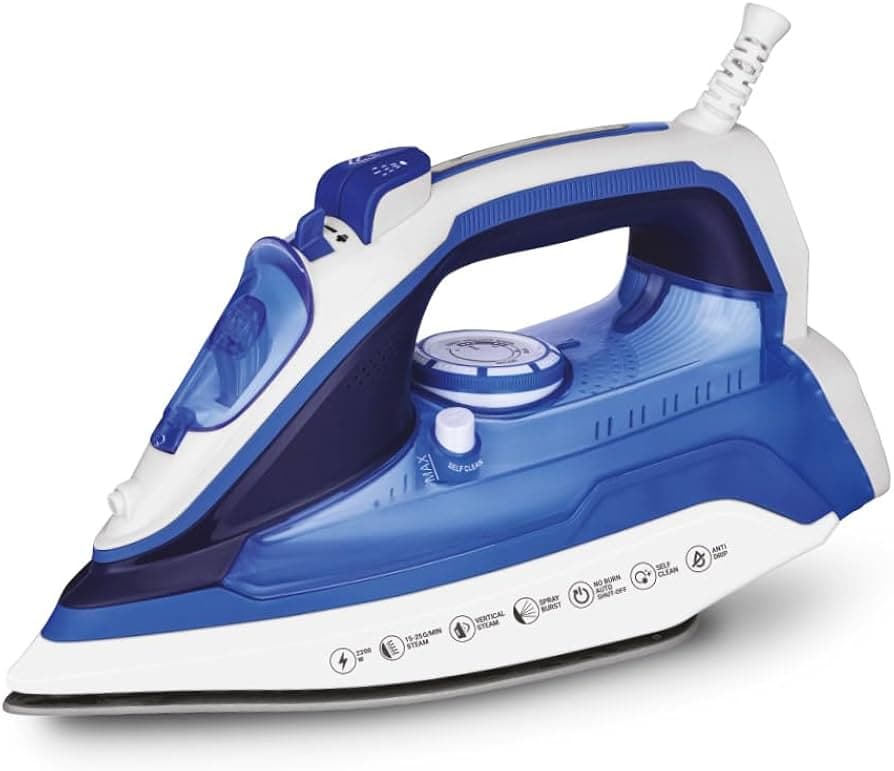
The engineering of the Ceramic soleplate on this steam iron focuses on friction reduction and thermal uniformity. Unlike basic metal plates, this Ceramic coating allows for a frictionless glide over intricate Indian embroideries and plastic buttons found on office shirts. The 1400 heating element is specifically tuned to reach operational temperatures within seconds, ensuring that the thermal energy is distributed evenly across the entire surface area. This prevents hot spots that often lead to fabric scorching in cheaper models. By maintaining a stable temperature, the soleplate ensures that even heavy linen or thick cotton sarees receive consistent heat for a perfectly crisp finish.
Precision temperature management is handled via a digital control system that interfaces with seven distinct fabric modes. These modes are engineered to match the specific melting points and heat tolerances of textiles like silk, rayon, and synthetic blends common in Indian wardrobes. When switching from a delicate silk kurta to a heavy cotton bedsheet, the internal thermostat adjusts the current flow to the heating element with high accuracy. This digital calibration is vital for mixed-fabric households where a single ironing session may involve multiple heat levels. The responsiveness of the temperature control prevents accidental heat damage while ensuring enough thermal power is available for stubborn creases.
The safety architecture of this steam iron is designed to handle the electrical realities of Indian households, such as voltage fluctuations between 220V and 240V. The integration of a thermal fuse provides a physical fail-safe that disconnects power if temperatures exceed safe limits. Furthermore, the auto shut-off feature acts as a critical guard against human error, deactivating the heating element if the unit remains stationary for too long. Combined with mandatory ISI certification, these components ensure the steam iron operates within strict national safety standards. This multi-layered defense system protects the internal circuitry from overheating while preventing potential fire hazards in the home during long ironing sessions.
Ergonomic considerations are central to the physical build, with a 1.4kg chassis that provides the necessary gravity-assisted pressure for thick fabrics without causing wrist fatigue. The handle is shaped to accommodate various grip styles, ensuring comfort during the repetitive motions of ironing school uniforms or large sarees. A 2m power cord allows for significant movement around the ironing board, reducing the need for cumbersome extension cords in older Indian apartments with limited socket placements. In conclusion, the 2.Kent Luxe Steam Iron represents a balanced engineering approach, combining safety, heat precision, and ergonomic comfort to meet the demanding requirements of daily garment maintenance in India.