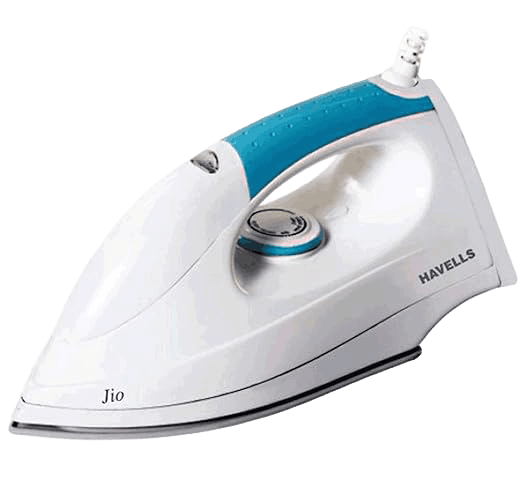
The Teflon-coated soleplate of this dry iron is engineered to minimize friction on natural fibers, which is critical for preventing snags on intricate embroidery found on silk kurtas. Unlike basic metallic plates, this non-stick surface ensures uniform heat distribution across its entire area, powered by a 1000 heating element that reaches operating temperature in under sixty seconds. This rapid thermal response reduces the waiting time between garments, while the scratch-resistant coating protects the plate from damage when navigating around metal buttons or zippers on office shirts. The resulting glide performance ensures that users can achieve a crisp finish on heavy cotton fabrics without excessive physical exertion.
Precision temperature management is achieved through a manual thermostat dial calibrated specifically for seven distinct fabric categories, including nylon, rayon, and linen. For delicate Indian textiles like georgette or silk, the dry iron maintains a lower, stable temperature to prevent fiber melting, whereas the cotton and linen modes utilize the full 1000 capacity for deep crease penetration. This mechanical thermostat system is preferred for its tactile feedback and long-term reliability compared to digital sensors. By allowing the user to map the heat output directly to the textile type, the dry iron prevents accidental scorch marks on mixed-fabric wardrobes commonly found in modern Indian homes.
The safety architecture of this dry iron is built around a multi-layered system designed for the 220–240V Indian power grid. An integrated thermal fuse acts as a primary fail-safe, physically breaking the circuit if the internal temperature exceeds safe operating limits due to a component failure. Additionally, the auto shut-off mechanism provides an essential layer of protection against unattended operation, reducing fire risks in busy households. The ISI certification ensures that the internal wiring and shockproof plastic body meet national standards for insulation and current leakage. This robust electrical design effectively shields the user from voltage fluctuations and prevents common household electrical hazards during daily laundry tasks.
Ergonomic considerations are evident in the 0.9 kg weight distribution, which provides sufficient gravity for pressing school uniforms while remaining light enough to prevent carpal fatigue. The handle is contoured to accommodate different grip styles, ensuring comfort during long ironing sessions involving multiple cotton sarees. Complementing this is the 1.7-meter power cord, which offers ample reach for standard ironing boards without requiring extension cables. The swivel cord attachment point further enhances maneuverability, preventing tangles that could lead to wire fraying over time. Ultimately, the 7.Jio 1000W combines mechanical durability with practical design features that cater to the specific functional requirements of Indian domestic environments.