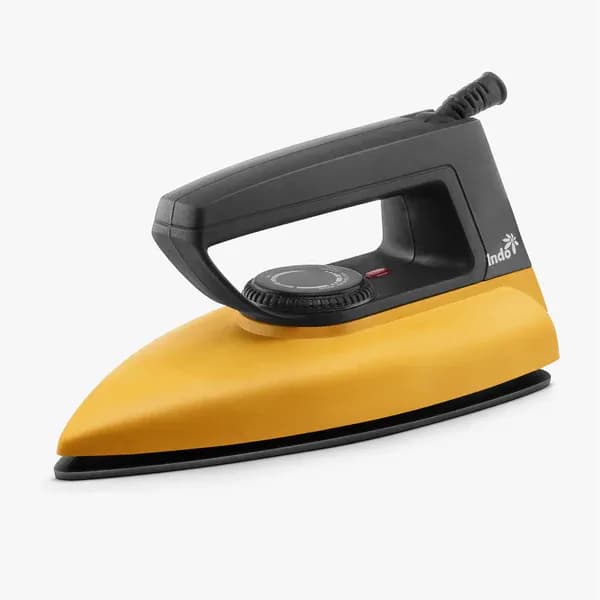
The engineering of the Ptfe Non Stick Coating soleplate is central to the dry iron’s performance on Indian textiles. This fluoropolymer coating provides a chemically inert, low-friction surface that prevents the dry iron from sticking to synthetic blends or delicate embroidery found on silk kurtas. The thermal distribution across the soleplate surface is meticulously balanced to eliminate cold spots, ensuring that the 1000 heating element transfers energy uniformly. This uniformity is critical when pressing starched cotton sarees, where uneven heat can cause yellowing. Furthermore, the coating is hardened to resist scratching from metallic zippers, hooks, or heavy plastic buttons frequently found on school uniforms and office trousers.
Precise thermal management is achieved through a bi-metallic thermostat connected to a manual dial with three distinct fabric modes. These modes—cotton, silk, and wool—are calibrated to specific temperature thresholds to accommodate the varying heat tolerances of common Indian fabrics. For instance, the cotton setting allows the soleplate to reach the high temperatures necessary to break down stubborn wrinkles in thick handloom fabrics, while the silk setting maintains a lower, stable heat to prevent fiber melting. This granular control ensures that the user can transition from ironing a heavy denim pair of jeans to a light polyester blend dupatta without damaging the garment fibers or compromising the finish.
The safety architecture is designed to withstand the nuances of Indian electrical infrastructure, including 220–240V fluctuations. By incorporating an auto shut-off feature and a secondary thermal fuse, the dry iron prevents thermal runaway if the thermostat fails or the unit is left unattended. These components are housed within a shockproof body that undergoes rigorous ISI certification testing to ensure user protection against leakage currents. Overheat protection serves as a critical fail-safe, automatically disconnecting power if internal temperatures exceed safe operational limits. This multi-layered approach to safety engineering ensures that the dry iron remains a reliable and secure tool for daily household operations across various Indian urban and rural settings.
Ergonomic efficiency is prioritized through a 0.9 kg weight profile, which provides sufficient downward pressure for effective crease removal while remaining light enough for extended ironing sessions involving multiple sarees or several sets of school uniforms. The 1.5-meter cord provides the necessary radius for maneuvering around a standard ironing board or a flat table surface. The handle is contoured to provide a secure grip, reducing the mechanical strain on the user's hand during repetitive motions. Combined with the quick heat-up time of the heating element, the Indo CrispYellowDry 1000w represents a pinnacle of functional design for the budget-conscious consumer seeking a durable, high-performance solution for their daily garment care needs.