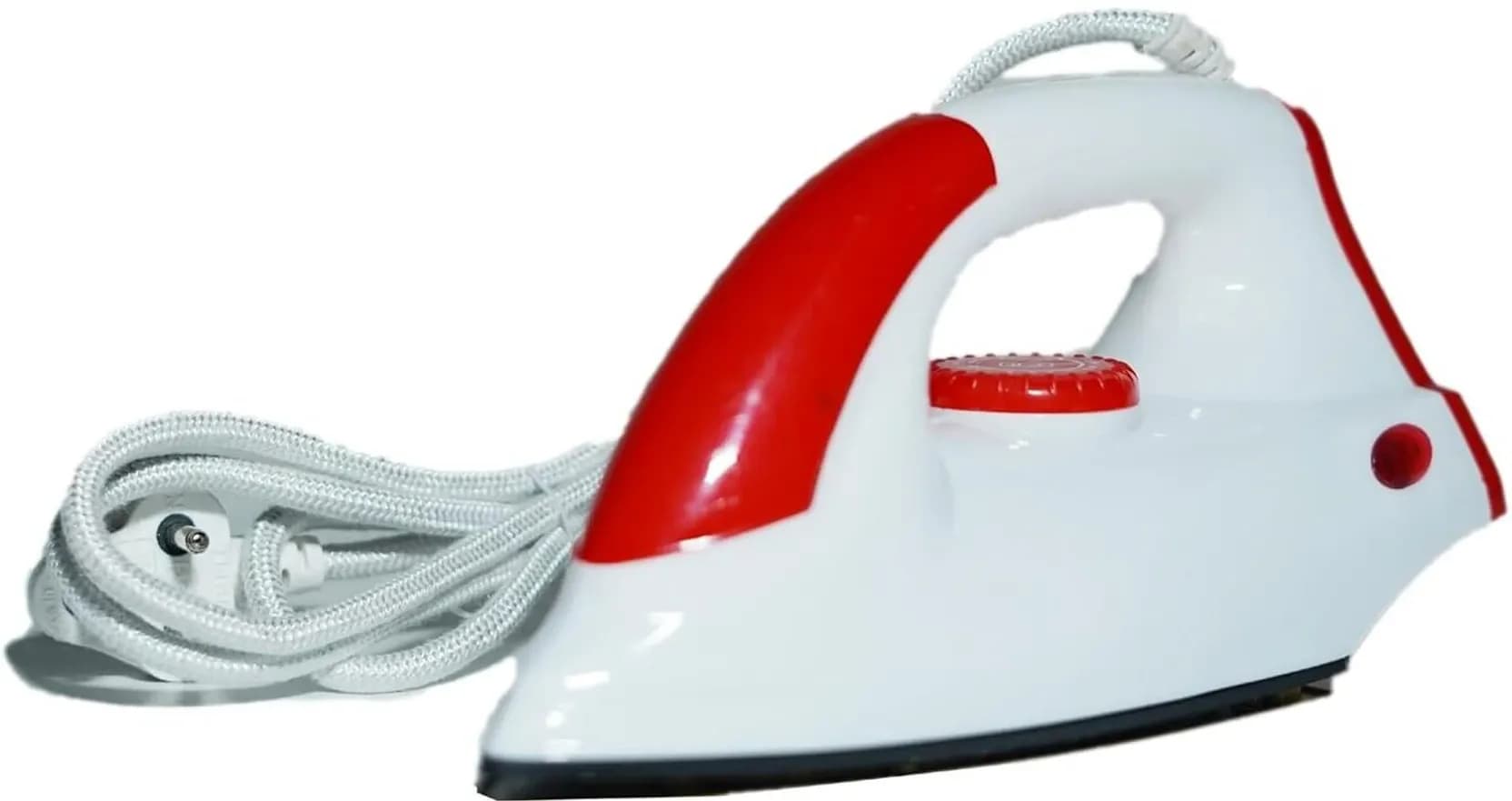
The Non Stick soleplate is a critical component for heat distribution, utilizing a specialized coating that facilitates a friction-free glide across various textile surfaces. Unlike standard metallic plates, this surface is resistant to the abrasive nature of starch and the intricate textures of Indian embroidery or zari work found on kurtas. The 1000W heating system is tuned to provide rapid thermal recovery, ensuring the plate stays at a constant temperature even when pressing damp cotton. This uniformity prevents the hot-spotting that typically leads to fabric scorching. Furthermore, the scratch-resistant layer ensures that buttons, zippers, and hooks on school uniforms do not damage the integrity of the soleplate, maintaining its smooth performance over long-term usage cycles.
Temperature regulation is managed through a silver-layered thermostat dial, which offers four distinct settings tailored for cotton, silk, synthetic, and linen. This precision is vital for the mixed-fabric wardrobes common in India, where one must switch from high-heat cotton sarees to low-heat synthetic blends instantly. The thermostat acts as a gatekeeper for the 1000W power draw, cycling the current to maintain an equilibrium that matches the selected fabric’s thermal threshold. By providing a dedicated setting for silk, the dry iron prevents the irreversible fiber melting often associated with inferior units. This calibrated mapping ensures that the heat output is always proportional to the material density, providing professional results on both delicate office shirts and heavy-duty linen trousers alike.
The safety architecture is designed to withstand the realities of the Indian electrical grid, specifically managing the standard 220–240V range. At the core is a thermal fuse that serves as a fail-safe, physically breaking the circuit if the dry iron detects an abnormal temperature spike. This is complemented by an auto shut-off mechanism that prevents accidents during unattended periods, a common concern in busy households. ISI certification confirms that the shockproof body and internal wiring meet national safety standards for insulation and grounding. These layered defenses work together to mitigate the risks of electrical fires or short circuits, providing a level of reliability that is essential for appliances that operate at high temperatures in a domestic environment every day.
Ergonomics play a significant role in reducing user fatigue, particularly during extended sessions involving a full week's worth of school uniforms and office wear. The dry iron features a lightweight 0.4 kg chassis that minimizes strain on the wrist and forearm, while the handle is shaped to accommodate various grip styles comfortably. A 1.8-meter cord length provides significant reach, allowing the user to navigate around large items like double bedsheets or long sarees without being tethered too closely to the power outlet. This focus on physical usability, combined with the efficient 1000W power delivery, ensures that the Electric Dry Iron remains the most practical choice for Indian consumers seeking a balance between lightweight design and heavy-duty performance.