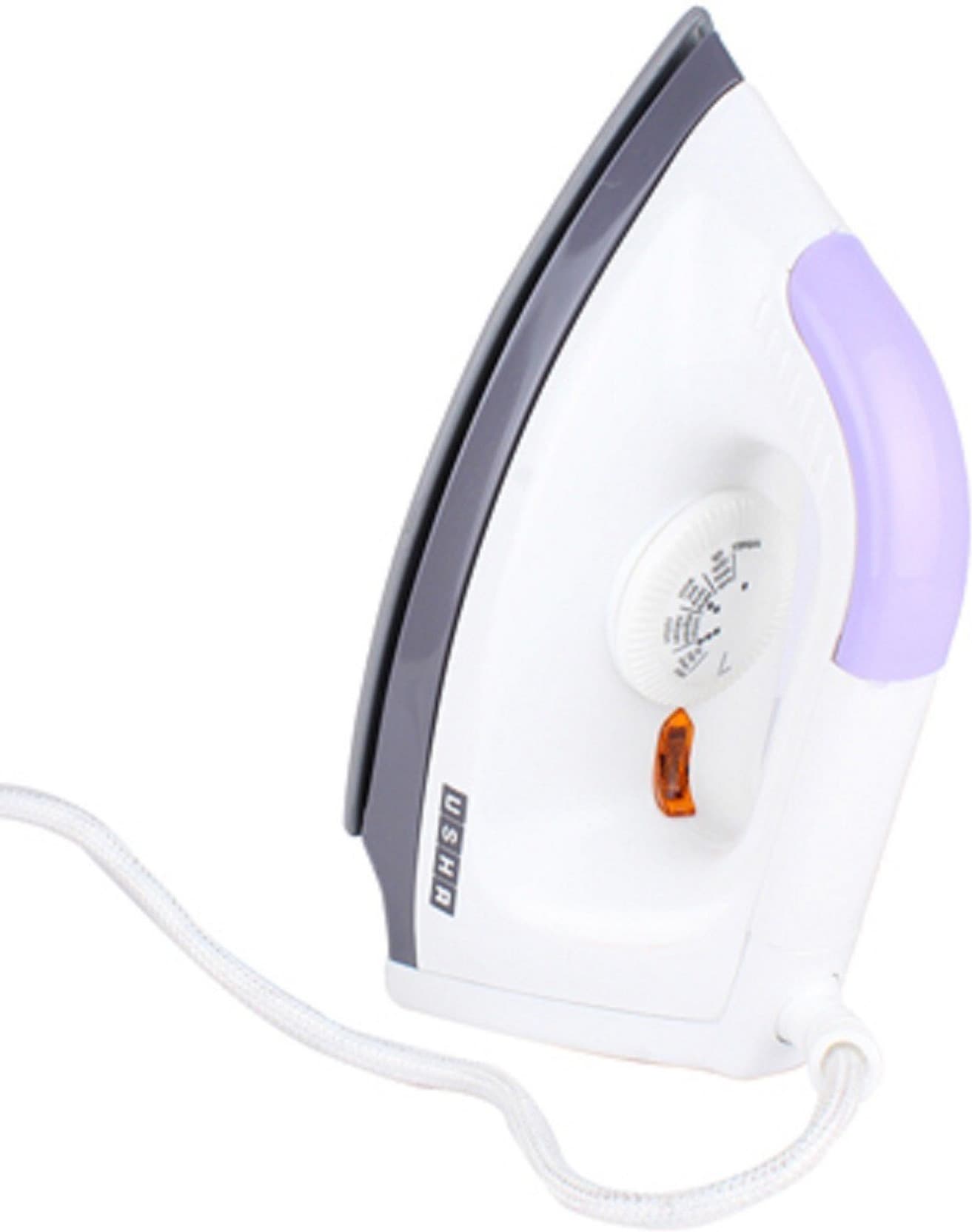
The engineering behind the Non Stick soleplate focuses on reducing friction coefficients against natural fibers. This coating ensures that as the 1000W heating element reaches peak temperature, the heat is distributed uniformly across the entire surface area. This prevents hot spots that could potentially scorch delicate Indian fabrics like silk or thin polyester blends. The surface is also treated for scratch resistance, allowing it to glide over metal buttons on office shirts or heavy zari work on festive sarees without degrading. Rapid thermal conductivity means the iron reaches the desired temperature for cotton within seconds, ensuring that deep creases are removed efficiently during the very first pass over the fabric.
The manual thermostat dial is calibrated to provide specific thermal increments that correspond to the four primary fabric modes. For cotton sarees, the dial allows the heating element to sustain high temperatures necessary for removing stubborn wrinkles from thick weaves. Conversely, for silk kurtas or synthetic office wear, the thermostat maintains a lower, stable heat profile to prevent fiber melting or shining. This level of control is essential for Indian wardrobes that often contain a mix of traditional handloom and modern factory-produced clothing. The mechanical nature of the dial ensures long-term reliability compared to digital sensors, providing tactile feedback that helps users quickly identify the correct heat setting.
To handle the 220–240V voltage fluctuations common in many Indian regions, the dry iron is equipped with a robust safety architecture. The ISI certification serves as a benchmark for electrical safety, ensuring that the internal wiring and heating element meet national standards. The auto shut-off and overheat protection systems act as secondary failsafes; if the internal temperature exceeds safe thresholds, the thermal fuse immediately breaks the circuit. This prevents the soleplate from reaching dangerous levels that could cause fires or ruin garments. Such engineering considerations make the unit suitable for households where multiple users might operate the iron, providing a layer of protection against accidental neglect or power surges.
Ergonomic engineering is evident in the 0.85 kg weight distribution, which is optimized to provide enough downward pressure for wrinkle removal while remaining light enough for fatigue-free use. The handle is shaped to accommodate various grip styles, reducing the strain on the palm and fingers during extended ironing sessions of school uniforms or bedsheets. With a 1.8-meter cord length, the iron provides sufficient mobility, allowing users to move freely around large pieces of fabric without being tethered too closely to a wall socket. Ultimately, the 12.el1602 Dry Iron is engineered to provide a balanced domestic experience, combining rapid heating, fabric safety, and user comfort into a single, cohesive package for Indian consumers.