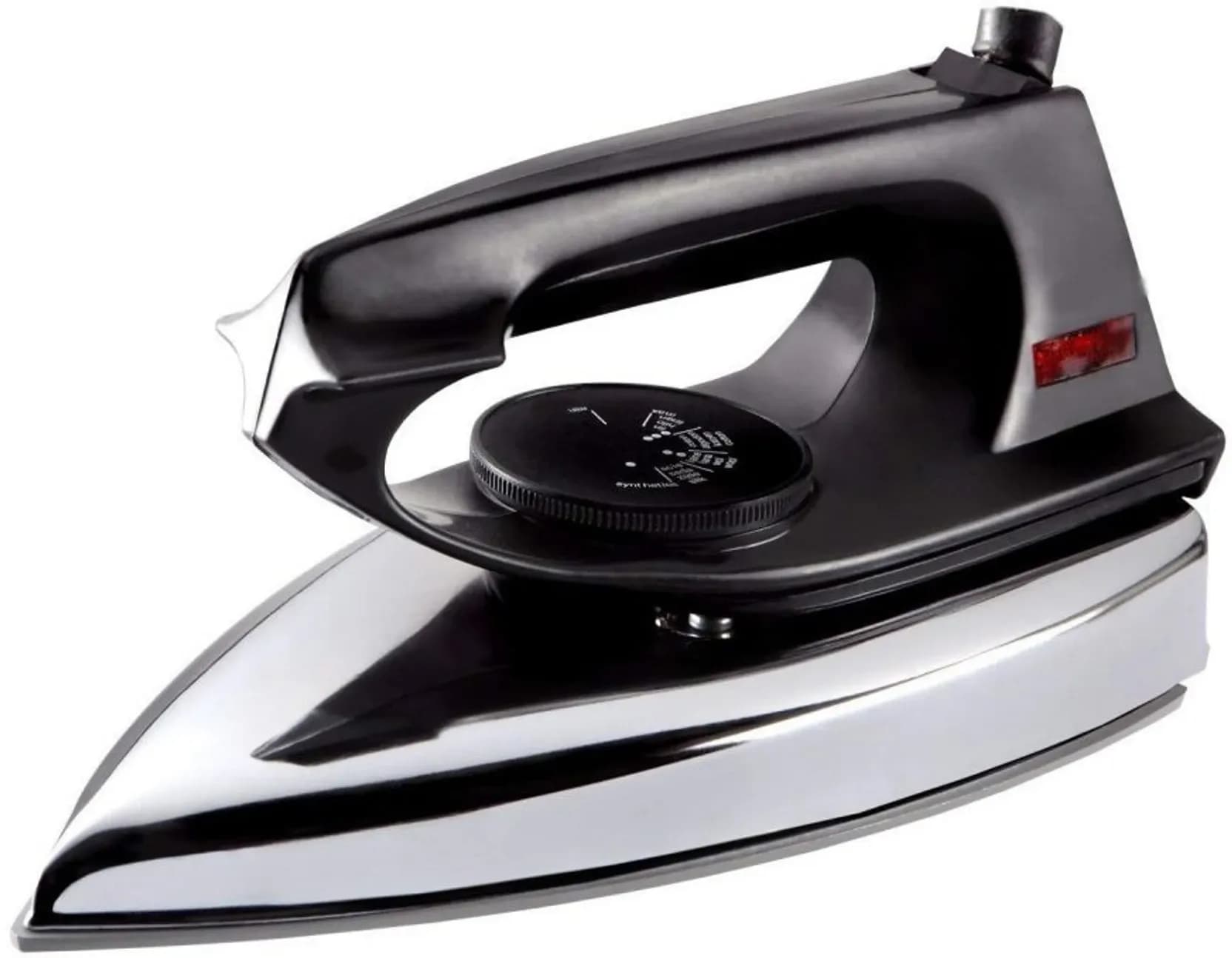
The cast iron soleplate is the core functional component of this dry iron, engineered for high thermal mass and durability. Unlike thinner aluminium bases, cast iron retains heat longer, allowing for a steady pressing temperature that does not fluctuate during use. This material is particularly effective at gliding over the varied textures of Indian fabrics, including the rougher weaves of khadi or the dense threads of embroidered silk kurtas. The scratch-resistant surface ensures that metal buttons or zippers on school uniforms do not damage the finish. Powered by 750W, the heating element quickly brings the base to the required operating temperature, facilitating a rapid start to the morning ironing routine.
Precision temperature management is achieved through a mechanical thermostat dial calibrated for specific fabric categories. The two primary modes focus on cotton and synthetic settings, covering the vast majority of garments found in a standard Indian wardrobe. For high-heat requirements like thick linen or heavy cotton sarees, the thermostat maintains a peak temperature that penetrates deep into fibers to break stubborn creases. Conversely, the synthetic setting limits the heat output to protect delicate polyester or nylon blends from scorching. This targeted thermal control ensures that users can transition between different laundry items without waiting excessively for the soleplate to cool or risk damaging sensitive materials through overheating.
The safety architecture of this dry iron is designed to handle the specific electrical conditions of Indian households, including voltage fluctuations between 220–240V. ISI certification indicates that the unit has undergone rigorous testing for insulation resistance and earthing reliability. An integrated thermal fuse acts as a secondary failsafe, physically breaking the circuit if the internal temperature exceeds safe operating limits. This overheat protection is crucial for preventing damage to both the dry iron and the garment if the thermostat were to malfunction. Furthermore, the auto shut-off capability provides a vital layer of security, reducing fire risks in busy environments where the user might be momentarily distracted by other household chores.
Ergonomic design considerations focus on reducing physical strain during extended ironing sessions. At a weight of 0.8 kg, the dry iron is heavy enough to apply effective pressure for crease removal but light enough to prevent wrist fatigue. The handle is shaped for a secure grip, accommodating various hand sizes comfortably while providing easy access to the temperature dial. A 1.5-meter power cord offers sufficient flexibility to move around the ironing board, while its reinforced exit point prevents fraying over years of use. These design choices contribute to a reliable user experience, making the 2.Eco Dry Iron the overall buying conclusion for Indian households seeking a durable and effective garment care solution.