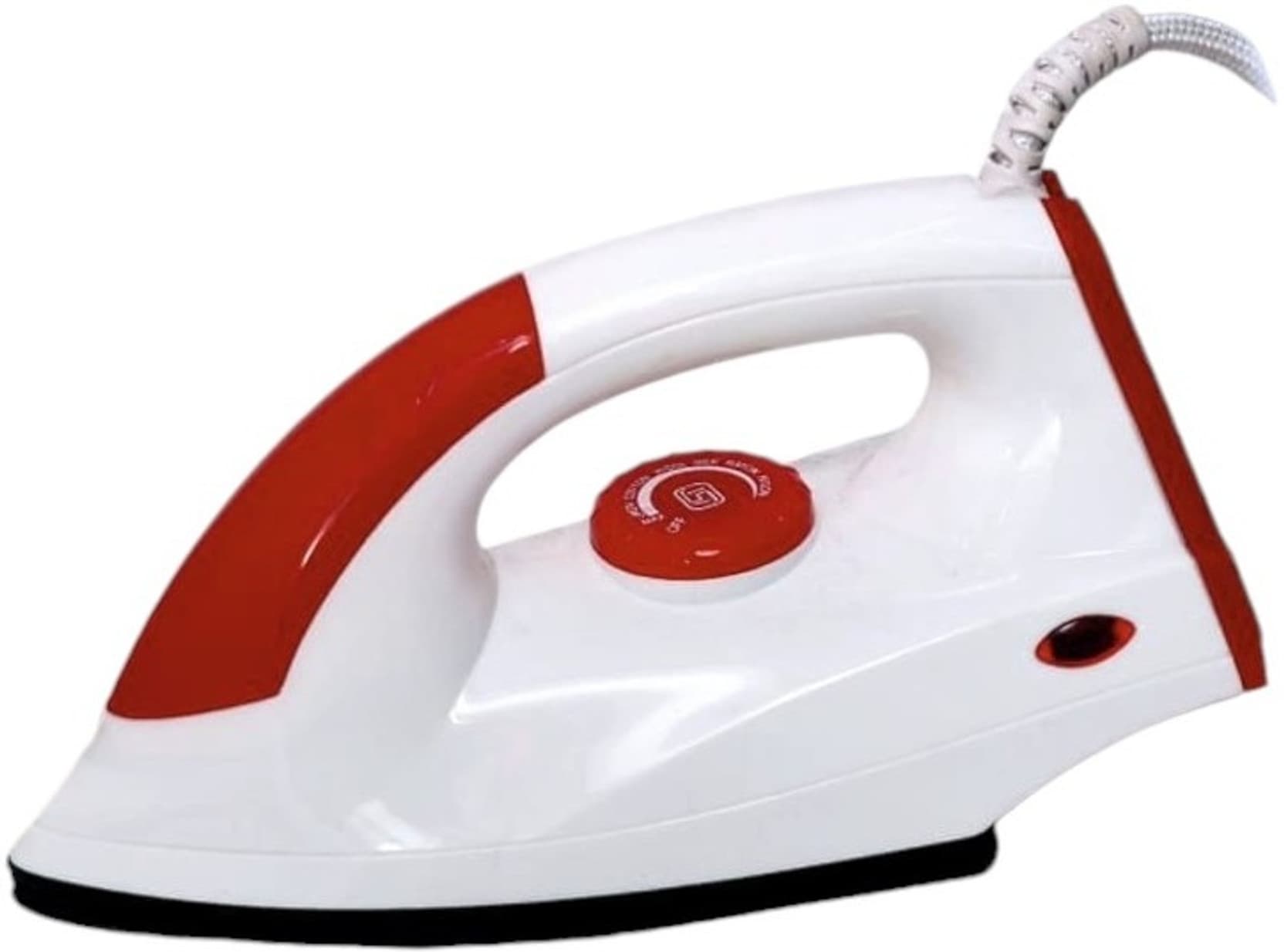
The non-stick soleplate is engineered using a high-grade coating that minimizes friction against various textile surfaces. This material ensures uniform heat distribution across the entire pressing area, preventing hot spots that could damage delicate embroidery or plastic buttons found on Indian garments. The 1000W heating element is calibrated to reach operational temperatures within seconds, maintaining a steady thermal state even during consecutive heavy-duty pressing sessions. This thermal consistency is vital for penetrating the thick fibers of starched cotton, ensuring that creases are removed in a single pass rather than multiple repetitive strokes.
Temperature regulation is managed through a mechanical thermostat connected to a manual dial, offering two primary heat zones tailored for cotton and synthetics. This system utilizes a bimetallic strip that accurately triggers the heating circuit based on internal plate temperature. For silk kurtas and polyester blends, the lower setting provides sufficient warmth to relax fibers without risk of melting. Conversely, the higher setting is optimized for high-density weaves. This engineering focus on specific heat stages ensures that the dry iron adapts to the mixed-fabric wardrobes commonly found in modern Indian homes, preserving garment integrity over time.
Electrical safety is governed by a triple-action architecture consisting of a thermal fuse, overheat protection, and mandatory ISI certification. These components are designed to handle the 220–240V fluctuations typical of Indian power grids. The thermal fuse acts as a final fail-safe, physically breaking the circuit if the thermostat fails, thereby preventing fire hazards. The overheat protection system cycles the power off once the target temperature is reached, which also conserves energy. These safety protocols ensure the dry iron remains reliable during the long ironing sessions required for large family laundry loads, providing a standardized level of protection.
The physical architecture of the dry iron focuses on user comfort and mobility. At a weight of 0.2, the unit is exceptionally easy to maneuver, reducing the physical strain on the user's shoulder and wrist. The handle is ergonomically shaped to provide a firm grip, while the cord entry point is reinforced to prevent fraying over years of use. This lightweight design does not compromise its ability to flatten tough creases on school uniforms or heavy linens, as the heat output compensates for the reduced physical mass. Overall, the 7.Duster red white represents a refined engineering solution for efficient and safe domestic garment care.