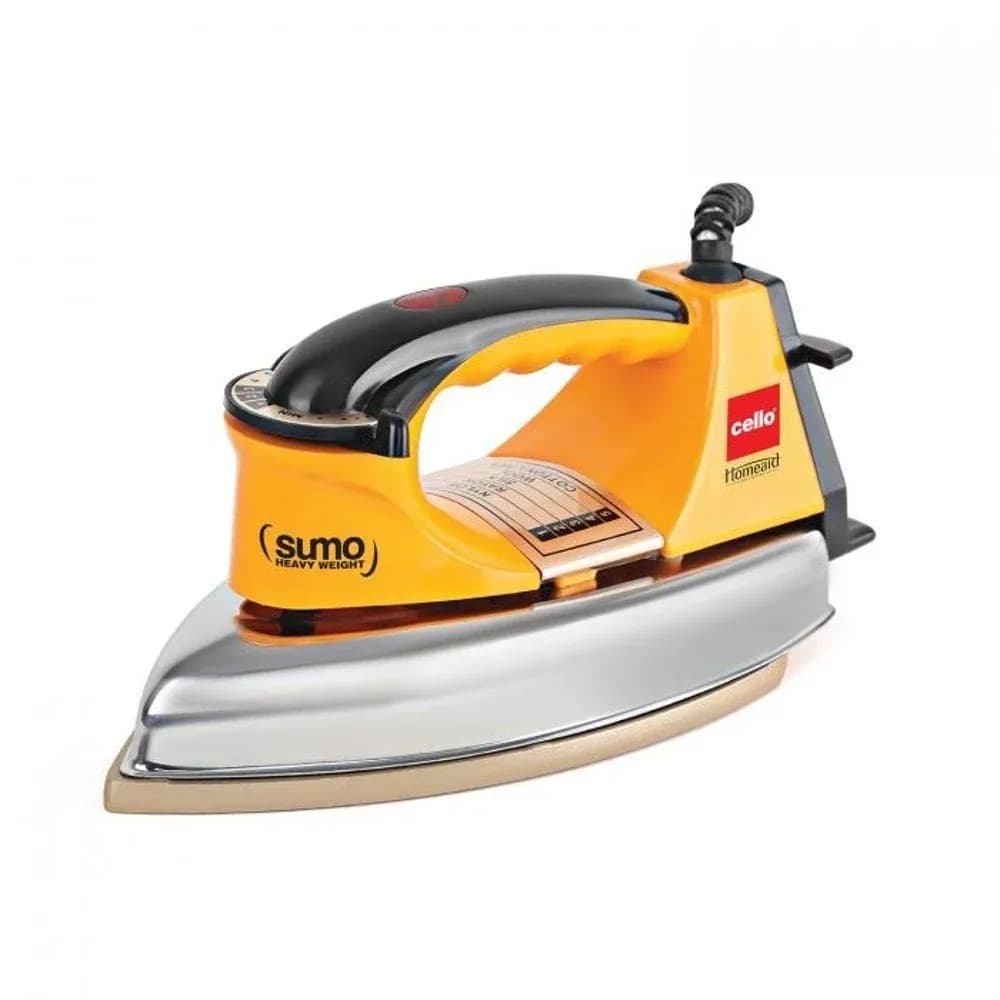
The soleplate of this dry iron is engineered using a high-grade non-stick coating that facilitates a smooth glide over intricate Indian embroideries and heavy cotton textures. Heat distribution is managed by a 1000 W heating element that reaches operational temperature within sixty seconds, ensuring uniform thermal output across the entire pressing surface. This uniformity prevents localized hot spots that typically cause fabric damage on silk or rayon garments. The scratch-resistant surface is designed to withstand contact with metal buttons on school uniforms and zippers on office trousers, maintaining its smooth texture over hundreds of uses. This technical focus on surface durability ensures long-term fabric protection.
The manual thermostat architecture is calibrated to align with the specific thermal resistance of cotton, wool, and silk fabrics. By mapping the dial to these three modes, the dry iron regulates the current flow to the heating element to maintain a narrow temperature band. For cotton sarees, the iron sustains a high heat profile to penetrate dense fibers, while the silk setting reduces thermal intensity to protect delicate protein-based fibers from melting. This mechanical precision is critical for Indian households where wardrobes often mix natural and synthetic blends, requiring frequent temperature adjustments during a single ironing session for optimal garment care.
Safety engineering in this dry iron centers on a triple-protection system comprising a thermal fuse, auto shut-off, and ISI-certified internal wiring. These components are designed to handle the 220–240V Indian household voltage, protecting the internal circuits from sudden power spikes. The auto shut-off feature acts as a fail-safe, cutting power if the thermostat fails or if the unit remains stationary for too long, preventing fire hazards. This structural integrity is reinforced by the heavy-duty plastic housing that remains cool to the touch, shielding the user from the high internal temperatures required to press thick linen or heavy-duty denim fabrics.
Ergonomic design is addressed through the 1.75 kg weight distribution, which leverages gravity to remove wrinkles rather than manual arm pressure. The 2.0-meter cord length provides a significant radius of movement, allowing users to reach the ends of long cotton sarees without repositioning the ironing board. The handle is contoured to reduce wrist strain during extended sessions involving multiple sets of school uniforms or office shirts. Ultimately, the 4.cello plug and press sumo heavy weight iron represents a thoughtful integration of physical weight and electrical efficiency, providing a stable and reliable ironing experience tailored to the specific needs of modern Indian homes.