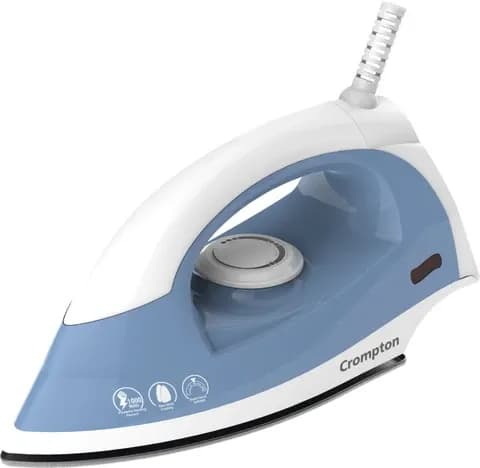
The Non Stick soleplate of this unit is engineered for minimal friction across various textile textures. By utilizing a high-density coating, the dry iron glides effortlessly over starched cotton and delicate polyester blends, preventing the fabric from clinging to the base. The heating element is calibrated to distribute thermal energy evenly across the entire surface area, eliminating cold spots that cause uneven pressing. This engineering approach ensures that the 1000W capacity translates directly into fast heat-up times, allowing the plate to reach its operating temperature in seconds. The surface is also resistant to micro-scratches from buttons or metallic embroidery.
Temperature regulation is managed via a bi-metallic thermostat dial that provides precise control over three primary fabric settings. For Indian wardrobes containing a mix of natural and synthetic fibers, this precision is vital to avoid fabric degradation. The silk mode maintains a lower, stable temperature to protect protein fibers, while the cotton setting ramps up the heat for deep-set creases in heavy linens. This mechanical control system is designed for longevity, resisting the wear associated with frequent adjustments. By mapping specific heat ranges to the dial, the iron provides a predictable user experience regardless of the garment type.
The safety architecture is built around a multi-layered system designed for the specific demands of the 220–240V Indian power environment. An internal thermal fuse acts as a physical fail-safe, cutting off power if internal temperatures exceed safe limits, while the auto shut-off mechanism prevents fire hazards during periods of inactivity. The shockproof body construction uses high-grade reinforced plastic to insulate the user from any internal electrical components. These features are backed by ISI certification, ensuring that the unit meets rigorous national standards for electrical appliances. This holistic safety approach minimizes risks associated with power surges or accidental unattended operation.
Ergonomics play a central role in the physical design, with a 0.8kg weight distribution that provides enough downward pressure for creases without causing user fatigue. The handle is contoured to fit the natural grip of the hand, facilitating better control during intricate tasks like pressing sari pleats or shirt cuffs. A 1.8-meter cord offers significant reach from power outlets, reducing the need for extension cords in older Indian homes. Every design choice, from the swivel cord to the pointed tip, is aimed at improving daily efficiency. Ultimately, the ACGI BRIO represents a well-rounded engineering solution for high-frequency domestic ironing tasks.