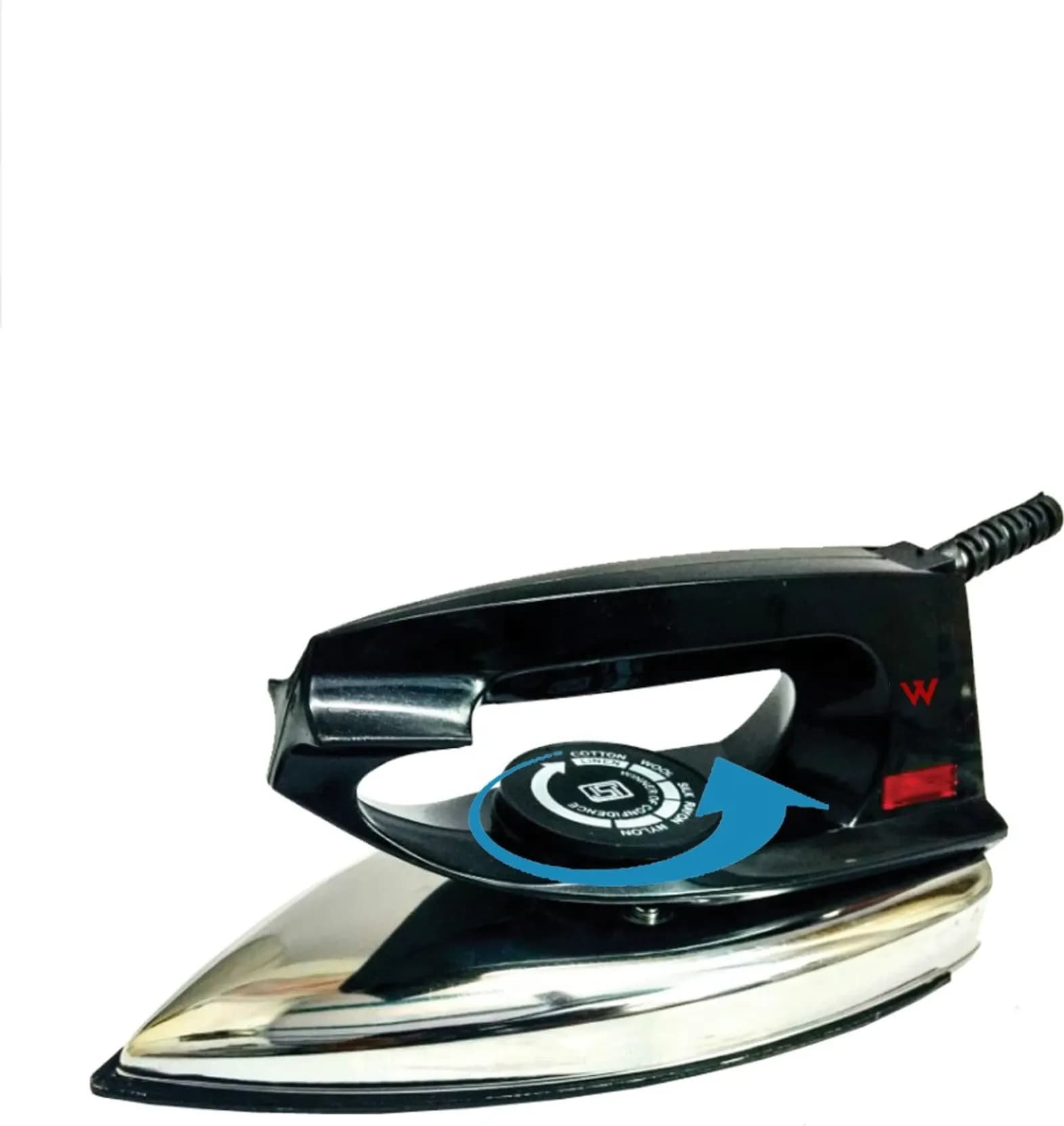
The engineering of the Non-Stick soleplate focuses on reducing the coefficient of friction against textured Indian textiles. By applying a specialized coating over a high-thermal-conductivity base, the unit ensures that heat is distributed uniformly across the entire pressing surface. This prevents localized hot spots that often damage silk or rayon blends. The 1000W heating element is calibrated to reach the optimal temperature for synthetic fabrics in under thirty seconds, significantly reducing the wait time between power-on and the first stroke. This thermal response is critical for users handling large batches of laundry where maintaining a steady temperature is necessary for consistent results across cotton and polyester.
The integrated thermostat system utilizes a bimetallic strip engineered for high sensitivity to temperature fluctuations. Each of the three fabric modes is mapped to a specific thermal window: low for delicate synthetics, medium for silk kurtas, and high for heavy-duty cotton and linen. This precision ensures that the soleplate never exceeds the safe threshold for the selected material, preventing fiber melting or yellowing. For Indian households with mixed-fabric wardrobes, this granular control allows for the safe pressing of embroidered fabrics where heat must be intense enough to flatten the base fabric but gentle enough to preserve the decorative threads and metallic zari work.
To handle the 220–240V fluctuations common in many Indian residential zones, the dry iron features a multi-layered safety architecture. The primary defense is the thermal fuse, which acts as a permanent circuit breaker if internal temperatures exceed safe operating limits. Complementing this is the overheat protection system that cycles the power to maintain a steady state once the target temperature is reached. These components are housed within a high-grade shockproof polymer body, ensuring that the user remains insulated from the electrical internals. This ISI-compliant design specifically addresses the risks of unattended ironing or power surges, providing a fail-safe environment for daily household operations.
The physical design of the unit emphasizes user comfort through a 0.8kg mass distribution, which provides enough downward pressure to flatten creases without requiring excessive manual force. The handle is shaped to accommodate various grip styles, reducing the risk of repetitive strain during long ironing sessions. A 1.8-meter cord with a 360-degree swivel allows for maximum maneuverability around the corners of ironing boards or large flat surfaces like beds where sarees are often pressed. Ultimately, the 1000W Iron represents a balanced engineering approach that prioritizes speed, safety, and fabric care, making it a definitive choice for the diverse textile landscape found across Indian households.