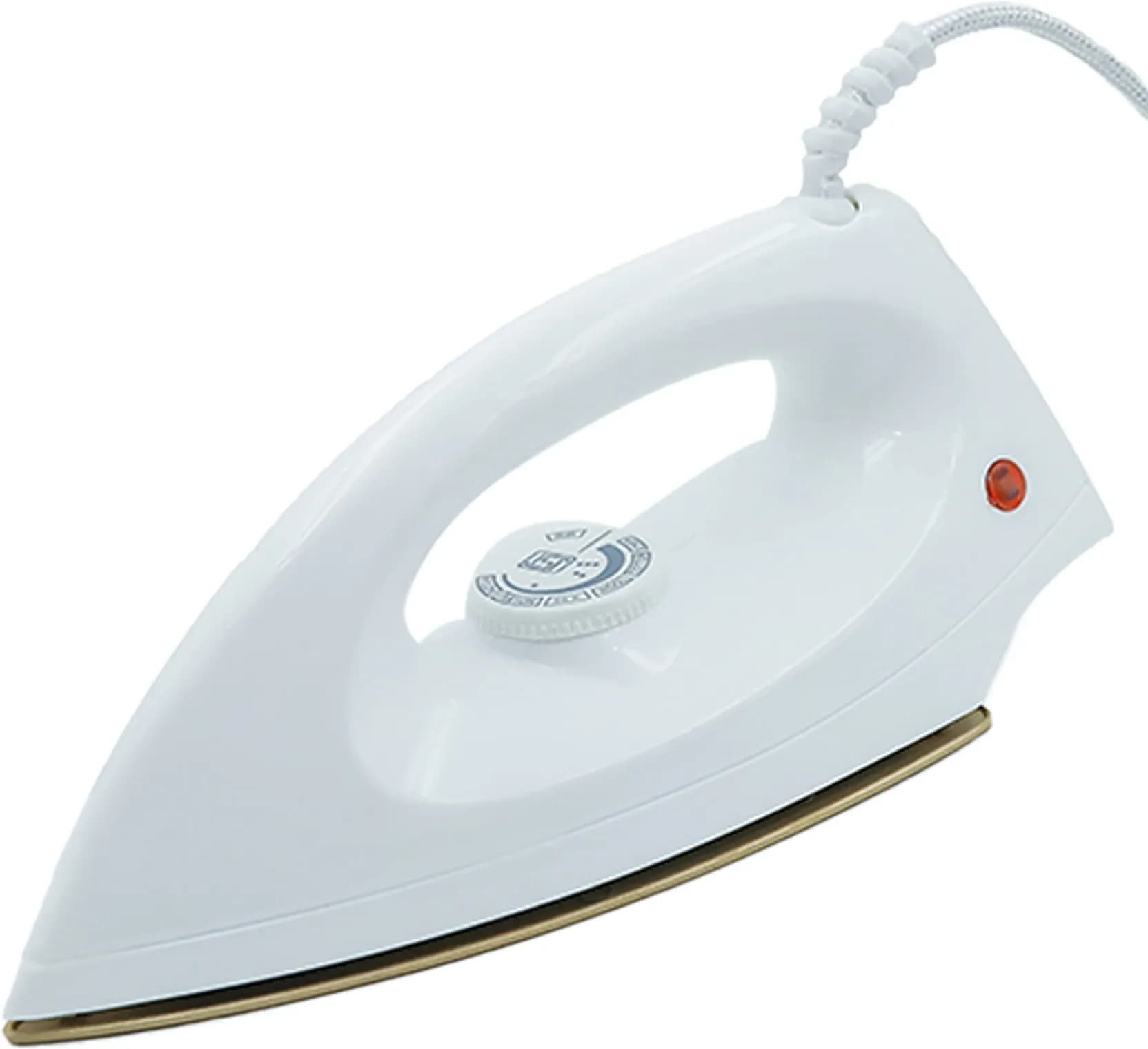
The non-stick soleplate engineering is central to the performance of this dry iron. By utilizing a specialized coating, the surface minimizes friction against fabric fibers, preventing the dragging or snagging often associated with traditional metal plates. This is particularly vital when navigating around the intricate buttons of office shirts or the delicate gold threads found in zari work on sarees. The 220 heating element is calibrated to distribute thermal energy uniformly across the entire soleplate area, eliminating cold spots. This ensures that the heat-up cycle is remarkably fast, allowing the user to begin pressing within seconds of activation while maintaining a consistent temperature.
The manual thermostat dial is engineered with precision detents that map directly to the seven distinct fabric modes: silk, cotton, wool, synthetic, linen, rayon, and nylon. Each setting represents a specific thermal threshold designed to maximize wrinkle removal without risking fiber damage. For instance, the silk setting maintains a lower, gentler heat to protect protein-based fibers, while the cotton and linen settings utilize the full thermal capacity for deep-crease penetration. This granular control is essential for the modern Indian household, where wardrobes often consist of a vast array of mixed-fabric garments. The engineering behind the thermostat ensures that transition times between heat settings are minimized for efficiency.
Electrical safety is managed through a multi-layered architecture designed for the Indian power grid. The ISI certification confirms that the dry iron adheres to rigorous national standards for build quality and electrical insulation. A critical component is the thermal fuse, which acts as a secondary failsafe by cutting off power if internal temperatures exceed safe limits. This works in tandem with the auto shut-off feature to prevent fire hazards if the unit is accidentally left face-down. Furthermore, the shockproof body construction protects the user from potential leakages, which is vital given the 220-240V fluctuations common in many regions. These integrated systems provide comprehensive protection for the appliance and the household.
Ergonomic considerations are evident in the 0.45 kg ultra-lightweight chassis, which is specifically balanced to reduce user fatigue during heavy-duty ironing tasks. The handle is contoured to fit the natural grip of the hand, providing better leverage when applying pressure to stubborn wrinkles in denim or thick cottons. A 1.5-meter power cord provides sufficient reach from wall sockets to the ironing board, allowing for a full range of motion without entanglement. This thoughtful design ensures that even large loads of laundry, such as multiple sets of school uniforms, can be handled comfortably. Ultimately, the 17.LW 101 Lightweight Basic 220W represents a peak combination of ergonomic physical design and robust internal engineering for Indian users.