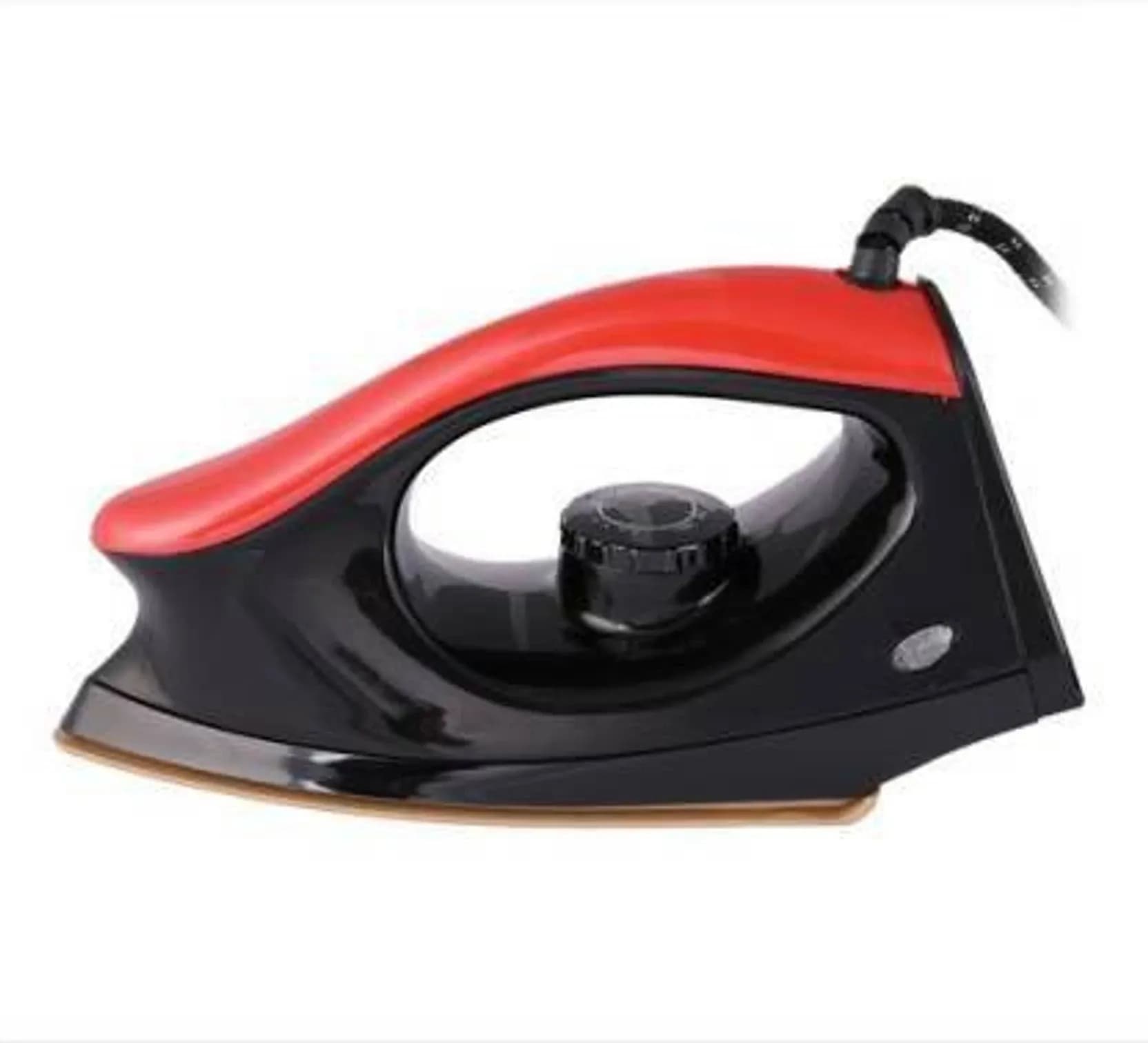
The soleplate of this dry iron is engineered with a high-grade non-stick coating that facilitates a smooth glide across diverse fabric surfaces. This material choice is critical for Indian households where garments often feature intricate embroidery, plastic buttons, or zari work that can snag on inferior surfaces. The non-stick layer provides a heat-resistant barrier that distributes thermal energy uniformly across the plate. Powered by a 750 heating element, the soleplate reaches its target temperature rapidly, minimizing the waiting time between switching the unit on and starting the task. This thermal efficiency ensures that even deep-set creases in thick linen or heavy cotton fabrics are smoothed out with minimal physical effort.
Temperature management is handled by a mechanical thermostat linked to a manual dial, offering three specific modes for cotton, synthetic, and linen fabrics. This mapping is vital for a mixed-fabric wardrobe consisting of rayon office shirts, polyester blends, and pure silk kurtas. The dial provides tactile feedback, allowing the user to select the exact heat level required for the material's density. For silk, the thermostat maintains a lower, stable temperature to prevent fiber melting, while the cotton setting leverages the full heat capacity to penetrate dense weaves. This precision engineering ensures that the dry iron adapts to the specific thermal requirements of every garment, preventing heat damage while maximizing wrinkle removal.
The safety architecture is the core of this dry iron's design, specifically tailored for the 220–240V electrical environment of Indian homes. It features a triple-redundancy system starting with the ISI certification, which guarantees the unit meets national safety standards. An integrated thermal fuse acts as a final fail-safe, physically breaking the circuit if the internal temperature exceeds safe limits during a voltage spike. Furthermore, the auto shut-off mechanism and overheat protection prevent the heating element from staying active indefinitely if left unattended. These engineering choices protect the household from electrical fires and safeguard the internal components from premature wear caused by fluctuating power supplies or human error during busy mornings.
Ergonomic considerations are evident in the handle design and the balanced 1.2 kg weight of the dry iron. This specific weight provides enough downward pressure to flatten stubborn wrinkles on school uniforms without causing wrist fatigue during long ironing sessions involving multiple cotton sarees. The 1.5-meter swivel cord offers ample reach from the power outlet to the ironing board, reducing the need for cumbersome extension cords. The handle is shaped to provide a secure grip, ensuring precise control when navigating around collars and cuffs of office shirts. Ultimately, the 16.pd 33 represents a thoughtfully designed dry iron that prioritizes user comfort and appliance longevity for the modern Indian household.