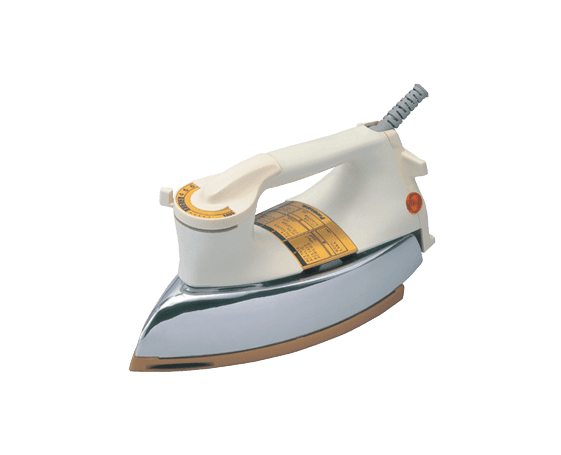
The Non Stick soleplate of this dry iron is engineered with a specialized coating that minimizes friction across varying textile surfaces. In the context of Indian garments, this prevents the iron from snagging on delicate zari work or intricate embroidery found on silk kurtas. The 1000 heating element is calibrated to reach the desired temperature within seconds, ensuring that the thermal energy is distributed uniformly across the entire baseplate. This uniformity is critical to avoid hot spots that could potentially melt synthetic fibers like nylon. By utilizing high-density materials, the soleplate also offers increased resistance to scratches from metal buttons and zippers commonly found on denim and heavy office shirts.
Precision temperature control is achieved through a manual dial featuring six granular settings, which effectively cover the thermal requirements of seven distinct fabric modes. This mechanical thermostat allows users to toggle between low heat for rayon and high heat for linen with tactile feedback. For Indian wardrobes containing a mix of polyester school uniforms and pure cotton sarees, this accuracy prevents over-heating. The internal bi-metal strip reacts quickly to current changes, maintaining a steady heat level that matches the fabric selection perfectly. This eliminates the guesswork often associated with lower-tier appliances, ensuring that the iron maintains the specific micro-environment needed for each garment type without damaging the fibers.
The safety architecture is specifically designed for the Indian electrical environment, where voltage fluctuations between 220V and 240V are common. An integrated thermal fuse acts as a secondary fail-safe, cutting off power if the internal temperature exceeds safe operating limits. Complementing this is the auto shut-off mechanism, which engages if the dry iron remains stationary or unattended for a specified period, significantly reducing fire risks in busy households. The ISI certification further validates that the internal wiring and insulation meet rigorous national standards for electrical safety. These layers of protection ensure that the dry iron remains a reliable tool, even during the peak power loads frequently experienced in urban and rural Indian residential areas.
Ergonomics play a vital role in the long-term usability of this dry iron, particularly during heavy ironing sessions. The 2.5 kg weight of the unit is intentionally balanced to provide downward pressure, reducing the need for the user to press down manually on tough fabrics like heavy cotton or denim. The 1.5-meter cord length provides sufficient mobility around large ironing boards, allowing for the smooth maneuvering required for full-length sarees. The handle is contoured to fit the natural grip of the hand, minimizing strain on the wrist and fingers. Ultimately, the 1.NI 22AWTXJ serves as a robust engineering solution for Indian families seeking a blend of physical ease and technical performance in their daily laundry routine.