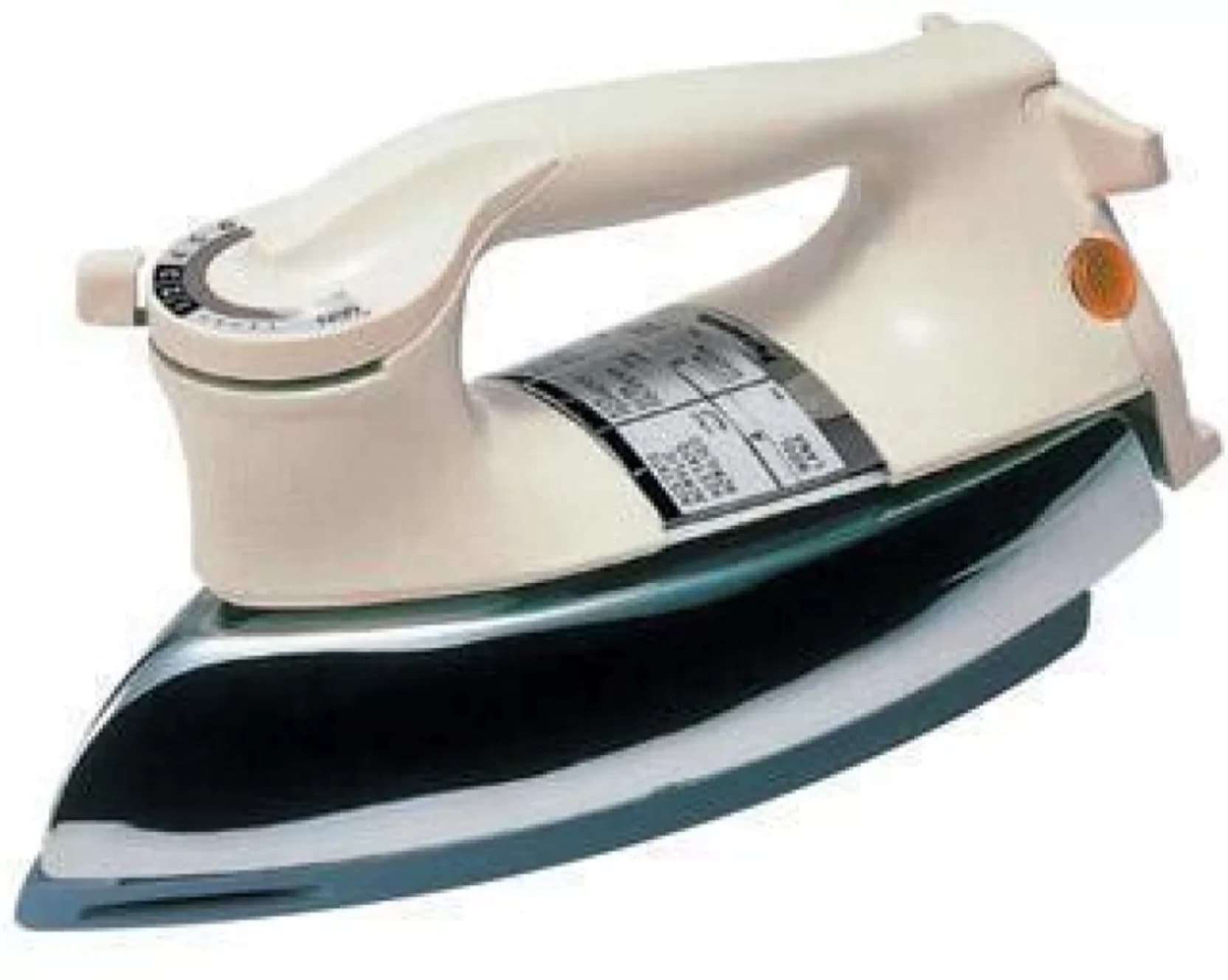
The Non Stick soleplate of this dry iron is engineered with a high-density coating that minimizes friction against various textile surfaces. Unlike standard plates, this material prevents the accumulation of starch or synthetic residues, which is crucial when pressing polyester blends or rayon kurtas. The uniform heat distribution across the surface eliminates cold spots, ensuring that every pass is effective. The 1000 heating coil is calibrated for rapid thermal recovery, meaning the plate returns to its target temperature quickly after making contact with damp or cold fabric. This efficiency is particularly noticeable when handling heavy cotton sarees that require sustained, high-intensity heat to remove deep-set storage wrinkles.
Precision is achieved through a 6-setting manual dial that maps directly to seven predefined fabric modes, ranging from delicate nylon to thick linen. This granularity allows users to match the thermal output to the specific melting point of the fiber, preventing the shine often seen on dark office shirts. For silk kurtas, the thermostat maintains a lower, stable temperature that protects the protein fibers from becoming brittle. Conversely, when switched to the cotton or linen modes, the internal sensor allows for a higher ceiling to tackle stubborn creases. This adaptability makes it a versatile tool for the complex mixed-fabric wardrobes found in modern Indian homes.
The safety architecture is specifically designed to handle the 220–240V fluctuations common in Indian electrical grids. The integration of a thermal fuse acts as a physical fail-safe, cutting power if the internal temperature exceeds safe limits due to a component failure. Furthermore, the auto shut-off feature provides peace of mind for users who may inadvertently leave the dry iron unattended during busy household chores. ISI certification ensures that the insulation and earthing components meet stringent national standards, reducing the risk of electrical shocks. These layers of protection are vital for residential environments where unattended ironing of school uniforms could otherwise lead to hazardous incidents.
Ergonomic considerations are evident in the handle geometry, which provides a secure grip for both small and large hands. The 1.8 weight of the unit is strategically balanced to provide enough downward pressure for crisp creases on school uniforms without causing user fatigue. This weight-to-performance ratio is ideal for those who iron multiple garments in a single session. The 1.5 cord reach prevents tangling and allows for a full range of motion, which is essential when navigating the pleats of a saree or the sleeves of a kurta. Ultimately, the 2.NI 22AWT serves as a benchmark for durability and functional design in the domestic dry iron category.