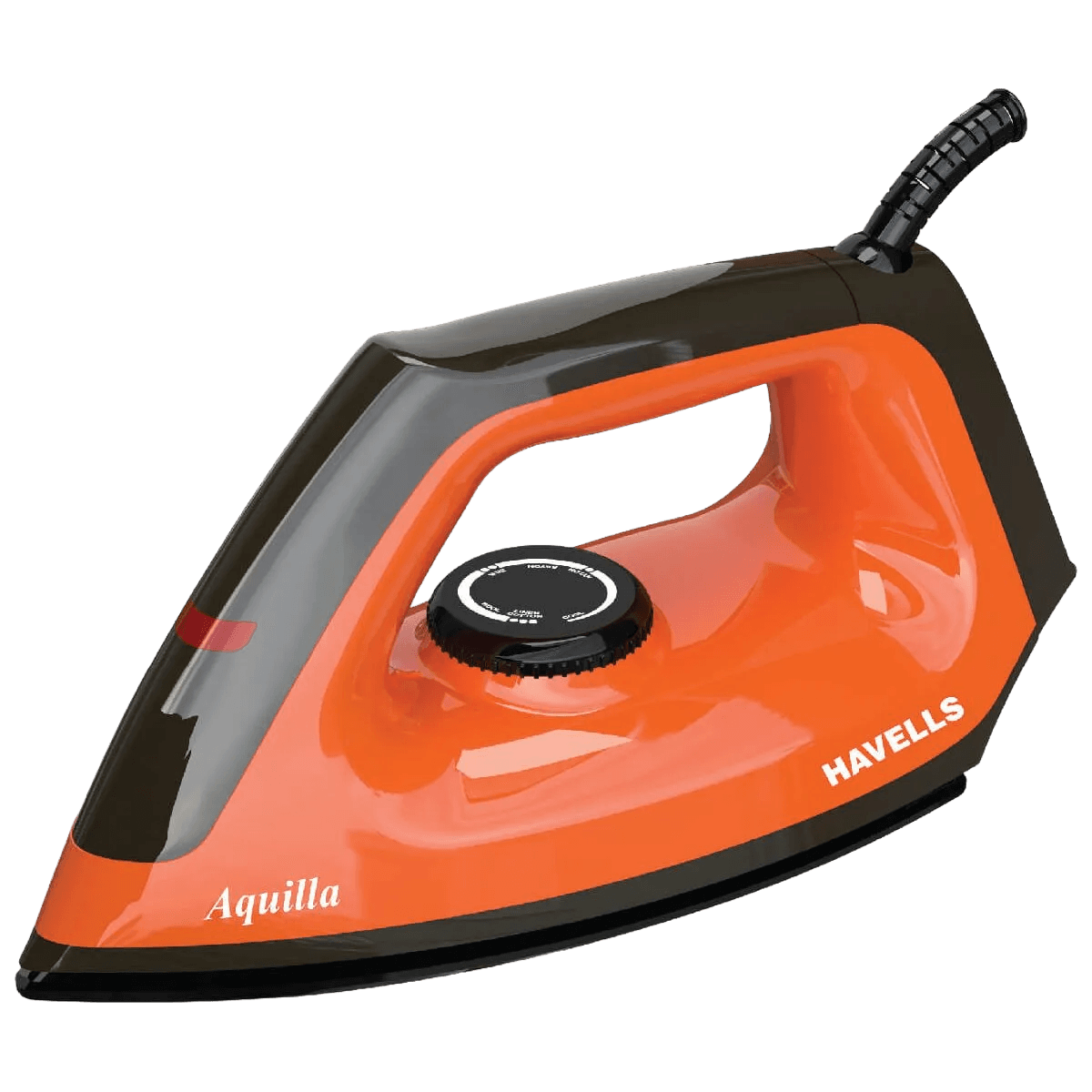
The non-stick soleplate is engineered to facilitate a low-friction glide across various textile densities, from coarse khadi to smooth synthetics. This coating prevents the accumulation of burnt starch residues, which is a common issue when pressing starched cottons at high temperatures. The 1000 heating element is calibrated for rapid thermal transfer, reaching the target temperature in under 45 seconds to reduce total ironing time. Even heat distribution is maintained across the entire surface area of the plate, preventing localized hot spots that could damage delicate embroidery or plastic buttons found on formal office wear.
The manual thermostat dial uses a high-sensitivity bimetallic strip to regulate current flow based on the selected fabric mode. Each of the seven settings—silk, cotton, wool, synthetic, linen, rayon, and nylon—corresponds to a specific temperature ceiling designed to maintain fiber integrity. For instance, the silk mode operates at a lower thermal threshold to prevent fiber melting, while the cotton and linen modes utilize the full capacity of the 1000 element to penetrate deep creases. This mechanical precision is vital for Indian wardrobes that often contain a mix of natural and blended fabrics.
The safety architecture is designed to address the specific challenges of the Indian electrical grid, where voltage spikes between 220V and 240V are frequent. The ISI certification confirms that the unit has passed rigorous insulation and leakage tests. A primary thermal fuse acts as a physical circuit breaker if internal temperatures exceed safe limits, while the auto shut-off mechanism provides a secondary layer of protection should the iron be left unattended. These redundant systems work in tandem to eliminate fire hazards and electrical shocks, making the unit suitable for households with children and elderly users.
Ergonomic engineering focuses on the 0.68kg lightweight chassis, which reduces the physical effort required for lateral movement during large ironing batches. The handle is shaped to accommodate various grip styles, reducing the pivot pressure required on the wrist when navigating the pleats of a saree or the seams of a trouser. The 1.6-meter power cord utilizes a flexible stress-relief joint to prevent internal wire breakage over years of repetitive movement. Ultimately, the 4.Aquila 1000W represents a balanced approach to power and safety, ensuring long-term reliability for the heavy-duty demands of daily Indian garment care.